 Bug FAQ
Wood Tiger
Parasemia plantaginis · Order: Lepidoptera · Family: Erebidae
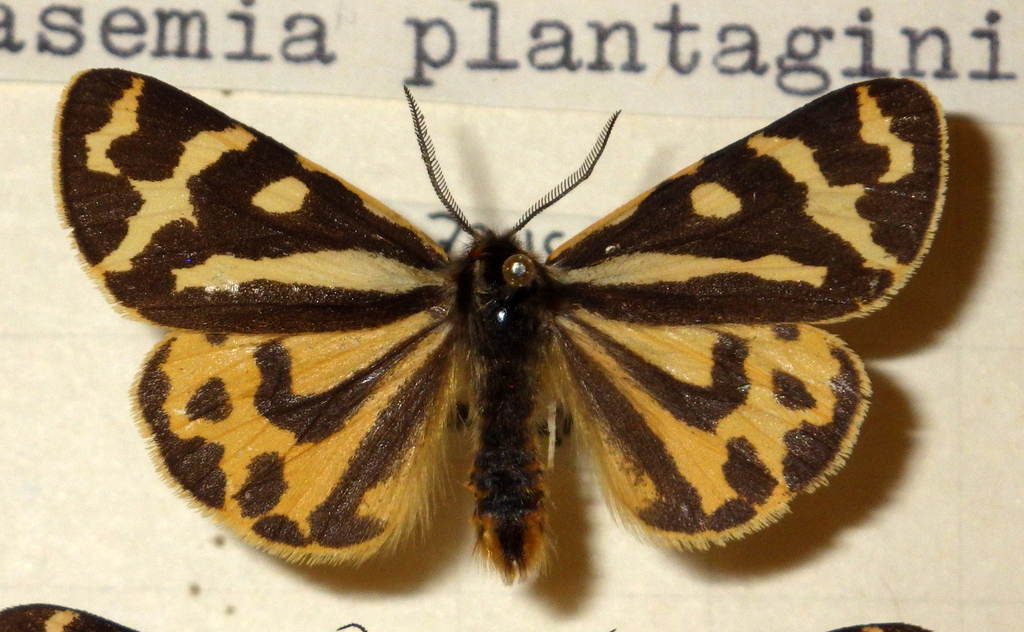
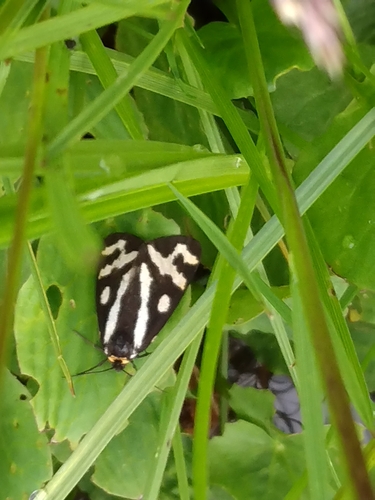
The wood tiger moth has a wingspan of about 32 to 38 mm and shows a black forewing with broad ivory-yellow bands; males have yellow or white hindwings with an irregular marginal band and a few submarginal spots. It lives in slightly moist meadow areas, especially near streams and lupine stands, and is found across the Holarctic region with one subspecies endemic to North America.
Source: Wikipedia
How to recognize it
Both sexes have black forewings marked with broad ivory-yellow bands. Males show yellow or white hindwings with an irregular, often broken marginal band and two or three submarginal spots.
Source: Wikipedia
Size
The wingspan ranges from 32 to 38 mm.
Source: Wikipedia
Where it lives
They prefer slightly moist meadow habitats, especially those near streams. Adults are often found close to lupine stands.
Source: Wikipedia
What it eats
Wood tiger moths are polyphagous, feeding on a wide variety of plants as larvae. Adults do not feed; their reproductive success depends on the larval diet.
Source: Wikipedia
Life cycle
Males are generally smaller than females but develop at a similar rate. Longer development time usually leads to larger pupal mass, and in females larger pupal mass correlates with higher lifetime egg production.
Source: Wikipedia
Where it comes from
One subspecies is endemic to North America.
Source: Wikipedia
Where it is found in the US
Recorded in 14 of 51 states and DC. Most records: Colorado, Kansas, Wyoming, Utah, Alaska, Montana, Idaho, California.
Darker = more records. Counts are museum and citizen-science records, not population size.
Source: GBIF
Status: native in North America; native in Canada; native in United States. Source: iNaturalist
Months it is reported in the US
Source: GBIF
More photos
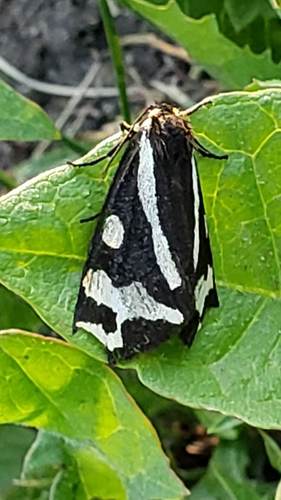
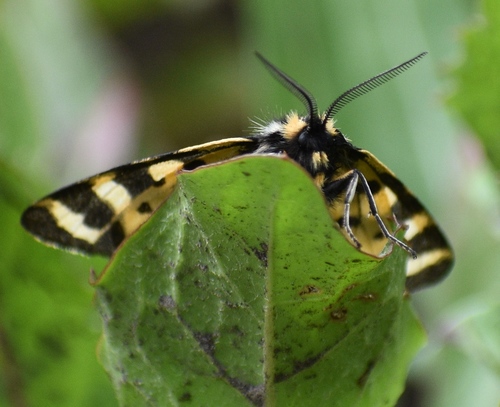
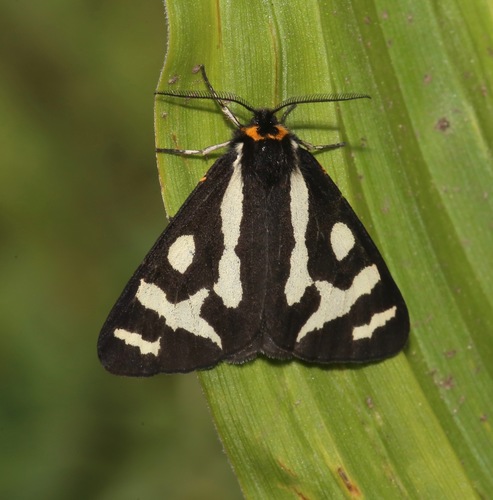
Questions people ask
What do wood tiger moths look like?
Both sexes have black forewings with broad ivory-yellow bands; males have yellow or white hindwings with an irregular marginal band and a few submarginal spots.
Source: Wikipedia
Where are wood tiger moths found?
One subspecies is native to North America, and others occur across the Holarctic region down to parts of Asia and the Middle East.
Source: Wikipedia
What do wood tiger moth larvae eat?
They are polyphagous, feeding on many different plant species during the larval stage.
Source: Wikipedia
Do adult wood tiger moths feed?
Adults do not feed; they rely on the nutrients stored from their larval diet for reproduction.
Source: Wikipedia
Same family (Erebidae)
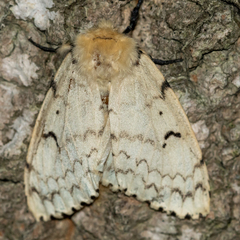 Spongy MothLymantria disparDamages trees, gardens or crops
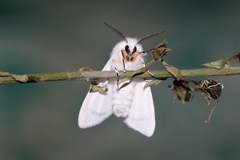 Fall Webworm MothHyphantria cuneaDamages trees, gardens or crops
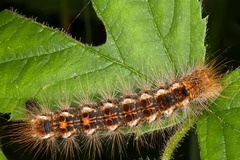 Brown-tail MothEuproctis chrysorrhoeaCan irritate skin
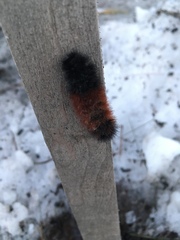 Isabella Tiger MothPyrrharctia isabella
 Virginian Tiger MothSpilosoma virginicaCan irritate skin
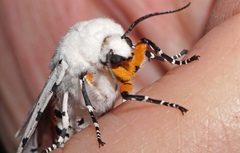 Salt Marsh MothEstigmene acreaDamages trees, gardens or crops
Sources
- Wikipedia: https://en.wikipedia.org/wiki/Arctia_plantaginis
Look it up elsewhere: GBIF · iNaturalist · BugGuide · Wikipedia
Text written 2026-10-24 from the sources above and checked sentence by sentence against them. Data fetched 2026-10-24.