 Bug FAQ
Isabella Tiger Moth
Pyrrharctia isabella · Order: Lepidoptera · Family: Erebidae
Also called: Banded Woollybear, Black-ended Bear, Isabelline Tiger, Woolly Bear
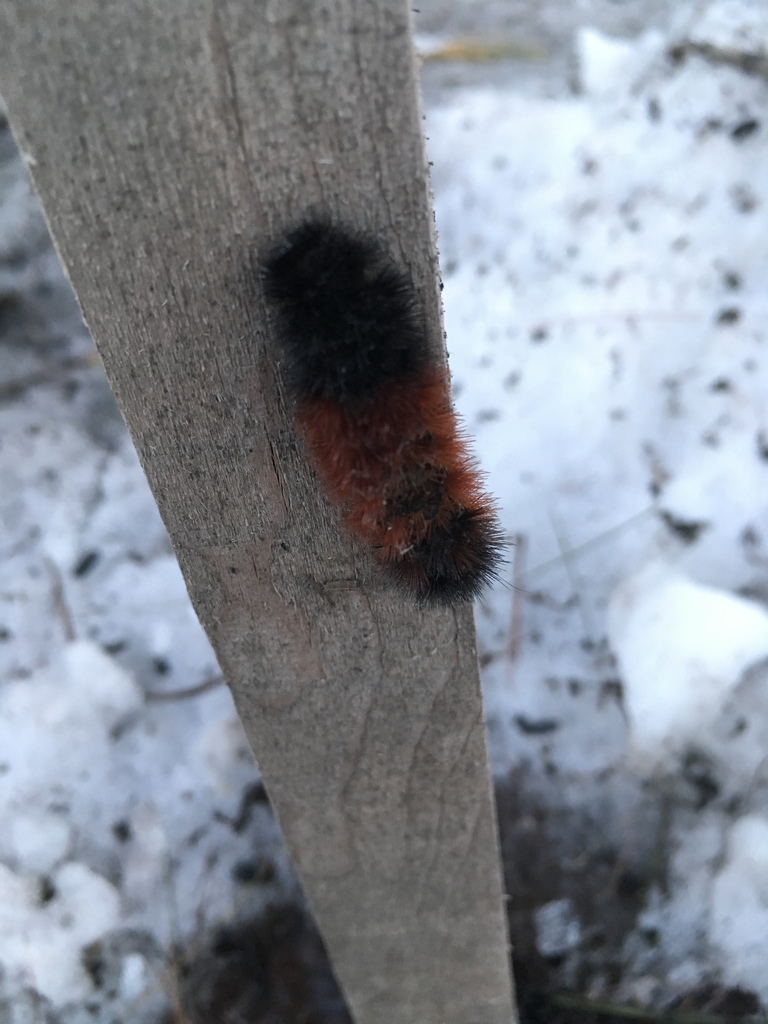
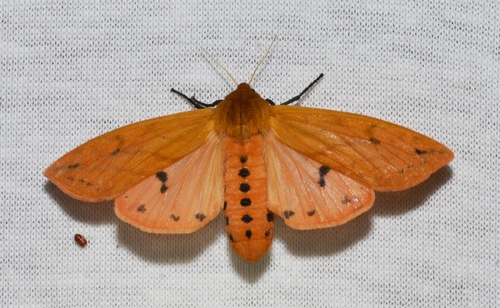
Adults are dull yellow-orange with sparse black spots on the wings and bright reddish-orange forelegs. Caterpillars have brown hair in the middle, black hair at the ends, and three black dots on each abdominal segment. They live in cold and temperate areas across the United States and Canada, feeding on many herbs and trees.
Source: Wikipedia
How to recognize it
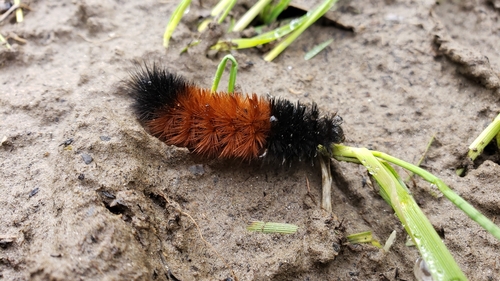
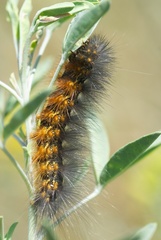
Each larval segment shows three black dots, with brown hair in the middle and black hair at the front and rear.
Source: Wikipedia
Size
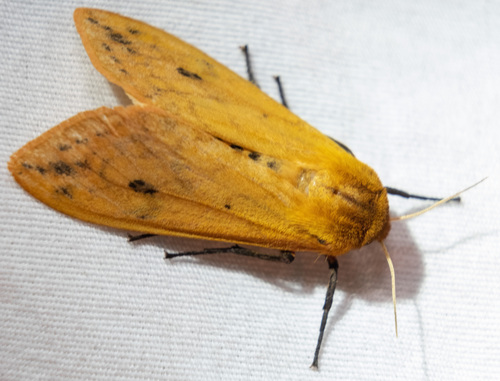
Adults are dull yellow-orange to orange, have robust scaly thoraxes, small heads, and bright reddish-orange forelegs. Their wings carry sparse black spots.
Source: Wikipedia
Does it bite or sting?
The caterpillar hairs do not inject venom and usually do not cause irritation, though they can cause dermatitis in sensitive people.
Source: Wikipedia
Where it lives
They are found in many cold and temperate regions.
Source: Wikipedia
What it eats
Both larvae and adults eat a wide variety of plants, including herbs and trees. Because they eat many plant species, they can appear wherever plants grow.
Source: Wikipedia
Life cycle
Eggs hatch in fall and the larvae overwinter frozen, then thaw in spring.
Source: Wikipedia
When you see it
Larvae emerge in fall, freeze over winter, and become active again in spring.
Source: Wikipedia
Where it comes from
The species occurs throughout the United States and Canada.
Source: Wikipedia
Lookalikes
Garden tiger moth larvae look similar and also feed on alkaloid plants.
Source: Wikipedia
Where it is found in the US
Recorded in 49 of 51 states and DC. Most records: New York, Pennsylvania, Ohio, Massachusetts, Maryland, Virginia, Oregon, Minnesota.
Darker = more records. Counts are museum and citizen-science records, not population size.
Source: GBIF
Status: native in North America; native in United States; native in Canada. Source: iNaturalist
Months it is reported in the US
Source: GBIF
More photos
Same family (Erebidae)
 Spongy MothLymantria disparDamages trees, gardens or crops
 Fall Webworm MothHyphantria cuneaDamages trees, gardens or crops
 Brown-tail MothEuproctis chrysorrhoeaCan irritate skin
 Virginian Tiger MothSpilosoma virginicaCan irritate skin
 Salt Marsh MothEstigmene acrea
 Banded Tussock MothHalysidota tessellaris
Sources
- Wikipedia: https://en.wikipedia.org/wiki/Pyrrharctia_isabella
Look it up elsewhere: GBIF · iNaturalist · BugGuide · ITIS · Wikipedia
Text written 2026-10-22 from the sources above and checked sentence by sentence against them. Data fetched 2026-10-22.