 Bug FAQ
Brown-tail Moth
Euproctis chrysorrhoea · Order: Lepidoptera · Family: Erebidae
Also called: Brown-tail Tussock Moth, Browntail Moth
Source: Wikipedia
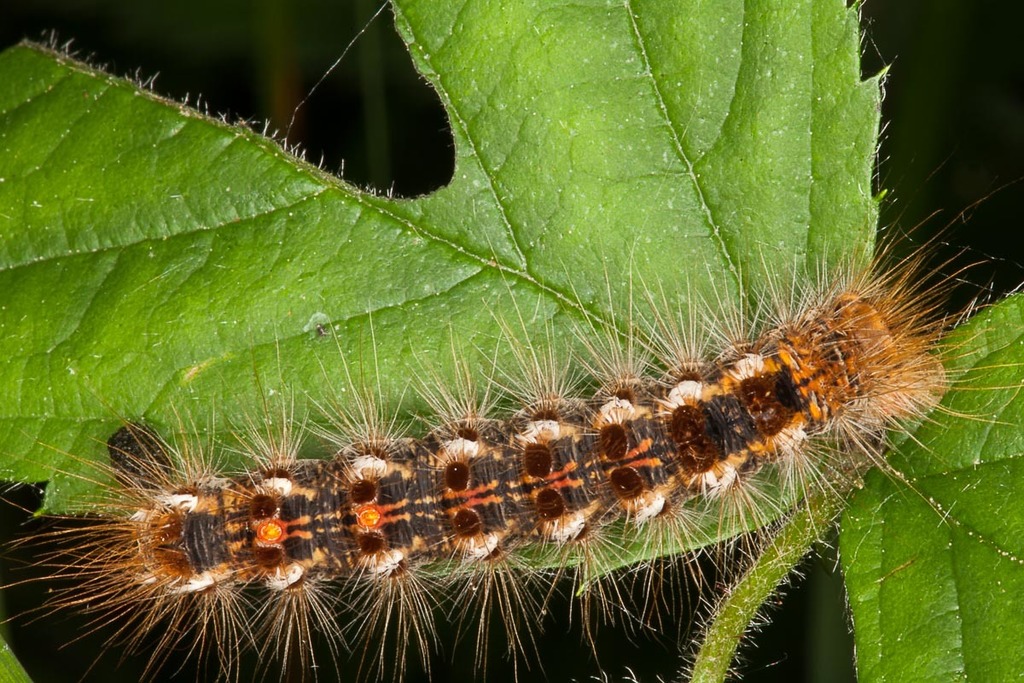
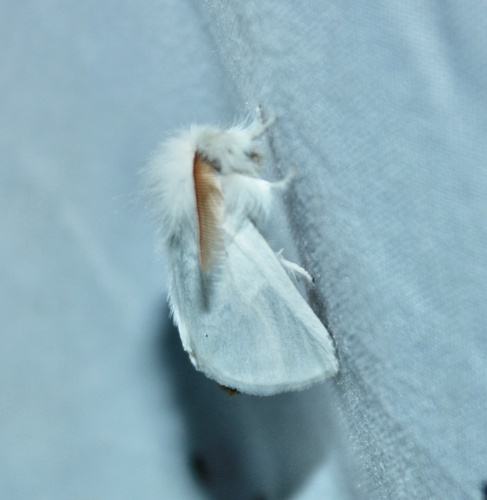
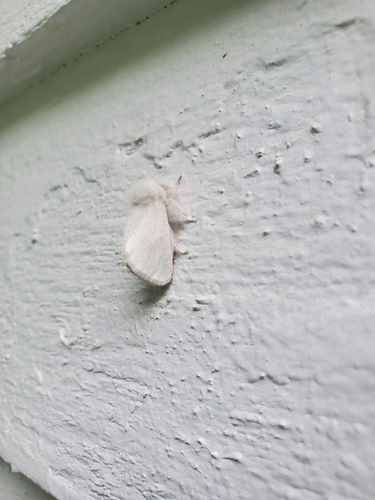
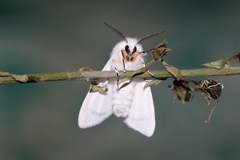
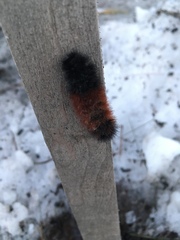
Adult brown-tail moths have white wings, a white hairy body and a brown tuft at the abdomen tip, while the larvae show two red spots near the tail. The larvae live together in silken tents on many trees and their hairs can irritate skin for weeks.
Source: Wikipedia
How to recognize it
Adults have white wings, a white hairy body and a brown hair tuft at the end of the abdomen. Larvae are distinguished by two red spots on the back near the tail.
Source: Wikipedia
Size
The moth’s wingspan ranges from about 36 to 42 mm (1.4 to 1.7 in).
Source: Wikipedia
Does it bite or sting?
Caterpillar hairs are toxic to humans and cause an itchy rash that can last weeks. The irritating hairs can become airborne, so direct contact with the larvae is not required.
Source: Wikipedia
How to get rid of it
In winter or early spring, cut the branch-tip webs and drop them into soapy water or burn them. Apply suitable pesticides before early May, when larvae begin to develop the irritating hairs.
Source: Wikipedia
Where it lives
These tents are common on many plants in late fall and winter when leaves have fallen.
Source: Wikipedia
What it eats
Brown-tail moth larvae feed on a wide range of trees such as pear, apple, maple and oak.
Source: Wikipedia
Life cycle
The moth spends about nine months as larvae (August to April) and the remaining months as egg, pupa and adult. It produces one generation per year with the four stages: egg, larva, pupa and adult.
Source: Wikipedia
Where it comes from
The species is native to Europe, nearby Asian countries and the north coast of Africa.
Source: Wikipedia
Lookalikes
Adults look similar to Euproctis similis, which has a yellow tail tuft, and to Hyphantria cunea, which lacks any tail-tuft colour.
Source: Wikipedia
Where it is found in the US
Recorded in 6 of 51 states and DC. Most records: Maine, Massachusetts, New Hampshire, Montana, California, Connecticut.
Darker = more records. Counts are museum and citizen-science records, not population size.
Source: GBIF
Status: introduced in North America; introduced in Canada; introduced in United States. Source: iNaturalist
Months it is reported in the US
Source: GBIF
More photos


Questions people ask
What do brown-tail moth caterpillars look like?
They have two red spots on the back near the tail and are covered in hairs that can cause skin irritation.
Source: Wikipedia
How can I get rid of the winter webs?
Cut the webs in winter or early spring and either soak them in soapy water or burn them; pesticide treatment before early May also helps.
Source: Wikipedia
Same family (Erebidae)


Sources
- Wikipedia: https://en.wikipedia.org/wiki/Brown-tail_moth
Look it up elsewhere: GBIF · iNaturalist · BugGuide · ITIS · Wikipedia
Text written 2026-10-23 from the sources above and checked sentence by sentence against them. Data fetched 2026-10-22.