 Bug FAQ
Spongy Moth
Lymantria dispar · Order: Lepidoptera · Family: Erebidae
Also called: Gypsy Moth
Source: Wikipedia
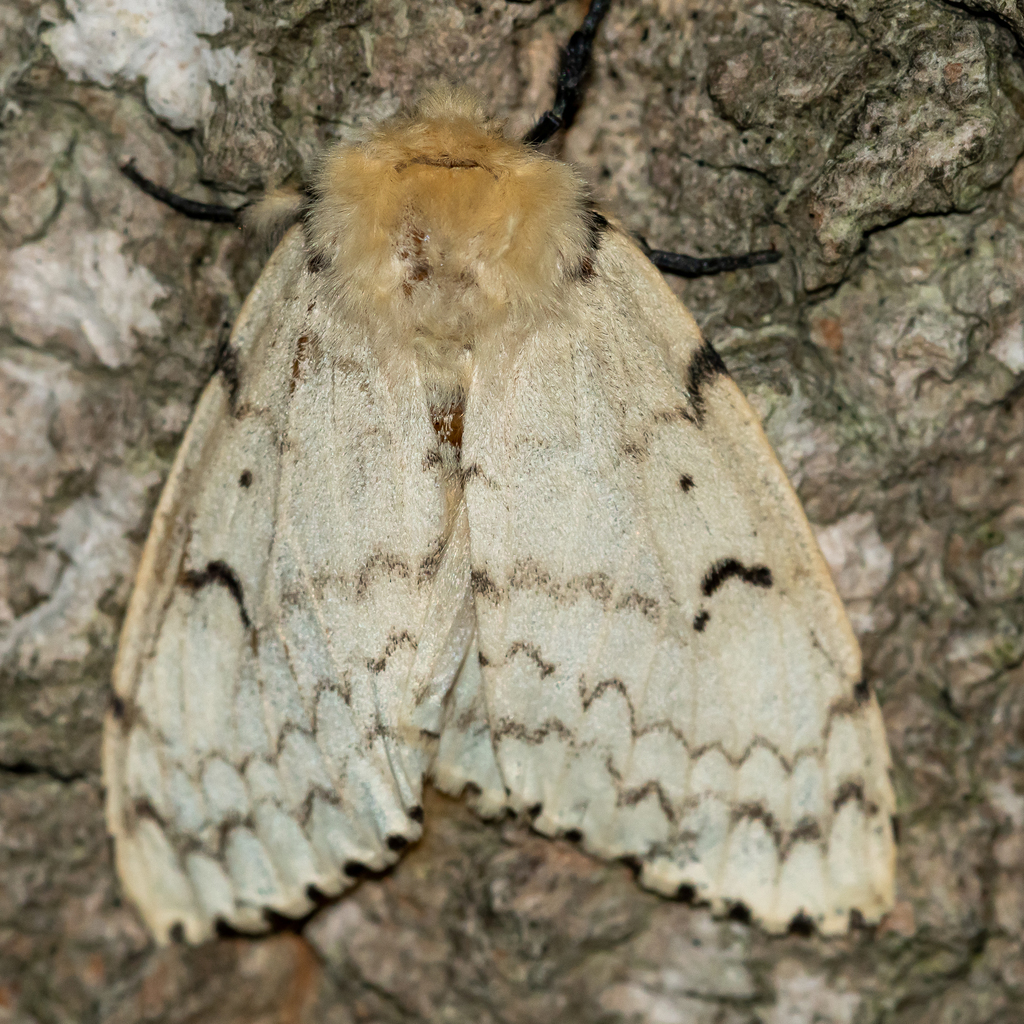
The caterpillars feed on many deciduous and coniferous trees and can cause major loss of foliage during outbreak years. Females lay egg masses on outdoor objects, and the moth can spread to new areas via firewood, vehicles, and other items.
Source: Wikipedia, USDA APHIS
How to recognize it
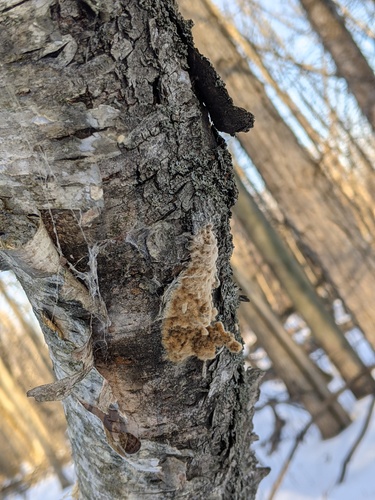
Each egg mass can hold up to about a thousand eggs and is covered with a buff or yellowish hair from the female’s abdomen.
Source: USDA APHIS
Size
Adult moths grow to about 1½ to 2½ inches long when fully grown.
Source: USDA APHIS
Is it a pest in the house?
Female moths lay egg masses on outdoor surfaces such as firewood, trailers, grills, lawn furniture, and toys. The moth can hitchhike on moved vehicles and outdoor items, spreading unnoticed to new locations.
Source: USDA APHIS
How to get rid of it
Biological control agents such as parasitoids and predators have been introduced to help manage the moth. The most effective microbial controls are the Lymantria dispar multicapsid nuclear polyhedrosis virus and the fungus Entomophaga maimaiga. Homeowners in quarantine areas should contact their county Extension office for control options. People outside quarantine zones should report sightings to their state plant health director or regulatory official.
Source: Wikipedia, USDA APHIS
Where it lives
The larvae are polyphagous and live on many deciduous and coniferous trees, sometimes causing severe damage during mass reproduction years.
Source: Wikipedia
What it eats
The caterpillars feed on a wide variety of both deciduous and coniferous trees.
Source: Wikipedia
Life cycle
The species has spread beyond its native range and is now found as an invasive pest on multiple continents.
Source: Wikipedia
When you see it
Outbreak cycles typically occur every eight to twelve years, and climate change is lengthening these cycles.
Source: Wikipedia
Lookalikes
Subspecies like L. d. dispar and L. d. japonica are clearly distinguishable. A key difference is that adult females of the flighted complex can fly, allowing rapid spread if unchecked.
Source: Wikipedia, USDA APHIS
Where it is found in the US
Recorded in 29 of 51 states and DC. Most records: New York, Michigan, Pennsylvania, Massachusetts, Wisconsin, Vermont, Connecticut, New Jersey.
Darker = more records. Counts are museum and citizen-science records, not population size.
Source: GBIF
Status: introduced in North America; introduced in Canada; introduced in United States. Source: iNaturalist
Months it is reported in the US
Source: GBIF
More photos

Questions people ask
How do spongy moths damage my garden?
The caterpillars eat the leaves of many trees and shrubs, which can defoliate and weaken plants during outbreak years.
Source: Wikipedia
Can I spread spongy moths unintentionally?
Yes, egg masses can stick to firewood, vehicles, and outdoor items, moving the pest to new locations.
Source: USDA APHIS
What control methods are available?
Effective controls include specific viruses and fungi, plus biological agents like parasitoids; contact local extension services for help.
Source: Wikipedia, USDA APHIS
Same family (Erebidae)


Sources
- Wikipedia: https://en.wikipedia.org/wiki/Lymantria_dispar
- USDA APHIS: https://www.aphis.usda.gov/plant-pests-diseases/spongy-moth
Look it up elsewhere: GBIF · iNaturalist · BugGuide · ITIS · Wikipedia
Text written 2026-10-22 from the sources above and checked sentence by sentence against them. Data fetched 2026-10-22.