 Bug FAQ
Virginian Tiger Moth
Spilosoma virginica · Order: Lepidoptera · Family: Erebidae
Also called: Virginia Tiger Moth, Yellow Bear, Yellow Woolly Bear, Yellow Woollybear
Source: Wikipedia

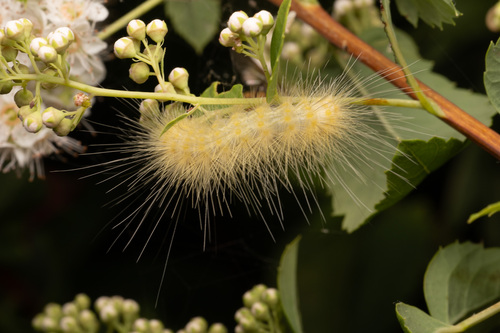
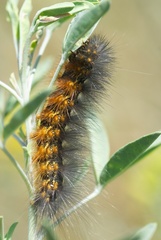
The Virginian tiger moth is a white moth with a darker abdomen and lacks the dark eyes of its close cousin. It lives across northern America, especially in the western regions, and its caterpillars are common in yards and gardens. The larvae eat many low-growing plants and can skeletonize leaves, sometimes harming crops in late summer.
Source: Wikipedia
How to recognize it
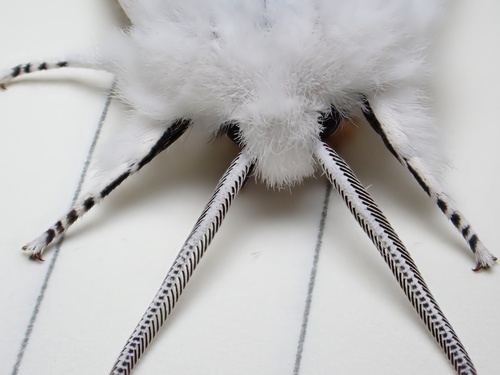
The adult moth is white with a darker abdomen and does not have the dark eyes seen in the agreeable tiger moth.
Source: Wikipedia
Does it bite or sting?
The moth is not poisonous, but its bristles can cause allergic reactions in some people.
Source: Wikipedia
Where it lives
It is found throughout the United States and southern Canada, especially in the western half of North America. Caterpillars are among the most common on garden plants and yard plantings.
Source: Wikipedia
What it eats
Adults feed on a wide variety of low-growing plants such as grass and clover. Larvae eat leaves, often skeletonizing them, and can damage crops when late-summer generations are abundant.
Source: Wikipedia
Life cycle
It usually has two to three generations per year, with one generation overwintering in temperate areas.
Source: Wikipedia
Where it comes from
The species occurs in the United States and southern Canada.
Source: Wikipedia
Lookalikes
It resembles the agreeable tiger moth but lacks the latter's dark eye markings.
Source: Wikipedia
Where it is found in the US
Recorded in 49 of 51 states and DC. Most records: Ohio, Texas, Illinois, Michigan, Virginia, Pennsylvania, New York, Massachusetts.
Darker = more records. Counts are museum and citizen-science records, not population size.
Source: GBIF
Status: native in North America; native in Canada; native in United States. Source: iNaturalist
Months it is reported in the US
Source: GBIF
More photos
Questions people ask
Do they bite or sting?
Some people have an allergic reaction to the bristles on its body.
Source: Wikipedia
Are they a garden pest?
The caterpillars feed on many low-growing plants and can skeletonize leaves, sometimes harming crops in late summer.
Source: Wikipedia
Same family (Erebidae)





Sources
- Wikipedia: https://en.wikipedia.org/wiki/Spilosoma_virginica
Look it up elsewhere: GBIF · iNaturalist · BugGuide · ITIS · Wikipedia
Text written 2026-10-22 from the sources above and checked sentence by sentence against them. Data fetched 2026-10-22.