 Bug FAQ
White Satin Moth
Leucoma salicis · Order: Lepidoptera · Family: Erebidae
Also called: Satin Moth, White Satin
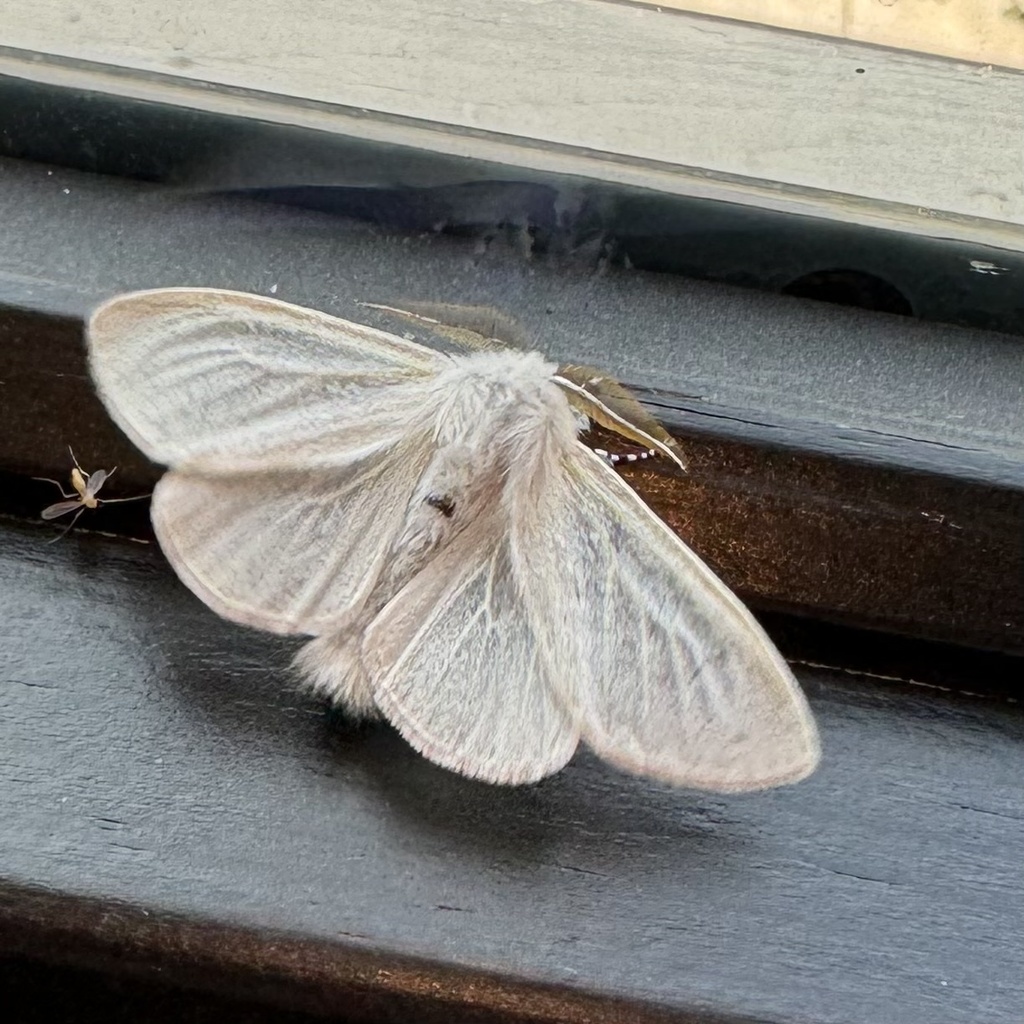
The White Satin Moth has a wingspan of about 37 to 50 mm and is pure white, sometimes showing black spots, with black head, collar and antennae tips, plus black rings on its legs. It flies in June, July and August, with males taking off just before dusk, and its caterpillars eat willow and poplar leaves.
Source: Wikipedia
How to recognize it
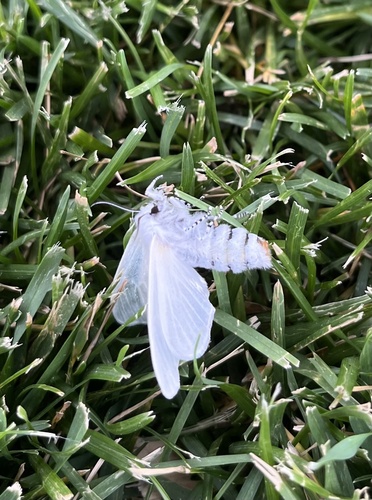
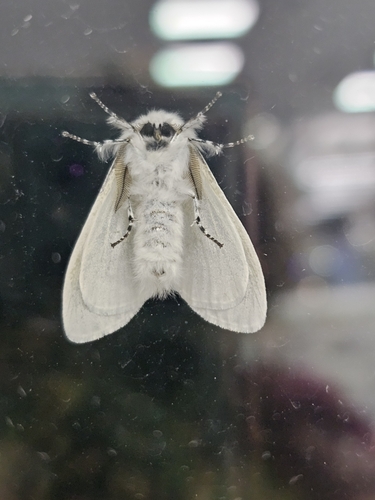
The moth is white, occasionally bearing black spots; its head, collar and the comb-like parts of the antennae are black, and its tibiae and tarsi have broad black bands.
Source: Wikipedia
Size
Wingspan ranges from 37 to 50 mm.
Source: Wikipedia
Where it lives
It prefers damp places such as forest edges, hedges, alleys, parks and gardens, including urban areas.
Source: Wikipedia
What it eats
Caterpillars feed on willow (Salix) and poplar (Populus) species.
Source: Wikipedia
Life cycle
Adults are active in June, July and August; males start flying shortly before dusk.
Source: Wikipedia
When you see it
The moth is generally seen in the summer months of June through August.
Source: Wikipedia
Where it comes from
It occurs across most of Europe, including the British Isles but not the far north, and extends eastward through the Palearctic to Japan, avoiding north-eastern Siberia.
Source: Wikipedia
Lookalikes
It can be confused with Leucoma candida, which is a smaller, more glossy white moth with thicker scaling and narrower wings.
Source: Wikipedia
Where it is found in the US
Recorded in 19 of 51 states and DC. Most records: Montana, Washington, Oregon, California, Michigan, Nevada, Wyoming, Idaho.
Darker = more records. Counts are museum and citizen-science records, not population size.
Source: GBIF
Status: introduced in North America; introduced in United States; introduced in Canada. Source: iNaturalist
Months it is reported in the US
Source: GBIF
More photos


Same family (Erebidae)
 Spongy MothLymantria disparDamages trees, gardens or crops
 Fall Webworm MothHyphantria cuneaDamages trees, gardens or crops
 Brown-tail MothEuproctis chrysorrhoeaCan irritate skin
 Isabella Tiger MothPyrrharctia isabella
 Virginian Tiger MothSpilosoma virginicaCan irritate skin
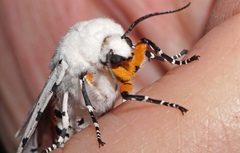 Salt Marsh MothEstigmene acreaDamages trees, gardens or crops
Sources
- Wikipedia: https://en.wikipedia.org/wiki/Leucoma_salicis
Look it up elsewhere: GBIF · iNaturalist · BugGuide · ITIS · Wikipedia
Text written 2026-10-24 from the sources above and checked sentence by sentence against them. Data fetched 2026-10-24.