 Bug FAQ
Western Tussock Moth
Orgyia vetusta · Order: Lepidoptera · Family: Erebidae
Source: Wikipedia
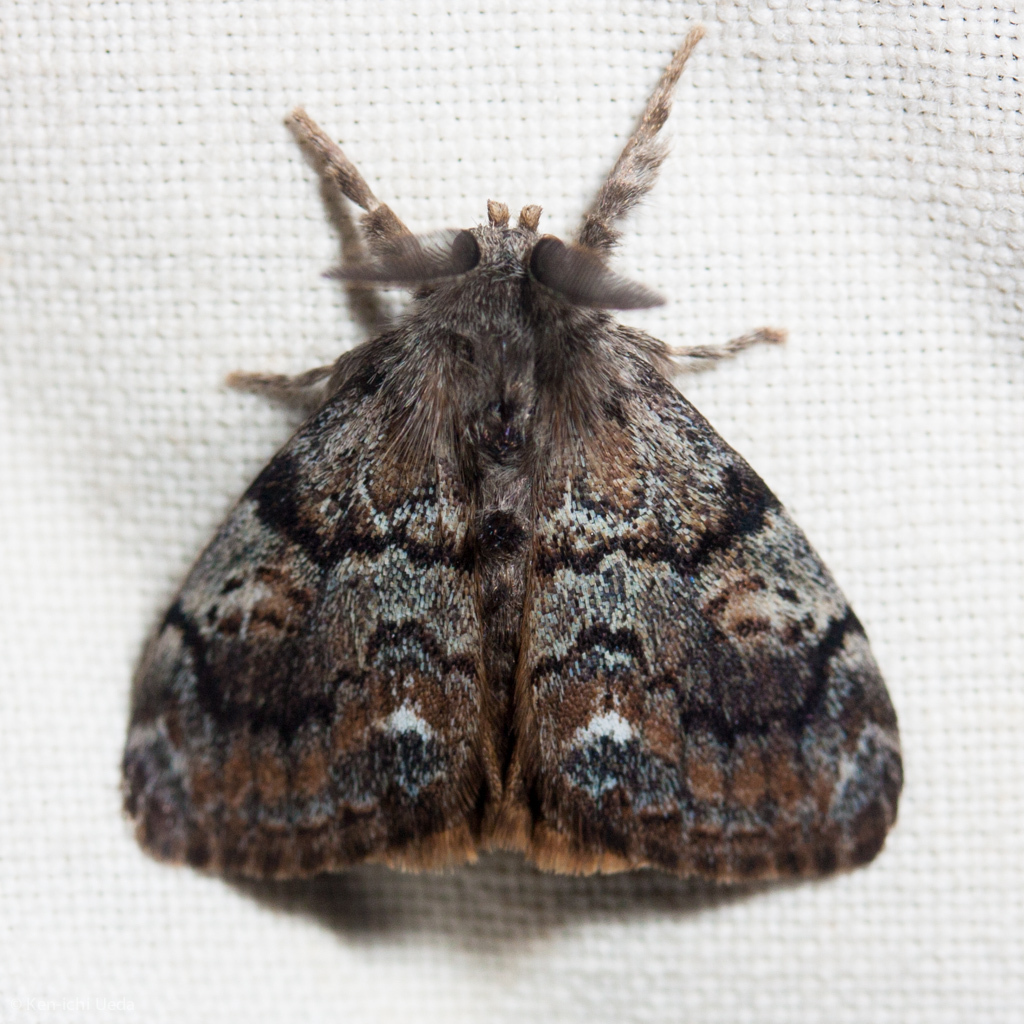
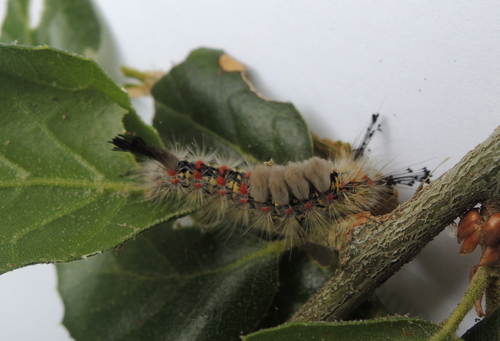
Caterpillars have tiny hairs that may irritate human skin. They can also damage citrus trees in Southern California.
Source: Wikipedia
How to recognize it
They are found on most California oak species and many fruit, nut, and ornamental trees.
Source: Wikipedia
Size
Females cannot fly, while males are winged.
Source: Wikipedia
Does it bite or sting?
The hairs on the larvae may cause mild skin irritation or allergic reactions in humans.
Source: Wikipedia
How to get rid of it
Releasing beneficial insects has been studied as a way to control their populations.
Source: Wikipedia
Where it lives
They occur in the Pacific states, British Columbia, and have been reported on the Gulf Coast such as Louisiana.
Source: Wikipedia
What it eats
Caterpillars feed on oak leaves and a variety of fruit, nut, and ornamental trees.
Source: Wikipedia
Life cycle
Eggs are laid in white masses that survive the winter. Caterpillars hatch in early spring and disperse only a little by hanging on silk threads. Adults emerge from their cocoons from June through August.
Source: Wikipedia
When you see it
Caterpillars appear from February to May, and adults from June to August.
Source: Wikipedia
Where it comes from
The species is native to the western United States and Canada.
Source: Wikipedia
Lookalikes
Other tussock moths in the Erebidae family, like the gypsy moth, look similar.
Source: Wikipedia
Where it is found in the US
Recorded in 5 of 51 states and DC. Most records: California, Oregon, Nevada, Idaho, Washington.
Darker = more records. Counts are museum and citizen-science records, not population size.
Source: GBIF
Status: native in United States. Source: iNaturalist
Months it is reported in the US
Source: GBIF
More photos


Questions people ask
What plants do Western tussock moth caterpillars eat?
They feed on oak leaves and many fruit, nut, and ornamental trees such as walnut and willow.
Source: Wikipedia
When will I see the caterpillars and adults?
Caterpillars hatch in early spring (February-May) and adults emerge from June to August.
Source: Wikipedia
Can the caterpillars bite or sting me?
Their hairs can cause minor skin irritation or allergic reactions if touched.
Source: Wikipedia
How can I reduce their numbers?
Studies have looked at using beneficial insects to keep their populations down.
Source: Wikipedia
Same family (Erebidae)
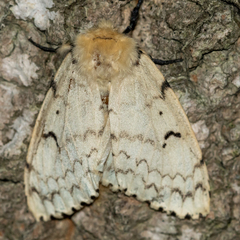 Spongy MothLymantria disparDamages trees, gardens or crops
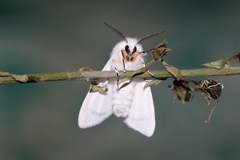 Fall Webworm MothHyphantria cuneaDamages trees, gardens or crops
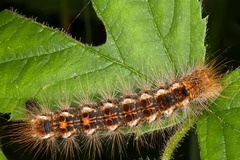 Brown-tail MothEuproctis chrysorrhoeaCan irritate skin
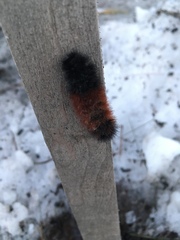 Isabella Tiger MothPyrrharctia isabella
 Virginian Tiger MothSpilosoma virginicaCan irritate skin
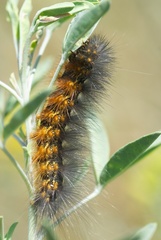 Salt Marsh MothEstigmene acrea
Sources
- Wikipedia: https://en.wikipedia.org/wiki/Western_tussock_moth
Look it up elsewhere: GBIF · iNaturalist · BugGuide · Wikipedia
Text written 2026-10-23 from the sources above and checked sentence by sentence against them. Data fetched 2026-10-23.