 Bug FAQ
Tiki hut litter moth
Simplicia cornicalis · Order: Lepidoptera · Family: Erebidae
Source: Wikipedia
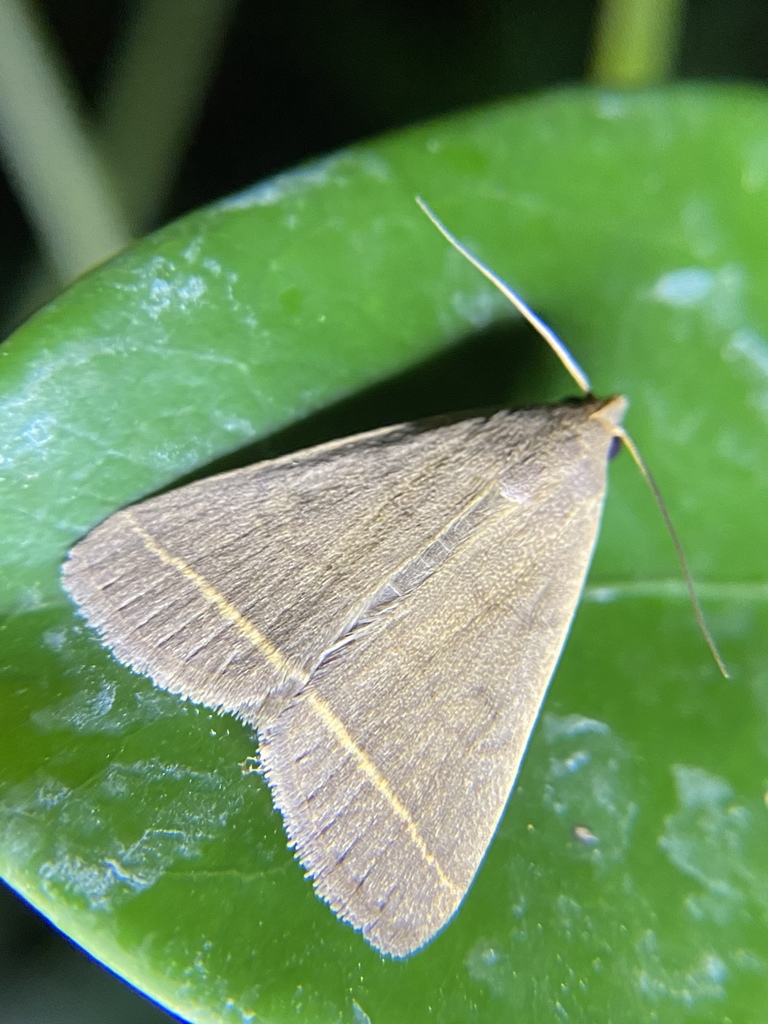
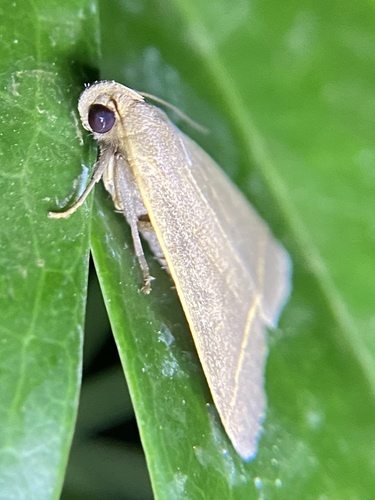
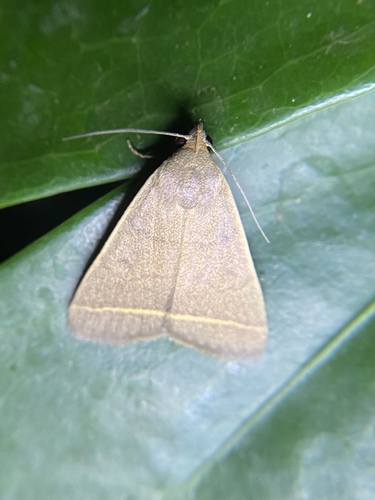
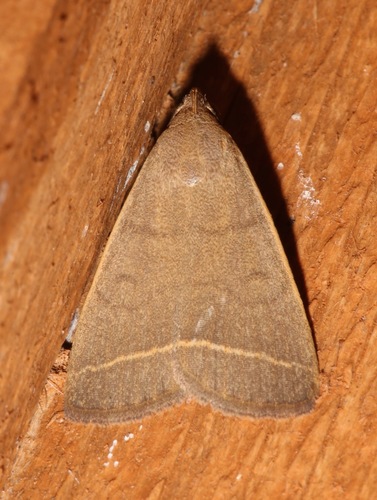
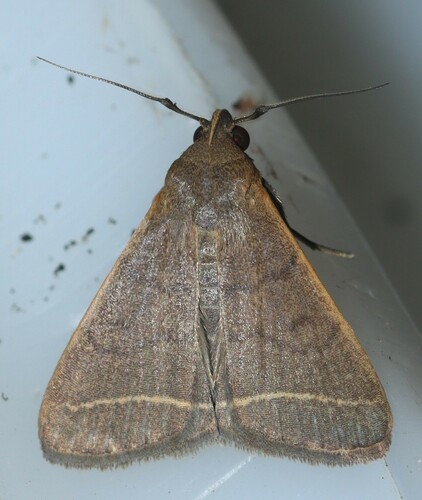
Adults have a wingspan of about 20 to 38 mm and a body that is ochre-brown in colour.
Source: Wikipedia
How to recognize it
The forewings show a curved, scalloped post-medial line. The hindwings are darkly suffused but lack the grey shading seen in similar species.
Source: Wikipedia
Size
The wingspan ranges from 20 mm to 38 mm.
Source: Wikipedia
Where it lives
It occurs in south-eastern Asia and the Pacific region. It has become established in southern Florida and Louisiana as an introduced species.
Source: Wikipedia
What it eats
Larvae feed on dead leaves.
Source: Wikipedia
Lookalikes
Unlike some related moths, its hindwings lack the typical grey coloration, helping to tell it apart.
Source: Wikipedia
Where it is found in the US
Recorded in 10 of 51 states and DC. Most records: Texas, Florida, Louisiana, Hawaii, Georgia, Alabama, Mississippi, New Jersey.
Darker = more records. Counts are museum and citizen-science records, not population size.
Source: GBIF
Status: introduced in North America; introduced in United States. Source: iNaturalist
Months it is reported in the US
Source: GBIF
More photos
Questions people ask
What damage can the larvae cause to my home?
The larvae may damage roofs that are made from dried palm leaves.
Source: Wikipedia
How can I tell this moth apart from similar species?
Its hindwings are darkly suffused but do not have the grey color that other species show.
Source: Wikipedia
Where is this moth originally from?
It is native to south-eastern Asia and many Pacific islands, including places like Thailand, Fiji, and parts of Australia.
Source: Wikipedia
Same family (Erebidae)
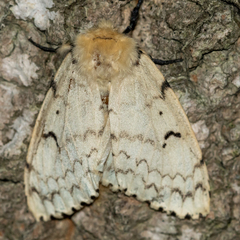 Spongy MothLymantria disparDamages trees, gardens or crops
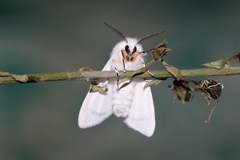 Fall Webworm MothHyphantria cuneaDamages trees, gardens or crops
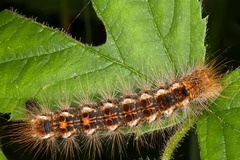 Brown-tail MothEuproctis chrysorrhoeaCan irritate skin
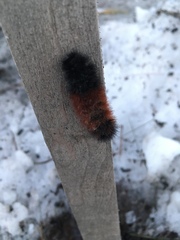 Isabella Tiger MothPyrrharctia isabella
 Virginian Tiger MothSpilosoma virginicaCan irritate skin
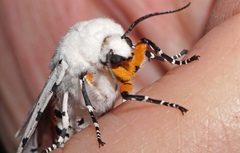 Salt Marsh MothEstigmene acreaDamages trees, gardens or crops
Sources
- Wikipedia: https://en.wikipedia.org/wiki/Simplicia_cornicalis
Look it up elsewhere: GBIF · iNaturalist · BugGuide · ITIS · Wikipedia
Text written 2026-10-26 from the sources above and checked sentence by sentence against them. Data fetched 2026-10-26.