 Bug FAQ
Three-staff Underwing
Catocala amestris · Order: Lepidoptera · Family: Erebidae
Also called: Three-staffed Underwing, leadplant underwing
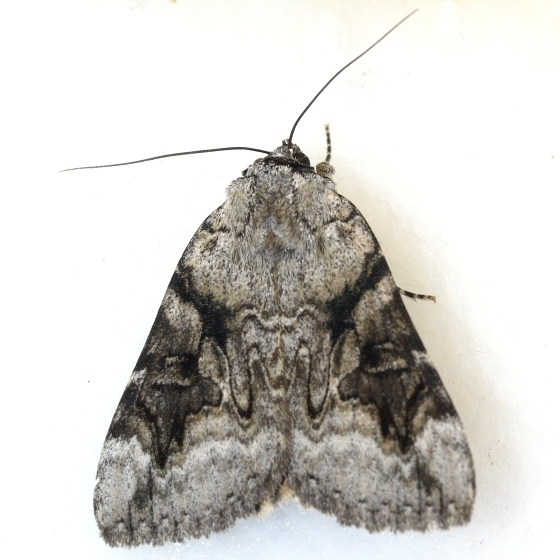
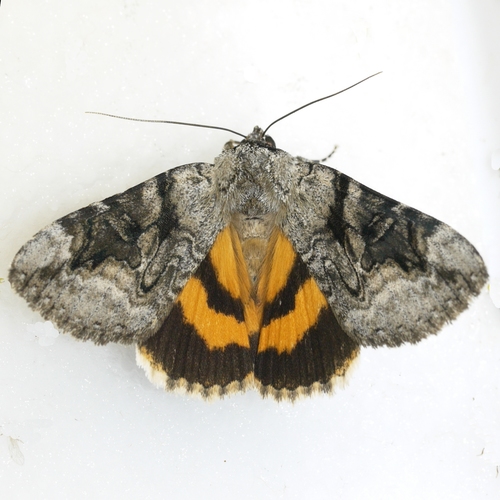
The three-staff underwing has a wingspan of about 1.6 to 1.8 in (4 to 4.5 cm). It shows dull brown-gray forewings with a kidney-shaped blotch and wavy lines, while the hindwings are bright yellow-orange crossed by two wavy black lines. Adults appear from June to August in dry-mesic prairie and oak-forest areas of North America, but are hard to find because the larvae feed only on Amorpha species.
Source: Wikipedia
How to recognize it
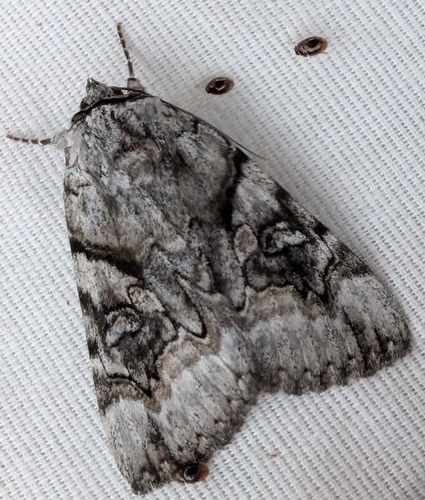
Forewings are brownish-gray with a kidney-shaped blotch and mixed wavy lines. Hindwings are bright yellow-orange with two wavy black lines. Caterpillars are bluish-white with yellow on the top, an orange side band and seven thin black side lines.
Source: Wikipedia
Size
Wingspan ranges from 1.6 to 1.8 inches (4 to 4.5 cm).
Source: Wikipedia
Where it lives
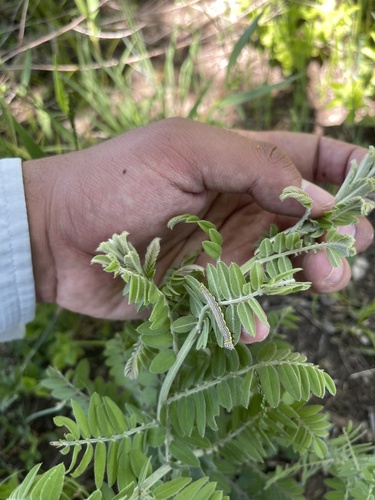
Seen June-August in dry-mesic prairie lands and oak forests. The species relies on a single host plant genus, Amorpha, making it scarce even in suitable habitats.
Source: Wikipedia
What it eats
Larvae feed only on plants of the genus Amorpha.
Source: Wikipedia
When you see it
Adults are active from June through August.
Source: Wikipedia
Where it comes from
It occurs in North America.
Source: Wikipedia
Where it is found in the US
Recorded in 21 of 51 states and DC. Most records: Wisconsin, Florida, Oklahoma, Texas, Michigan, Colorado, Minnesota, Nebraska.
Darker = more records. Counts are museum and citizen-science records, not population size.
Source: GBIF
Status: native in North America; native in Canada. Source: iNaturalist
Months it is reported in the US
Source: GBIF
More photos
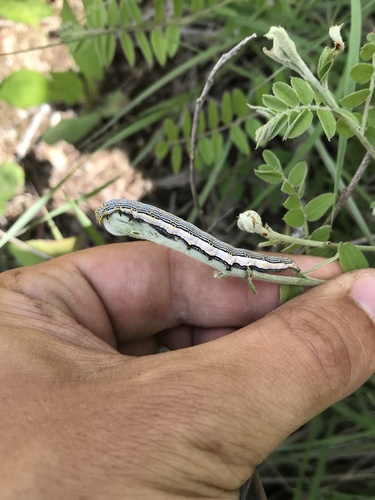
Questions people ask
When can I see the three-staff underwing?
Adults are on the wing from June to August.
Source: Wikipedia
Where does this moth live?
It is found in North America, especially in dry-mesic prairie and oak-forest habitats.
Source: Wikipedia
Same family (Erebidae)
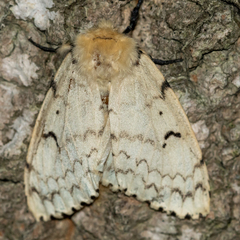 Spongy MothLymantria disparDamages trees, gardens or crops
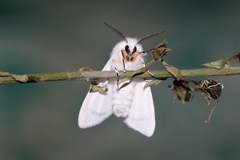 Fall Webworm MothHyphantria cuneaDamages trees, gardens or crops
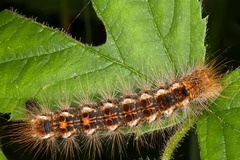 Brown-tail MothEuproctis chrysorrhoeaCan irritate skin
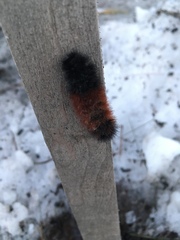 Isabella Tiger MothPyrrharctia isabella
 Virginian Tiger MothSpilosoma virginicaCan irritate skin
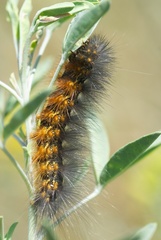 Salt Marsh MothEstigmene acrea
Sources
- Wikipedia: https://en.wikipedia.org/wiki/Catocala_amestris
Look it up elsewhere: GBIF · iNaturalist · BugGuide · ITIS · Wikipedia
Text written 2026-10-24 from the sources above and checked sentence by sentence against them. Data fetched 2026-10-24.