 Bug FAQ
Three-cornered Alfalfa Hopper
Spissistilus festinus · Order: Hemiptera · Family: Membracidae
Also called: Membracid bug, threecornered alfalfa treehopper
Source: Wikipedia

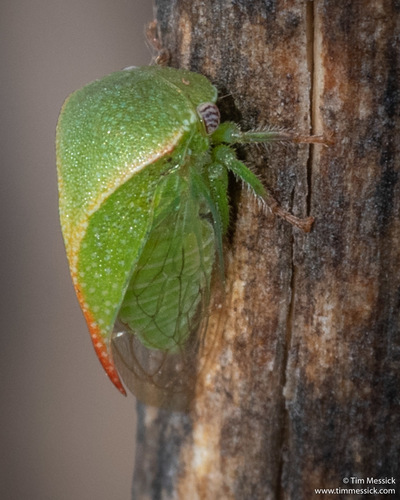
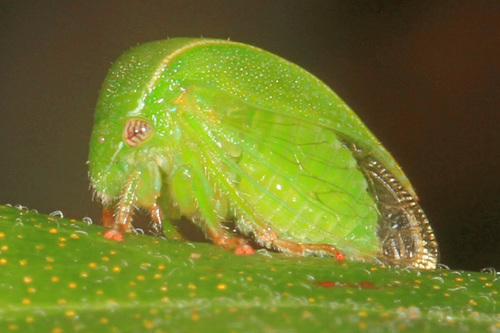
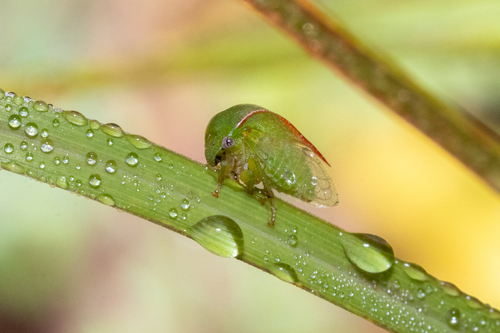
Adults are about 6-7 mm long and are light green when alive, turning orange-straw when dried. Males are noticeably smaller than females and have a red tint on the top of the pronotum. They live across Canada to the West Indies, most commonly in the southern United States.
Source: Wikipedia
How to recognize it
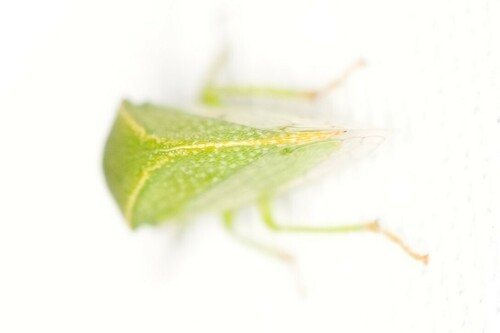
Live adults are light green; dried specimens look deep orange to straw coloured. Males are smaller than females and show a red tint on the dorsal pronotum.
Source: Wikipedia
Size
Adults measure about 6-7 mm in length.
Source: Wikipedia
Is it a pest in the house?
They are a serious threat to the U.S. wine industry because they transmit grapevine red blotch virus. Their feeding and reproduction cause significant damage to many plant hosts, earning them pest status.
Source: Wikipedia
How to get rid of it
Research has examined using predators to control their populations in crops. Red-lipped green lacewing larvae can kill all life stages of this hopper.
Source: Wikipedia
Where it lives
They are found from Canada through the West Indies, especially in the southern United States.
Source: Wikipedia
What it eats
They feed on phloem sap using piercing-sucking mouthparts, probing petioles and shoots.
Source: Wikipedia
Life cycle
They undergo incomplete metamorphosis: egg, nymph, then adult. Nymph development takes about 18-33 days, longer if temperatures differ from 30 °C.
Source: Wikipedia
When you see it
Females mate 7 to 14 days after reaching adulthood. A female can lay over 220 eggs over a 38-day reproductive period, carrying 21 to 30 eggs at a time.
Source: Wikipedia
Where it comes from
Their range spans Canada to the West Indies, with the highest occurrence in the southern U.S.
Source: Wikipedia
Where it is found in the US
Recorded in 33 of 51 states and DC. Most records: Mississippi, Texas, North Carolina, Arizona, Tennessee, Florida, Arkansas, Louisiana.
Darker = more records. Counts are museum and citizen-science records, not population size.
Source: GBIF
Months it is reported in the US
Source: GBIF
More photos
Questions people ask
How can I tell males from females?
Males are smaller and have a red tint on the top of the pronotum, while females lack this coloration.
Source: Wikipedia
Where are these hoppers found?
They occur from Canada to the West Indies, most commonly in the southern United States.
Source: Wikipedia
Why are they a problem for vineyards?
They spread grapevine red blotch virus, which can damage grape crops and affect wine production.
Source: Wikipedia
Same family (Membracidae)
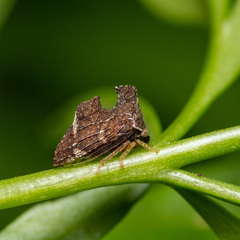 Keeled TreehopperEntylia carinata
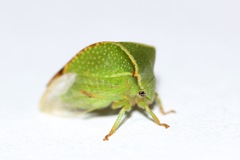 Buffalo TreehopperStictocephala bisoniaDamages trees, gardens or crops
 Horned TreehopperCentrotus cornutus
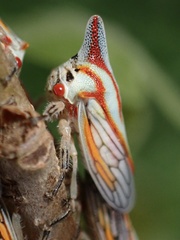 Oak TreehopperPlatycotis vittata
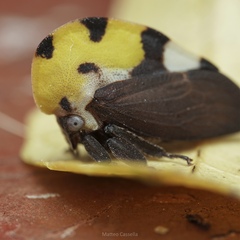 Mexican TreehopperMembracis mexicanaDamages trees, gardens or crops
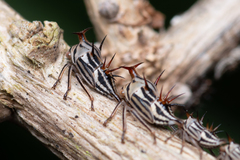 Lantana treehopperAconophora compressaDamages trees, gardens or crops
Sources
- Wikipedia: https://en.wikipedia.org/wiki/Spissistilus_festinus
Look it up elsewhere: GBIF · iNaturalist · BugGuide · ITIS · Wikipedia
Text written 2026-10-23 from the sources above and checked sentence by sentence against them. Data fetched 2026-10-22.