 Bug FAQ
Oak Treehopper
Platycotis vittata · Order: Hemiptera · Family: Membracidae
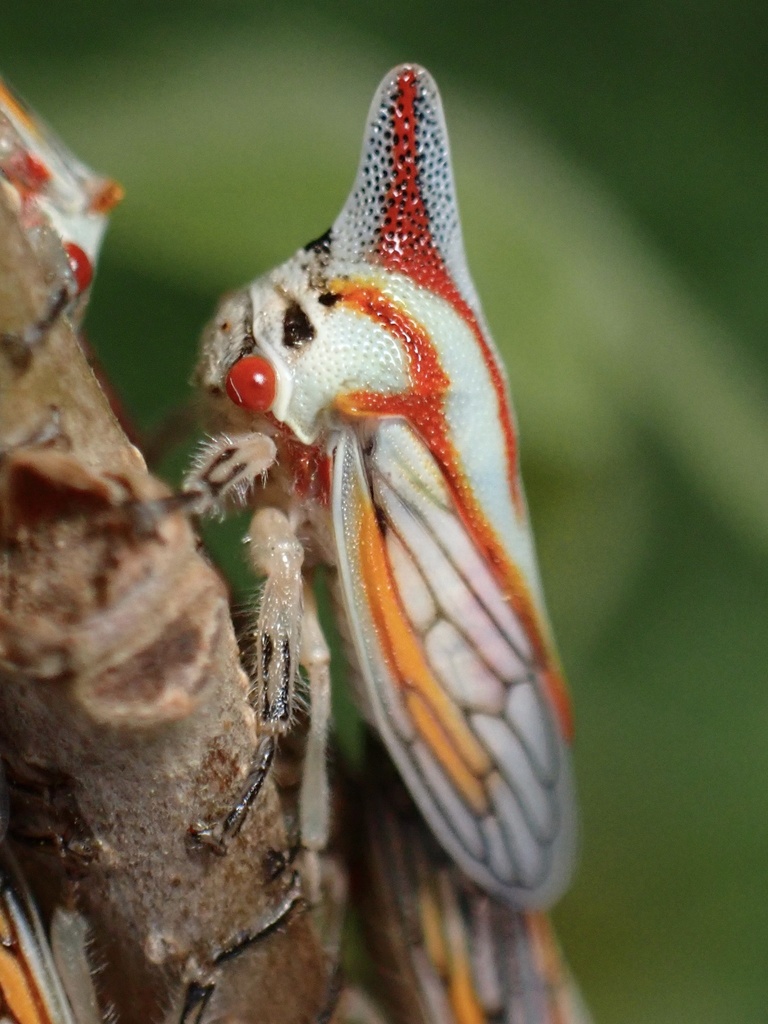
Adult oak treehoppers are about a centimeter long, ranging from 9 to 13 mm. They live on oak trees and are found throughout North America. Adults look after their young, showing parental care.
Source: Wikipedia
How to recognize it
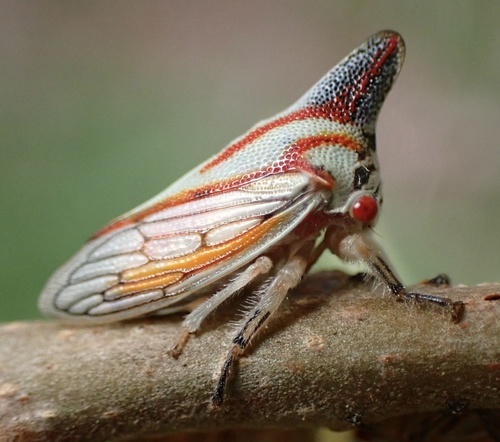
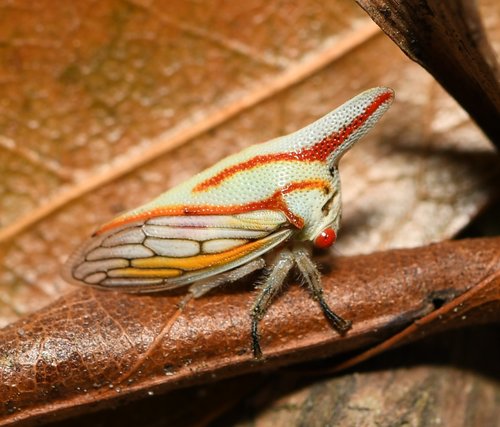
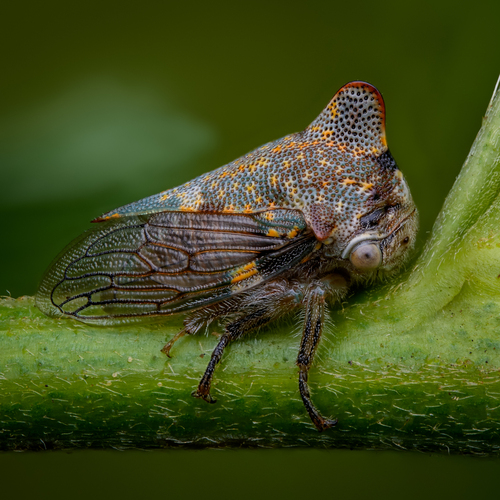
Their bodies can be sea-green, bronze, olive-green, pale blue with red dots, or have four lengthwise stripes. The wings are clear with a yellow front edge and black veins.
Source: Wikipedia
Size
Adults measure 9 to 13 mm (0.35 to 0.5 in) in length.
Source: Wikipedia
Where it lives
They are specialists that live on oak trees.
Source: Wikipedia
What it eats
They feed on oak trees.
Source: Wikipedia
Life cycle
Adults protect their nymphs, showing parental care.
Source: Wikipedia
Where it comes from
They occur in North America.
Source: Wikipedia
Lookalikes
The species is also known as Platycotis vittatus.
Source: Wikipedia
Where it is found in the US
Recorded in 31 of 51 states and DC. Most records: Virginia, North Carolina, Maryland, Florida, Texas, California, Ohio, Georgia.
Darker = more records. Counts are museum and citizen-science records, not population size.
Source: GBIF
Status: native in North America; native in United States; native in Canada. Source: iNaturalist
Months it is reported in the US
Source: GBIF
More photos

Questions people ask
What do oak treehoppers look like?
They may be sea-green, bronze, olive-green, pale blue with red dots, or have four lengthwise stripes, and their clear wings have a yellow front margin and black veins.
Source: Wikipedia
Do oak treehoppers care for their young?
Yes, adult oak treehoppers protect their nymphs.
Source: Wikipedia
Same family (Membracidae)
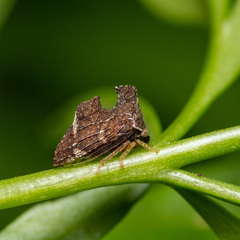 Keeled TreehopperEntylia carinata
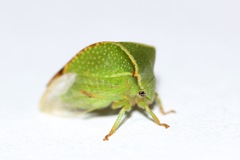 Buffalo TreehopperStictocephala bisoniaDamages trees, gardens or crops
 Horned TreehopperCentrotus cornutus
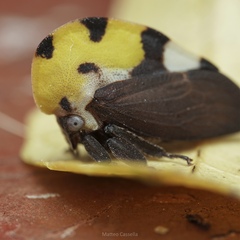 Mexican TreehopperMembracis mexicanaDamages trees, gardens or crops
 Three-cornered Alfalfa HopperSpissistilus festinusDamages trees, gardens or crops
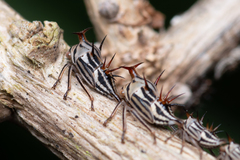 Lantana treehopperAconophora compressaDamages trees, gardens or crops
Sources
- Wikipedia: https://en.wikipedia.org/wiki/Platycotis_vittata
Look it up elsewhere: GBIF · iNaturalist · BugGuide · Wikipedia
Text written 2026-10-22 from the sources above and checked sentence by sentence against them. Data fetched 2026-10-22.