 Bug FAQ
Mexican Treehopper
Membracis mexicana · Order: Hemiptera · Family: Membracidae
Source: Wikipedia
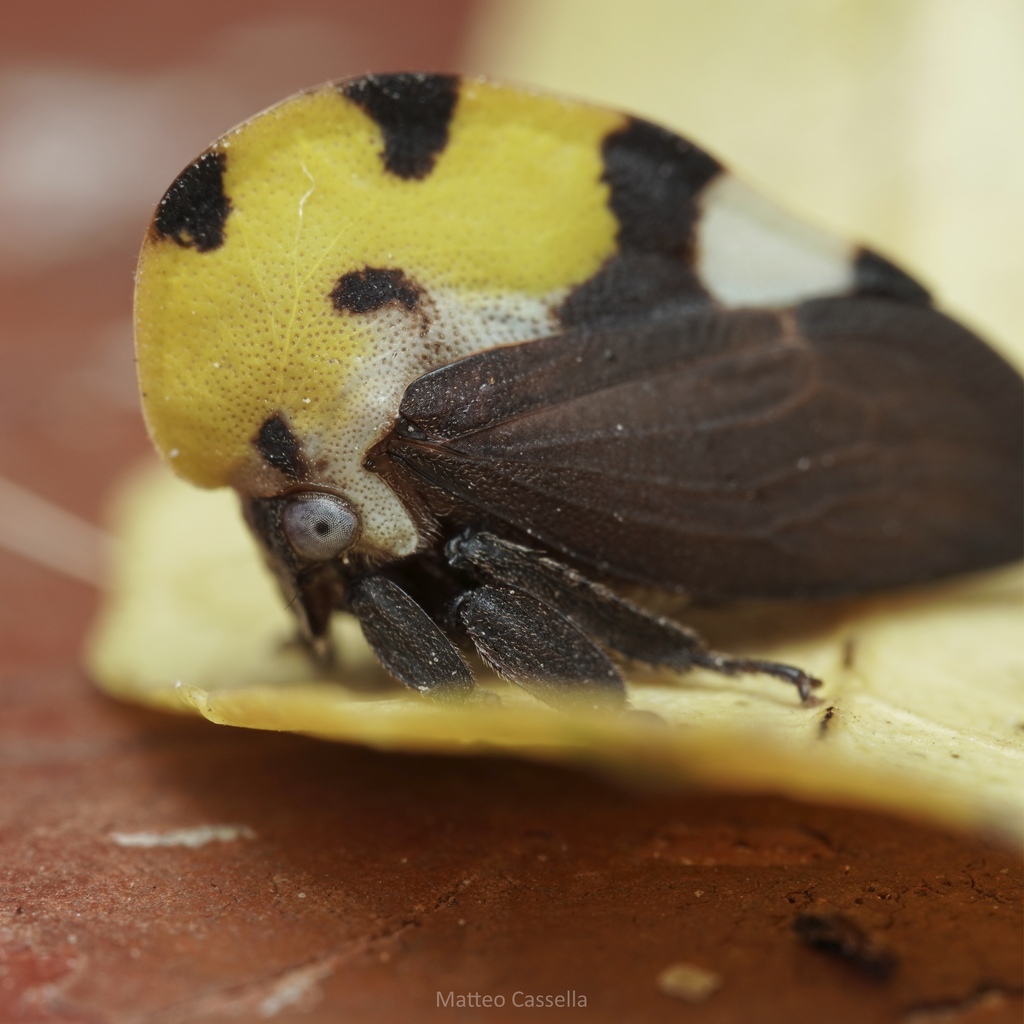
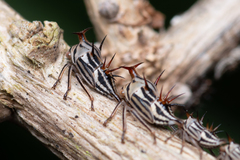
Adults are black with yellow markings, while nymphs start black and later turn white with three black spots and a reddish belt separating the thorax and abdomen. The species ranges from California down through Central and South America to Colombia and Ecuador. Adults can cause minor damage to avocado crops.
Source: Wikipedia
How to recognize it
Adults are black with yellow markings; nymphs begin black and later become white with three black dots and a reddish belt between thorax and abdomen.
Source: Wikipedia
Is it a pest in the house?
Adults are minor pests of avocado crops.
Source: Wikipedia
Where it lives
It is found from California through Colombia and Ecuador.
Source: Wikipedia
What it eats
Adults feed on avocado crops and are considered minor pests.
Source: Wikipedia
Where it comes from
Its distribution extends from California to Colombia and Ecuador.
Source: Wikipedia
Status: native in North America. Source: iNaturalist
Questions people ask
What does the Mexican Treehopper look like?
Adults are black with yellow markings; nymphs start black and later become white with three black spots and a reddish belt between thorax and abdomen.
Source: Wikipedia
Where can I find Mexican Treehoppers?
They are distributed from California down through Colombia and Ecuador.
Source: Wikipedia
Same family (Membracidae)
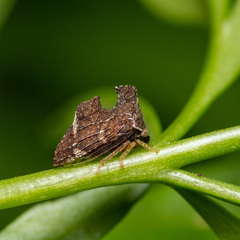 Keeled TreehopperEntylia carinata
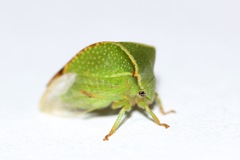 Buffalo TreehopperStictocephala bisoniaDamages trees, gardens or crops
 Horned TreehopperCentrotus cornutus
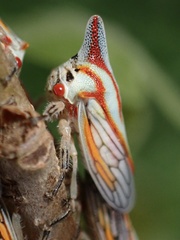 Oak TreehopperPlatycotis vittata
 Three-cornered Alfalfa HopperSpissistilus festinusDamages trees, gardens or crops
 Lantana treehopperAconophora compressaDamages trees, gardens or crops
Sources
- Wikipedia: https://en.wikipedia.org/wiki/Membracis_mexicana
Look it up elsewhere: GBIF · iNaturalist · BugGuide · Wikipedia
Text written 2026-10-22 from the sources above and checked sentence by sentence against them. Data fetched 2026-10-22.