 Bug FAQ
Buffalo Treehopper
Stictocephala bisonia · Order: Hemiptera · Family: Membracidae
Also called: American buffalo treehopper
Source: Wikipedia
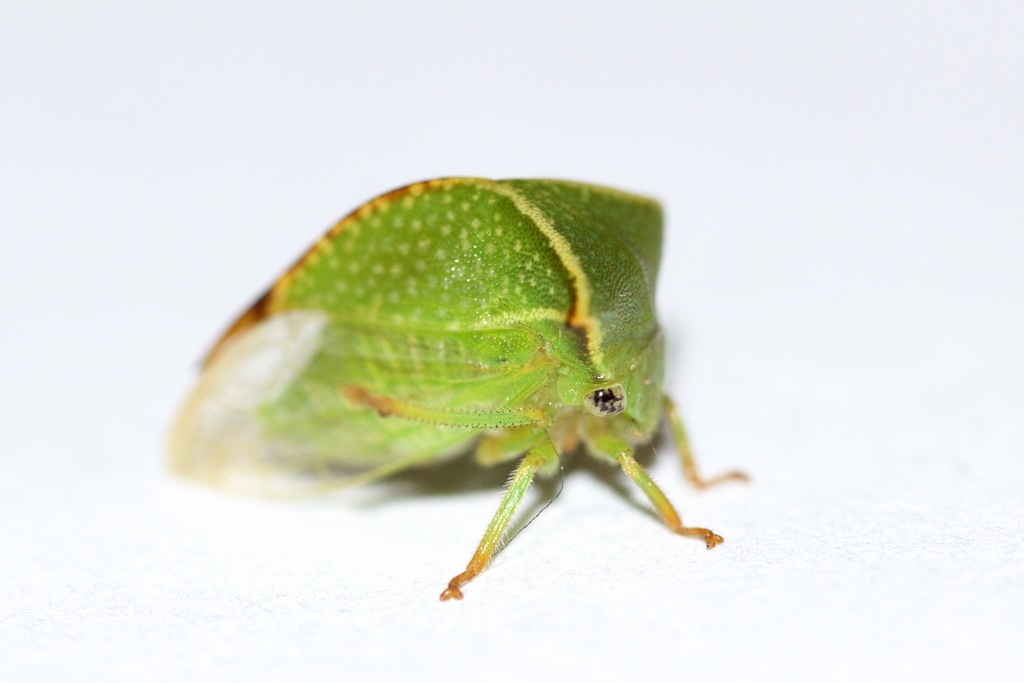
They feed on plant sap from trees such as black locust, clover, elm, goldenrod and willow. Adults mate in summer, females lay eggs July-October, and nymphs emerge the next May-June before becoming adults.
Source: Wikipedia
How to recognize it
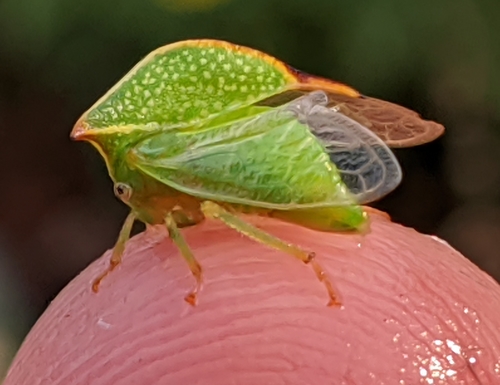
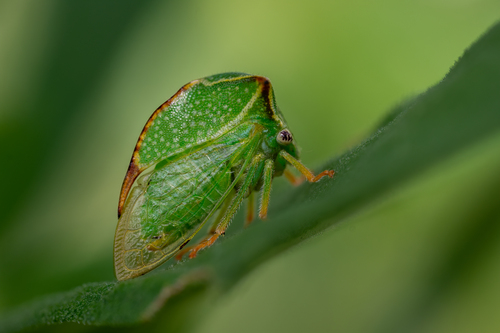
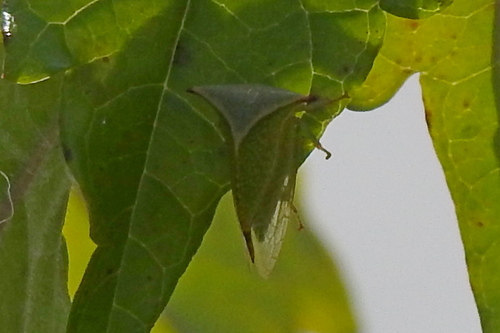
Their bright green color and triangular shape help them blend in as thorns or twig-like bumps. The overall outline vaguely resembles the profile of an American bison.
Source: Wikipedia
Size
Adults measure about 6 to 8 mm (0.24 to 0.31 in) and have clear wings.
Source: Wikipedia
Is it a pest in the house?
It can be an occasional pest of fruit trees and may harm young orchard trees, especially apples. The species has become invasive in parts of Europe.
Source: Wikipedia
Where it lives
Both adults and nymphs live on trees where they suck sap with specialized mouthparts.
Source: Wikipedia
What it eats
They prefer the sap of black locust, clover, elm, goldenrod and willow.
Source: Wikipedia
Life cycle
Mating takes place in summer, and females lay eggs from July through October. Eggs hatch into nymphs in May-June; the nymphs molt several times over about six weeks before becoming adults. Adults return to trees to continue feeding and reproducing.
Source: Wikipedia
When you see it
Mating occurs during the summer months.
Source: Wikipedia
Where it comes from
Native to North America, it now occurs widely in southern Europe, the Near East and North Africa.
Source: Wikipedia
Lookalikes
It is sometimes listed under the name Ceresa bisonia.
Source: Wikipedia
Where it is found in the US
Recorded in 38 of 51 states and DC. Most records: Utah, Ohio, Colorado, New York, Pennsylvania, Massachusetts, Wyoming, Illinois.
Darker = more records. Counts are museum and citizen-science records, not population size.
Source: GBIF
Months it is reported in the US
Source: GBIF
More photos
Questions people ask
What trees can they damage?
They may damage fruit trees and young orchard trees, particularly apple trees.
Source: Wikipedia
Where are they found?
Originally from North America, they are now common in southern Europe, the Near East and North Africa.
Source: Wikipedia
How can I recognize a buffalo treehopper?
Look for a small (6-8 mm) bright-green bug with a triangular, bison-shaped profile that blends in with twigs or thorns.
Source: Wikipedia
Same family (Membracidae)
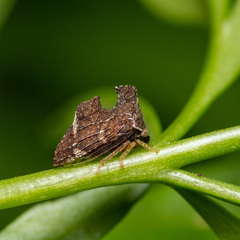 Keeled TreehopperEntylia carinata
 Horned TreehopperCentrotus cornutus
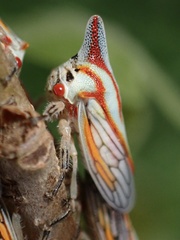 Oak TreehopperPlatycotis vittata
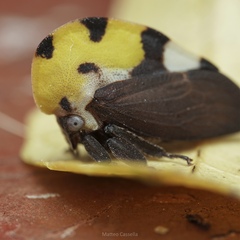 Mexican TreehopperMembracis mexicanaDamages trees, gardens or crops
 Three-cornered Alfalfa HopperSpissistilus festinusDamages trees, gardens or crops
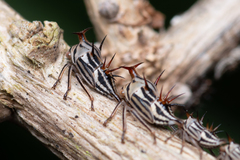 Lantana treehopperAconophora compressaDamages trees, gardens or crops
Sources
- Wikipedia: https://en.wikipedia.org/wiki/Buffalo_treehopper
Look it up elsewhere: GBIF · iNaturalist · BugGuide · Wikipedia
Text written 2026-10-22 from the sources above and checked sentence by sentence against them. Data fetched 2026-10-22.