 Bug FAQ
Lantana treehopper
Aconophora compressa · Order: Hemiptera · Family: Membracidae
Source: Wikipedia
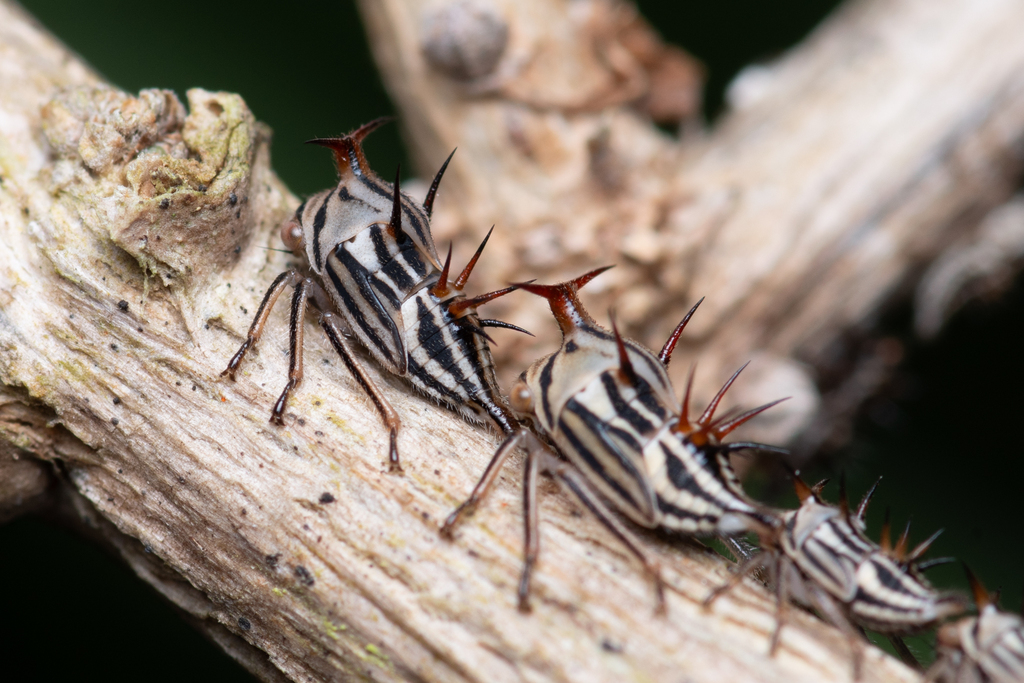
The Lantana treehopper is a small brown bug about 8 mm long with a thorn-shaped body. It feeds in groups on the sap of Lantana, other Verbenaceae, and ornamental plants, often covering stems with honeydew that encourages sooty mold and can defoliate trees. Heavy infestations can spread onto other garden plants, causing further damage.
Source: Wikipedia
How to recognize it
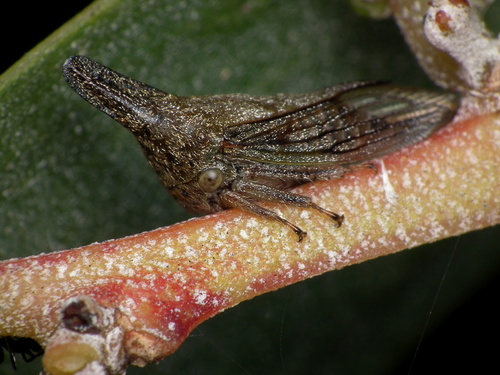
The bug is brown and up to 8 mm long with a thorn-shaped body.
Source: Wikipedia
Size
Adults reach about 8 mm in length.
Source: Wikipedia
Is it a pest in the house?
Heavy infestations coat branches with honeydew, leading to sooty mold, defoliation, and yellowed lawns. Large populations on fiddlewood can spill over onto other garden plants.
Source: Wikipedia
How to get rid of it
It prefers ornamental Lippia species and lemon verbena, which led to its rejection as a biocontrol agent.
Source: Wikipedia
Where it lives
It was introduced to Australia in 1995 for biological control of Lantana camara. Since then it has also become common on fiddlewood (Citharexylum spinosum).
Source: Wikipedia
What it eats
The treehopper gathers in large numbers to suck sap from plant stems. Its known hosts are mainly in the verbena family, especially Lantana in its native range and ornamental Verbenaceae elsewhere.
Source: Wikipedia
Life cycle
Females lay eggs on plant stems and guard them from predators. Nymphs pass through five instars and become adults in about 45 days.
Source: Wikipedia
Where it comes from
Its native range includes Mexico, Central America, and Colombia.
Source: Wikipedia
Where it is found in the US
Recorded in 1 of 51 states and DC. Most records: Arizona.
Darker = more records. Counts are museum and citizen-science records, not population size.
Source: GBIF
More photos
Questions people ask
How can I control Lantana treehopper infestations?
Since it is no longer used for biocontrol and prefers ornamental Verbenaceae, removing or treating heavily infested host plants can reduce numbers.
Source: Wikipedia
What plants are most at risk from this bug?
Lantana, other verbena family plants, ornamental Lippia, lemon verbena, and fiddlewood are commonly attacked.
Source: Wikipedia
Does the honeydew cause any problems?
Yes, the honeydew promotes sooty mold, which can defoliate trees and discolor lawns.
Source: Wikipedia
Same family (Membracidae)
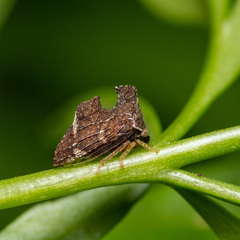 Keeled TreehopperEntylia carinata
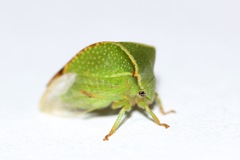 Buffalo TreehopperStictocephala bisoniaDamages trees, gardens or crops
 Horned TreehopperCentrotus cornutus
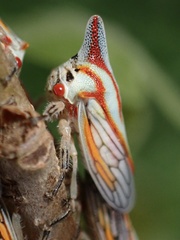 Oak TreehopperPlatycotis vittata
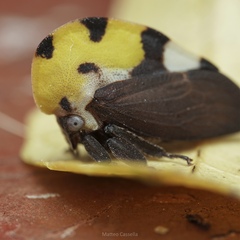 Mexican TreehopperMembracis mexicanaDamages trees, gardens or crops
 Three-cornered Alfalfa HopperSpissistilus festinusDamages trees, gardens or crops
Sources
- Wikipedia: https://en.wikipedia.org/wiki/Aconophora_compressa
Look it up elsewhere: GBIF · iNaturalist · BugGuide · Wikipedia
Text written 2026-10-23 from the sources above and checked sentence by sentence against them. Data fetched 2026-10-23.