 Bug FAQ
The Snout
Hypena proboscidalis · Order: Lepidoptera · Family: Erebidae
Also called: Snout
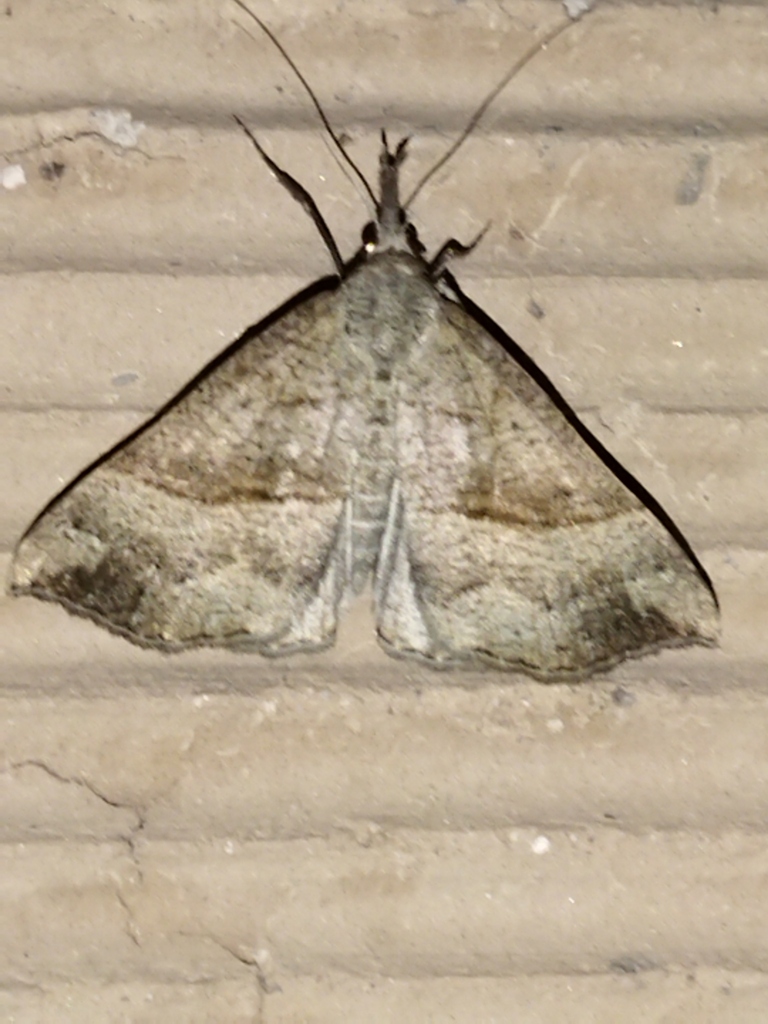
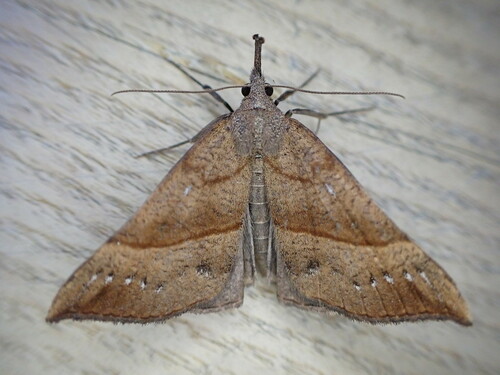
Females are usually brownish while males are grey, and the forewings show dark transverse lines and a brown-yellow tint in females.
Source: Wikipedia
How to recognize it
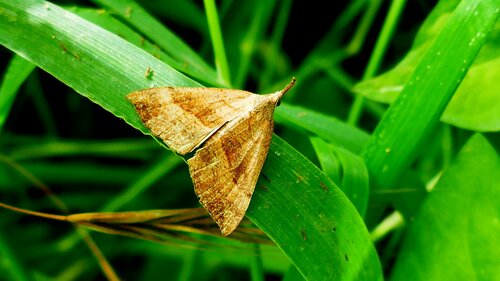
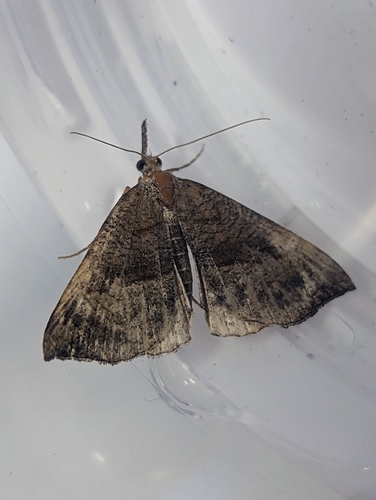
Forewings are grey-brown with many dark cross-lines; females have a brown-yellow wash and both sexes show dark brown lines and cloudy subterminal markings.
Source: Wikipedia
Size
Wingspan ranges from 25 to 38 mm.
Source: Wikipedia
Where it lives
Found in deciduous, mixed and coniferous forests, as well as near rivers, hedges, gardens and parkland.
Source: Wikipedia
What it eats
Caterpillars feed on hop, nettle, ground-elder and Stachys species.
Source: Wikipedia
Life cycle
Adults are on the wing in two generations from May through September.
Source: Wikipedia
When you see it
Active period is May to September, covering two broods.
Source: Wikipedia
Lookalikes
Similar species include Hypena tatorhina from Japan, which is smaller and grey in both sexes, and forms like flexilinea and indicalis from western China that differ in shading and size.
Source: Wikipedia
More photos
Questions people ask
How can I identify a Snout moth?
Look for a 25 to 38 mm wingspan, grey-brown forewings with dark cross-lines, and a brown-yellow tint on females; males are usually plain grey.
Source: Wikipedia
What do Snout moth caterpillars eat?
The larvae feed on hop, nettle, ground-elder and Stachys plants.
Source: Wikipedia
Where might I find Snout moths?
They live in a variety of habitats such as forests, riverbanks, hedges, gardens and parkland across Europe and much of the Palearctic region.
Source: Wikipedia
Same family (Erebidae)
 Spongy MothLymantria disparDamages trees, gardens or crops
 Fall Webworm MothHyphantria cuneaDamages trees, gardens or crops
 Brown-tail MothEuproctis chrysorrhoeaCan irritate skin
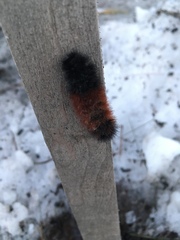 Isabella Tiger MothPyrrharctia isabella
 Virginian Tiger MothSpilosoma virginicaCan irritate skin
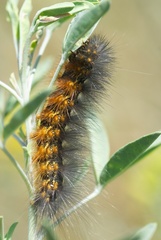 Salt Marsh MothEstigmene acrea
Sources
- Wikipedia: https://en.wikipedia.org/wiki/Hypena_proboscidalis
Look it up elsewhere: GBIF · iNaturalist · BugGuide · Wikipedia
Text written 2026-10-22 from the sources above and checked sentence by sentence against them. Data fetched 2026-10-22.