 Bug FAQ
Sundowner moth
Sphingomorpha chlorea · Order: Lepidoptera · Family: Erebidae
Source: Wikipedia

Adult moths pierce ripe fruit to feed, causing loss of marketable produce in orchards. The larvae feed on a wide range of trees and crops, including citrus, apple, peas and several Acacia species.
Source: Wikipedia
How to recognize it
The head is ochre-white and the base of the palps are dark brown. The thorax is dark brown on top with a broad ochre-white stripe across the top. Forewings are reddish-brown with dark streaks. Hindwings are fuscous brown, lighter at the base and across a diffused medial band.
Source: Wikipedia
Size
Wingspan ranges from about 60 to 84 mm.
Source: Wikipedia
What it eats
Larvae feed on many trees and crops such as Acacia, citrus, apple, peas and other listed plants.
Source: Wikipedia
Life cycle
First described by Pieter Cramer in 1777.
Source: Wikipedia
Where it comes from
Native to Africa and southern Asia.
Source: Wikipedia
Where it is found in the US
Recorded in 1 of 51 states and DC. Most records: Florida.
Darker = more records. Counts are museum and citizen-science records, not population size.
Source: GBIF
More photos


Questions people ask
How does the sundowner moth damage fruit?
The adult moth uses a vertical, rhythmic head movement to pierce the skin of ripe fruit and feed on the juices.
Source: Wikipedia
What crops can the larvae of the sundowner moth eat?
Larvae feed on a variety of trees and crops, including Acacia species, citrus, apple, peas and several other listed plants.
Source: Wikipedia
Where is the sundowner moth originally from?
It is native to Africa and southern Asia.
Source: Wikipedia
Same family (Erebidae)
 Spongy MothLymantria disparDamages trees, gardens or crops
 Fall Webworm MothHyphantria cuneaDamages trees, gardens or crops
 Brown-tail MothEuproctis chrysorrhoeaCan irritate skin
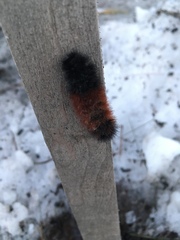 Isabella Tiger MothPyrrharctia isabella
 Virginian Tiger MothSpilosoma virginicaCan irritate skin
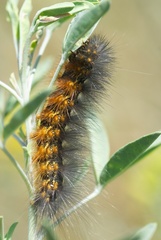 Salt Marsh MothEstigmene acrea
Sources
- Wikipedia: https://en.wikipedia.org/wiki/Sphingomorpha_chlorea
Look it up elsewhere: GBIF · iNaturalist · BugGuide · Wikipedia
Text written 2026-10-23 from the sources above and checked sentence by sentence against them. Data fetched 2026-10-22.