 Bug FAQ
Straw Dot
Rivula sericealis · Order: Lepidoptera · Family: Erebidae
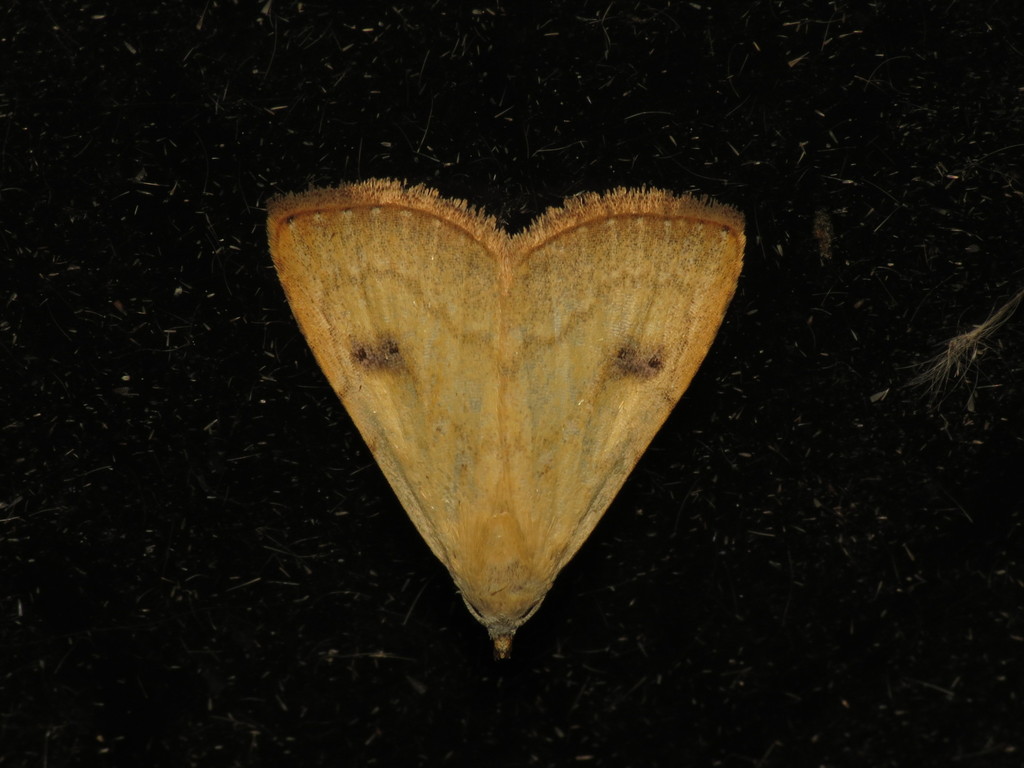
The straw dot moth has a wingspan of about 18 to 22 mm and forewings 13 to 15 mm long. Its forewings are straw-yellow with a dark reniform spot that holds two black dots, and the hindwings are mud-coloured with a yellowish tint. It lives in moist grasslands, wastelands, sparse and alder forests, and parklands across Europe, North Africa, and eastward through the Palearctic to Japan.
Source: Wikipedia
How to recognize it
Forewings are straw yellow, deepening toward the edge, with a black-brown kidney-shaped mark that contains two black dots; hindwings are mud-coloured with a yellow tint and darker at the edge.
Source: Wikipedia
Size
Wingspan ranges from 18 to 22 mm. Forewing length is 13 to 15 mm.
Source: Wikipedia
Life cycle
Adults are on the wing from May to October, depending on location.
Source: Wikipedia
When you see it
Flight period spans May through October, varying with region.
Source: Wikipedia
Where it comes from
Occurs throughout Europe, including the Iberian Peninsula, southern Fennoscandia, and south to North Africa.
Source: Wikipedia
Lookalikes
It closely resembles Evergestis forficalis.
Source: Wikipedia
More photos

Questions people ask
Are they a garden pest?
The larvae eat grasses, but there is no information that they cause significant damage to crops or gardens.
Source: Wikipedia
What other moth looks like the straw dot?
It is often confused with Evergestis forficalis.
Source: Wikipedia
Same family (Erebidae)
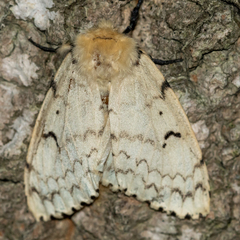 Spongy MothLymantria disparDamages trees, gardens or crops
 Fall Webworm MothHyphantria cuneaDamages trees, gardens or crops
 Brown-tail MothEuproctis chrysorrhoeaCan irritate skin
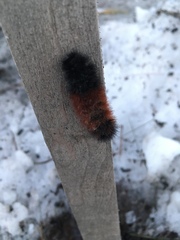 Isabella Tiger MothPyrrharctia isabella
 Virginian Tiger MothSpilosoma virginicaCan irritate skin
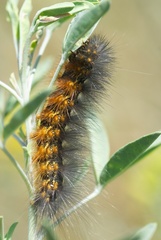 Salt Marsh MothEstigmene acrea
Sources
- Wikipedia: https://en.wikipedia.org/wiki/Rivula_sericealis
Look it up elsewhere: GBIF · iNaturalist · BugGuide · Wikipedia
Text written 2026-10-22 from the sources above and checked sentence by sentence against them. Data fetched 2026-10-22.