 Bug FAQ
Southern Moon Moth
Dasypodia selenophora · Order: Lepidoptera · Family: Erebidae
Also called: Granny Moth, Moon Moth, Old Lady Moth, Southern Old Lady Moth
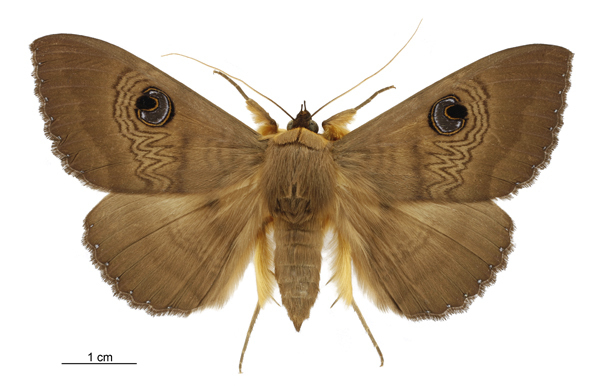
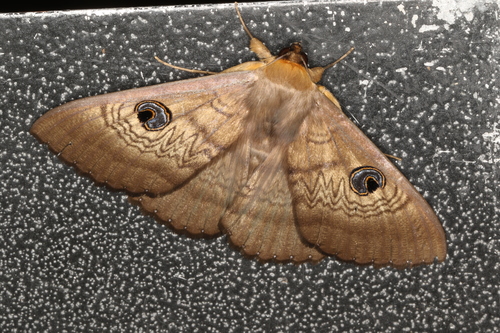
The southern moon moth has a wingspan of about 9 cm and shows brown shades with large black and blue eye-spots on its forewings; its body is covered in hair. It is found in southern Australia, Norfolk Island, New Zealand and Macquarie Island and is often seen during the day in dark corners of homes and other buildings. The caterpillars feed on several Acacia species such as Tan Wattle, Cootamundra Wattle, Golden Wattle and Silver Wattle.
Source: Wikipedia
How to recognize it
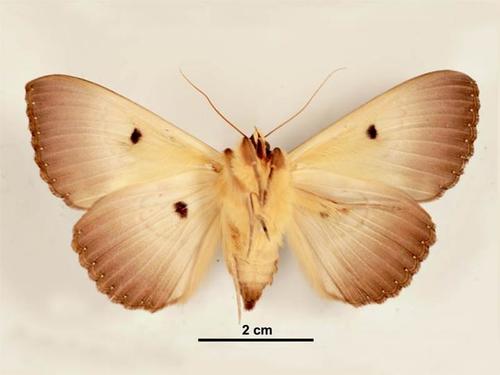
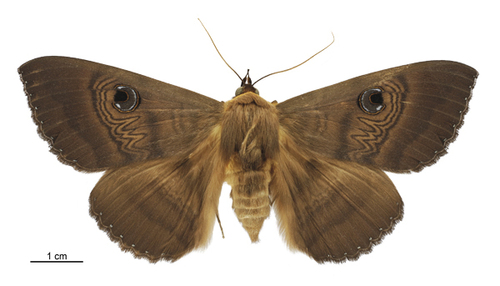
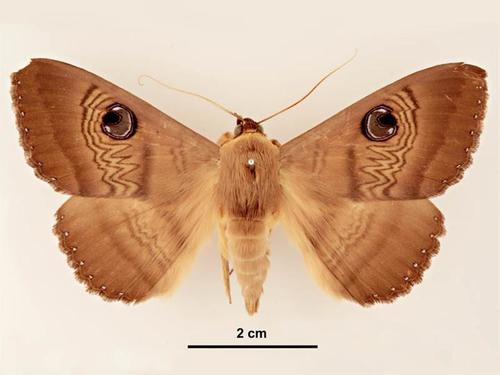
Adults are brown with large black and blue eye-spots on the centre of the forewings and have a hairy body.
Source: Wikipedia
Size
The wingspan is about 90 mm.
Source: Wikipedia
Is it a pest in the house?
They are often observed in homes, especially in dark corners, but no specific damage to the house is recorded.
Source: Wikipedia
What it eats
Caterpillars feed on Acacia species, including Tan Wattle, Cootamundra Wattle, Golden Wattle and Silver Wattle.
Source: Wikipedia
Where it comes from
They occur in the southern half of Australia, Norfolk Island, New Zealand and Macquarie Island.
Source: Wikipedia
More photos
Questions people ask
Are they a problem inside the house?
They may appear in dark areas of homes, but the sources do not mention any damage to food, clothing or structures.
Source: Wikipedia
Same family (Erebidae)
 Spongy MothLymantria disparDamages trees, gardens or crops
 Fall Webworm MothHyphantria cuneaDamages trees, gardens or crops
 Brown-tail MothEuproctis chrysorrhoeaCan irritate skin
 Isabella Tiger MothPyrrharctia isabella
 Virginian Tiger MothSpilosoma virginicaCan irritate skin
 Salt Marsh MothEstigmene acrea
Sources
- Wikipedia: https://en.wikipedia.org/wiki/Dasypodia_selenophora
Look it up elsewhere: GBIF · iNaturalist · BugGuide · Wikipedia
Text written 2026-10-22 from the sources above and checked sentence by sentence against them. Data fetched 2026-10-22.