 Bug FAQ
Smoky-winged Woodlouse Fly
Melanophora roralis · Order: Diptera · Family: Calliphoridae
Also called: World Woodlouse Fly
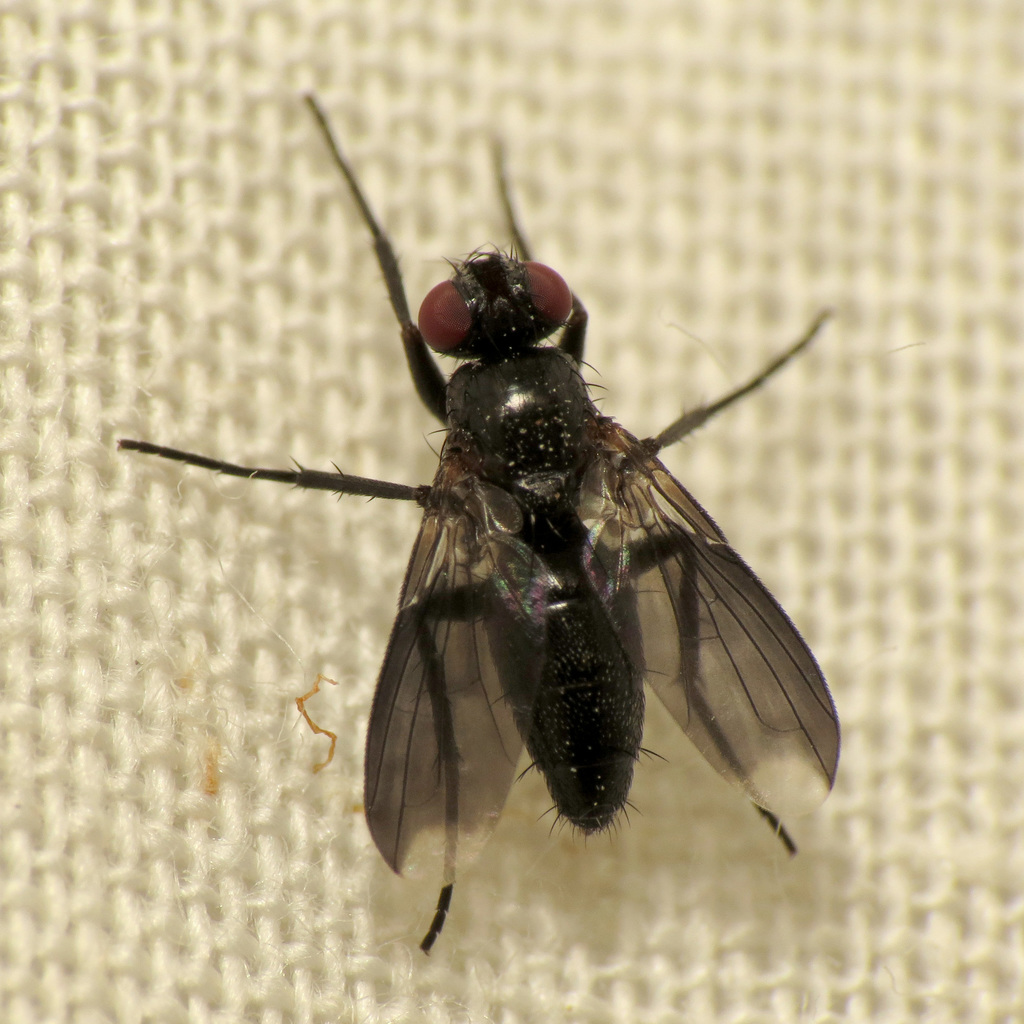
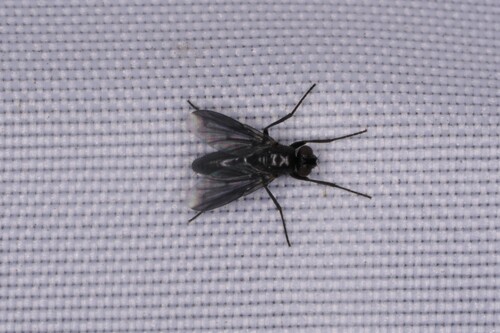
It is a small black fly about 3 to 5.5 mm long with hairy antennae and a shiny thorax. It lives in old forests and damp shoreline areas and is active from mid-May through October. The species was introduced from Europe to North America, parasitizes the woodlouse Porcellio scaber, and takes up to three weeks to pupate.
Source: Wikipedia
How to recognize it
The fly is black, has hairy antennae, and a shiny thorax.
Source: Wikipedia
Size
Adults measure between 3 and 5.5 mm in length.
Source: Wikipedia
What it eats
It is a parasite of the woodlouse Porcellio scaber.
Source: Wikipedia
Life cycle
It can take up to 21 days to reach the pupal stage.
Source: Wikipedia
When you see it
Adults are on the wing from mid-May through October.
Source: Wikipedia
Where it is found in the US
Recorded in 28 of 51 states and DC. Most records: Massachusetts, California, New York, New Jersey, Illinois, Michigan, Maryland, Pennsylvania.
Darker = more records. Counts are museum and citizen-science records, not population size.
Source: GBIF
Months it is reported in the US
Source: GBIF
More photos
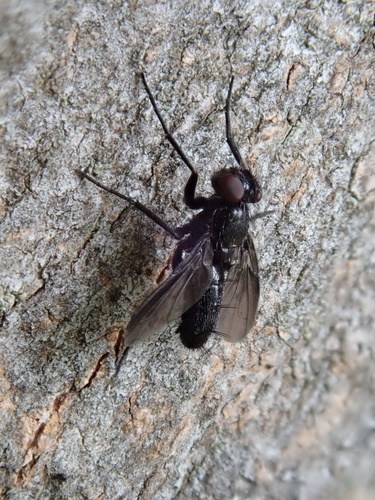
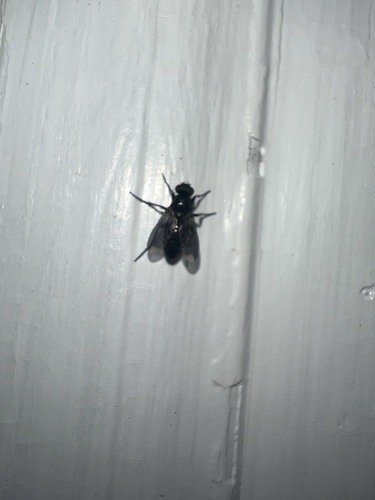
Questions people ask
Same family (Calliphoridae)
 Common European Greenbottle FlyLucilia sericataNuisance, not dangerous
 Blue BlowflyCalliphora vicinaCan spread germs or disease
 Black Blow FlyPhormia reginaNuisance, not dangerous
 Oriental Latrine FlyChrysomya megacephalaCan spread germs or disease
 Australian Sheep Blow FlyLucilia cuprinaNuisance, not dangerous
 Locust BlowflyStomorhina lunata
Sources
- Wikipedia: https://en.wikipedia.org/wiki/Melanophora_roralis
Look it up elsewhere: GBIF · iNaturalist · BugGuide · ITIS · Wikipedia
Text written 2026-10-26 from the sources above and checked sentence by sentence against them. Data fetched 2026-10-26.