 Bug FAQ
Australian Sheep Blow Fly
Lucilia cuprina · Order: Diptera · Family: Calliphoridae
Also called: Bronze Bottle Fly, Sheep Blow-fly
Source: Wikipedia

Australian Sheep Blow Fly is a metallic greenish blow fly about 5-10 mm long that likes warm weather. Adults travel up to 10 mi looking for carrion or decaying fruit, while larvae develop in shaded carrion and can cause fly-strike on sheep.
Source: Wikipedia
How to recognize it
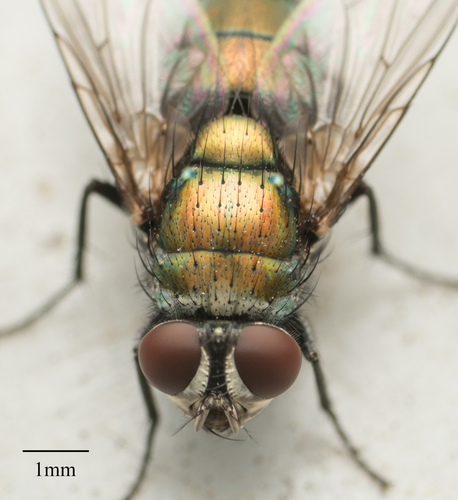
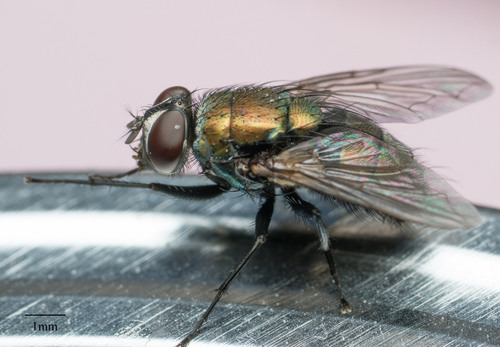
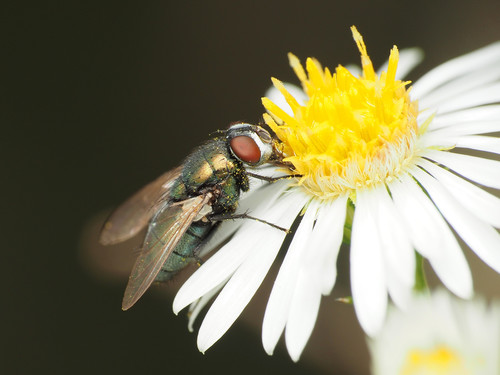
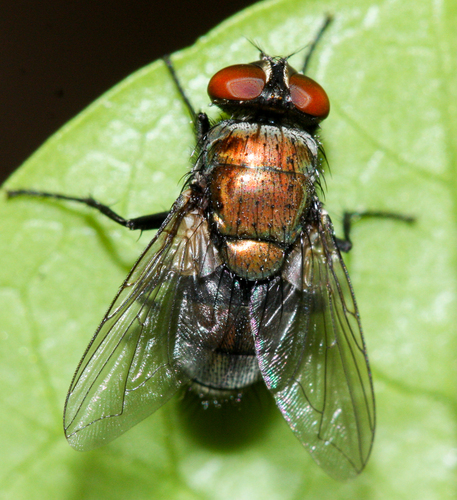
They have a shiny metallic green or blue abdomen with bronze reflections and reddish eyes.
Source: Wikipedia
Size
Their bodies are round to oval and range from about 4.5 to 10 mm in length.
Source: Wikipedia
How to get rid of it
Basic farm practices like drenching, shearing, or crutching help reduce fly-strike. Insecticides have been used, but resistance and wool residues are concerns.
Source: Wikipedia
Where it lives
They prefer warm conditions with soil above 15 °C and air between 17 °C and 40 °C. They are found worldwide, including Africa, North America, and dry climates where sheep are raised.
Source: Wikipedia
What it eats
Adults can fly up to 16 km searching for carrion or rotting fruit, while larvae develop in shaded carrion.
Source: Wikipedia
Life cycle
From egg to adult takes 11 to 21 days depending on temperature and food. They can produce four to eight generations each year, mainly driven by temperature.
Source: Wikipedia
When you see it
They are active in warm weather when soil and air temperatures meet their preferred range.
Source: Wikipedia
Where it comes from
They are a global sheep pest, most common in dry regions.
Source: Wikipedia
Lookalikes
They are almost indistinguishable from their close relative Lucilia sericata.
Source: Wikipedia
Where it is found in the US
Recorded in 31 of 51 states and DC. Most records: Texas, California, Florida, Oklahoma, North Carolina, Alabama, Georgia, South Carolina.
Darker = more records. Counts are museum and citizen-science records, not population size.
Source: GBIF
Status: introduced in United States. Source: iNaturalist
Months it is reported in the US
Source: GBIF
More photos
Questions people ask
Why are they a problem for sheep?
Their larvae can infest sheep wounds and cause fly-strike, which is painful and can be fatal if untreated.
Source: Wikipedia
How can I control them on my farm?
Regular shearing, drenching, crutching, and careful use of insecticides are common control methods.
Source: Wikipedia
Same family (Calliphoridae)
 Common European Greenbottle FlyLucilia sericataNuisance, not dangerous
 Blue BlowflyCalliphora vicinaCan spread germs or disease
 Black Blow FlyPhormia reginaNuisance, not dangerous
 Oriental Latrine FlyChrysomya megacephalaCan spread germs or disease
 Locust BlowflyStomorhina lunata
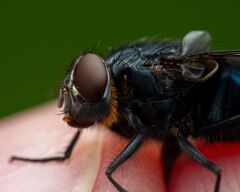 Orange-bearded Bluebottle FlyCalliphora vomitoria
Sources
- Wikipedia: https://en.wikipedia.org/wiki/Lucilia_cuprina
Look it up elsewhere: GBIF · iNaturalist · BugGuide · Wikipedia
Text written 2026-10-22 from the sources above and checked sentence by sentence against them. Data fetched 2026-10-22.