 Bug FAQ
Slender owlet moth
Rhapsa scotosialis · Order: Lepidoptera · Family: Erebidae
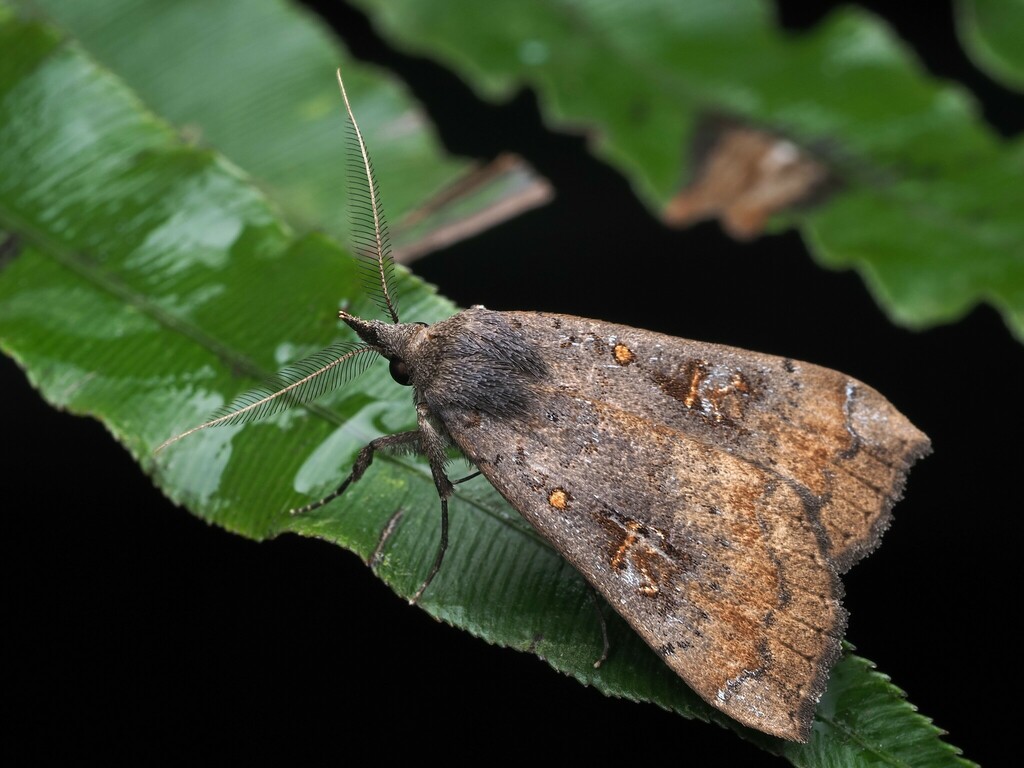
The slender owlet moth is a common forest moth in New Zealand, found throughout the country in native forests. Adults have a wingspan of about 1 ⅜ inches and can be seen flying year-round. Its larvae feed on the leaves of native trees, Piper excelsum, and also on fallen leaves and Pinus radiata, pupating in leaf litter.
Source: Wikipedia
How to recognize it
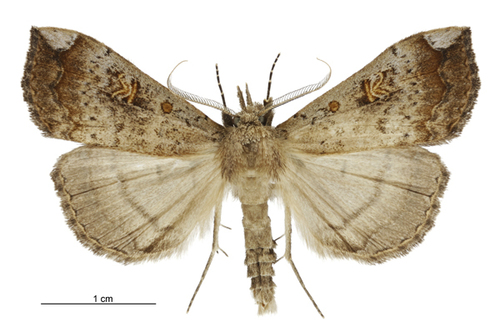
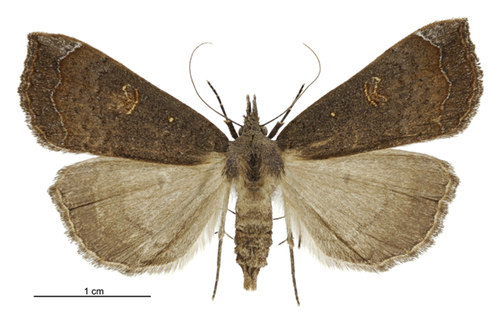
Hind-wings are greyish-ochreous with a faint mid-line, a broad shade beyond it, small crescent marks on the termen, and dark greyish-ochreous cilia.
Source: Wikipedia
Size
The wings expand to about 1 ⅜ inches.
Source: Wikipedia
What it eats
Larvae feed on Piper excelsum and also on fallen leaves of various native trees and on Pinus radiata.
Source: Wikipedia
Life cycle
It takes about 20 days for larvae to develop before emerging.
Source: Wikipedia
Where it comes from
The species is endemic to New Zealand and occurs throughout the country.
Source: Wikipedia
More photos

Questions people ask
When can I see adult slender owlet moths?
Adults are active and can be seen flying at any time of the year.
Source: Wikipedia
What do the larvae of the slender owlet moth eat?
They feed on Piper excelsum, fallen leaves of native trees, and on Pinus radiata.
Source: Wikipedia
Where does this moth live?
It lives in native forests across New Zealand and is a common forest moth there.
Source: Wikipedia
Same family (Erebidae)
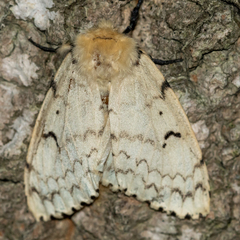 Spongy MothLymantria disparDamages trees, gardens or crops
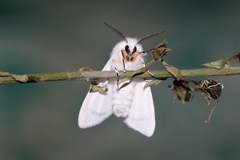 Fall Webworm MothHyphantria cuneaDamages trees, gardens or crops
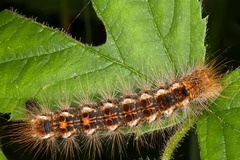 Brown-tail MothEuproctis chrysorrhoeaCan irritate skin
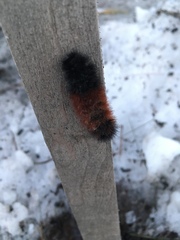 Isabella Tiger MothPyrrharctia isabella
 Virginian Tiger MothSpilosoma virginicaCan irritate skin
 Salt Marsh MothEstigmene acrea
Sources
- Wikipedia: https://en.wikipedia.org/wiki/Rhapsa_scotosialis
Look it up elsewhere: GBIF · iNaturalist · BugGuide · Wikipedia
Text written 2026-10-23 from the sources above and checked sentence by sentence against them. Data fetched 2026-10-22.