 Bug FAQ
Scarce Footman Moth
Eilema complana · Order: Lepidoptera · Family: Erebidae
Also called: Scarce Footman
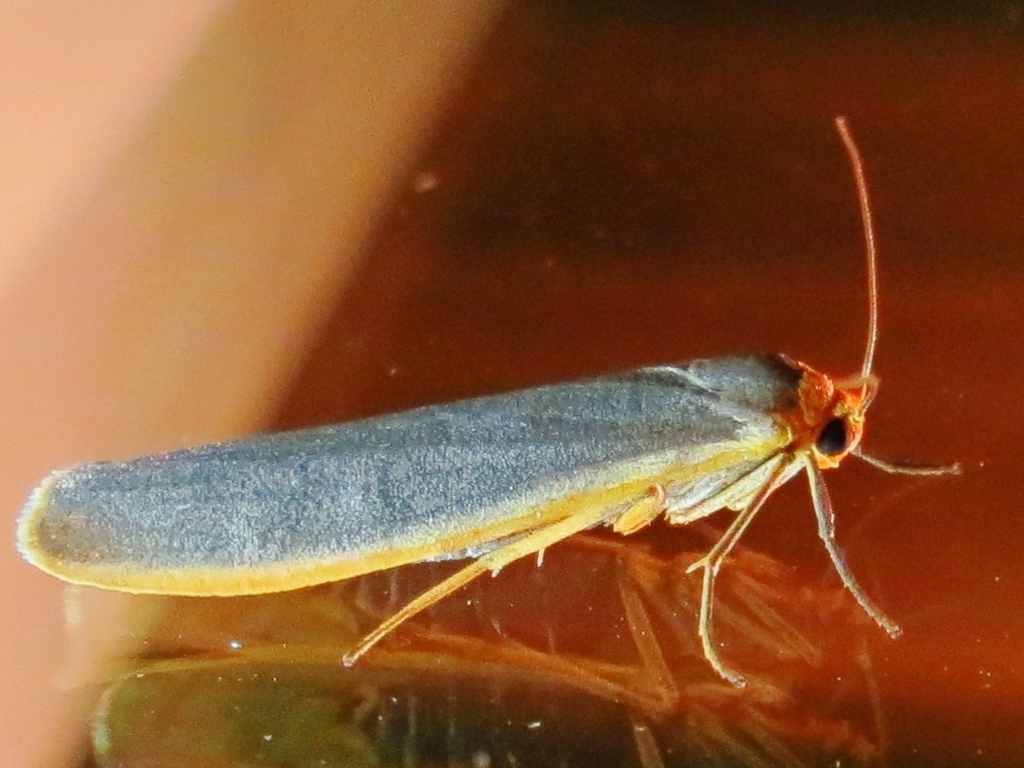
The scarce footman moth has a wingspan of about 28 to 35 mm. It lives across the whole Palearctic region and its larvae eat lichens and soft leaves. Adults are on the wing from June to August, varying with location.
Source: Wikipedia
How to recognize it
The forewing is less elongated than a similar species, with a broader bright yellow costal streak and a duller hindwing that is not very transparent. The underside shows a dark iron-grey disc contrasting with an orange-yellow costa and a wide pale yellow edge; the hindwing underside is pale yellow with a deeper yellow costa and a grey streak below it.
Source: Wikipedia
Size
Wingspan ranges from 28 to 35 mm.
Source: Wikipedia
Where it lives
It is found throughout the Palearctic region.
Source: Wikipedia
Life cycle
Adults fly from June to August, depending on location.
Source: Wikipedia
When you see it
Flight period is June through August, varying with region.
Source: Wikipedia
Where it comes from
Its native range covers the entire Palearctic region.
Source: Wikipedia
Lookalikes
It looks very similar to Eilema morosinum.
Source: Wikipedia
Same family (Erebidae)
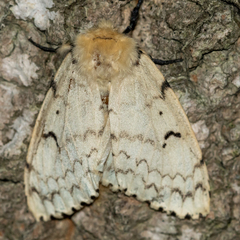 Spongy MothLymantria disparDamages trees, gardens or crops
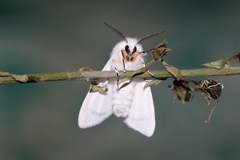 Fall Webworm MothHyphantria cuneaDamages trees, gardens or crops
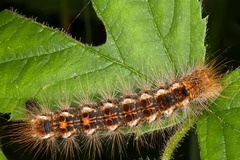 Brown-tail MothEuproctis chrysorrhoeaCan irritate skin
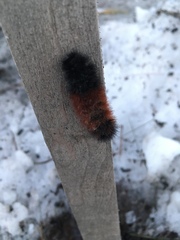 Isabella Tiger MothPyrrharctia isabella
 Virginian Tiger MothSpilosoma virginicaCan irritate skin
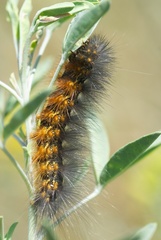 Salt Marsh MothEstigmene acrea
Sources
- Wikipedia: https://en.wikipedia.org/wiki/Manulea_complana
Look it up elsewhere: GBIF · iNaturalist · BugGuide · Wikipedia
Text written 2026-10-22 from the sources above and checked sentence by sentence against them. Data fetched 2026-10-22.