 Bug FAQ
Sandalwood defoliator
Amata passalis · Order: Lepidoptera · Family: Erebidae
Source: Wikipedia
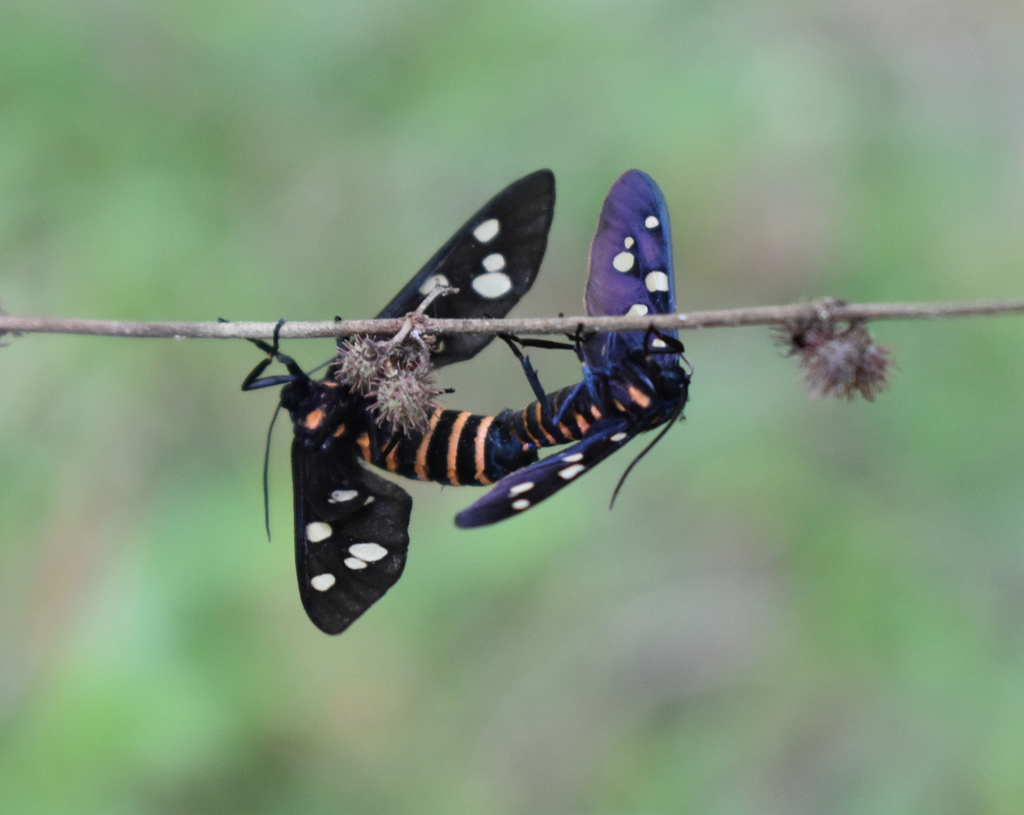
The moth’s larvae feed on sandalwood leaves and can also eat cowpeas, other pulses and ornamental plants, causing defoliation. It completes its life cycle in about two months and can produce many generations each year.
Source: Wikipedia
Size
First-instar larvae are about 2 mm long and the final instar reaches nearly 30 mm.
Source: Wikipedia
How to get rid of it
The larval parasitoid Apanteles nepitae can be released to suppress its populations.
Source: Wikipedia
Where it lives
It occurs in Sri Lanka and India.
Source: Wikipedia
What it eats
The caterpillars mainly defoliate sandalwood (Santalum album). They also feed on cowpeas, other pulses and various ornamental plants.
Source: Wikipedia
Life cycle
In captivity the average life cycle lasts about 62 days. The species breeds year-round, producing 6 to 11 generations annually.
Source: Wikipedia
Where it comes from
Its native range includes Sri Lanka and India.
Source: Wikipedia
Questions people ask
What plants does the sandalwood defoliator damage?
It mainly defoliates sandalwood trees and can also feed on cowpeas, other pulses and ornamental plants.
Source: Wikipedia
How long does its life cycle take?
The average life cycle in captivity is about 62 days, and it can produce many generations each year.
Source: Wikipedia
How can I control this pest?
A natural enemy, the larval parasitoid Apanteles nepitae, can be used to control the moth.
Source: Wikipedia
Same family (Erebidae)
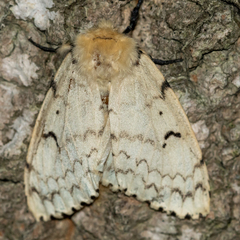 Spongy MothLymantria disparDamages trees, gardens or crops
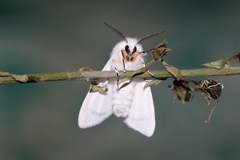 Fall Webworm MothHyphantria cuneaDamages trees, gardens or crops
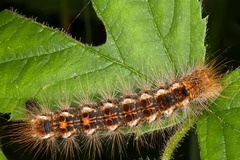 Brown-tail MothEuproctis chrysorrhoeaCan irritate skin
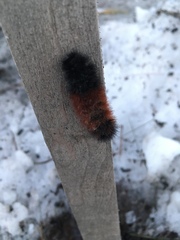 Isabella Tiger MothPyrrharctia isabella
 Virginian Tiger MothSpilosoma virginicaCan irritate skin
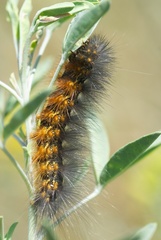 Salt Marsh MothEstigmene acrea
Sources
- Wikipedia: https://en.wikipedia.org/wiki/Amata_passalis
Look it up elsewhere: GBIF · iNaturalist · BugGuide · Wikipedia
Text written 2026-10-22 from the sources above and checked sentence by sentence against them. Data fetched 2026-10-22.