 Bug FAQ
Ross' Tussock Moth
Gynaephora rossii · Order: Lepidoptera · Family: Erebidae
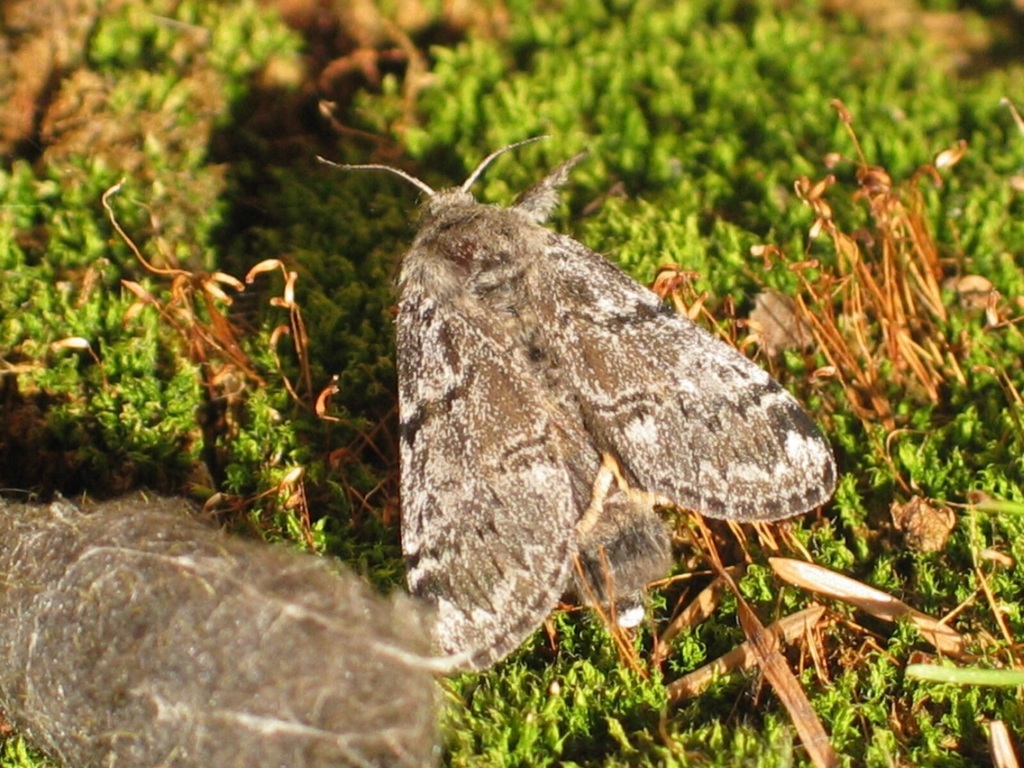
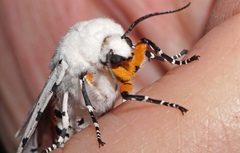
Ross' tussock moth is a day-flying moth with mottled grey forewings marked by jagged black lines, a small black disc-shaped dot, and a pale-grey edged mark; males have light ochre-yellow hindwings with a dark gray edge and a fringe of hairs. Females have forewings about 17 mm long, males are slightly smaller, and the eggs are roughly 1.4 mm in size. The species lives in Arctic and sub-Arctic tundra, high-altitude alpine tundra, and muskeg areas with scattered trees in Canada.
Source: Wikipedia
Size
Female forewing length is about 17 mm; males are slightly smaller. Eggs measure roughly 1.4 mm.
Source: Wikipedia
Where it lives
It is a day-flying moth found in Arctic and sub-Arctic tundra. It also occurs on rocky alpine tundra atop high mountains and in muskeg habitats with trees in Canada.
Source: Wikipedia
What it eats
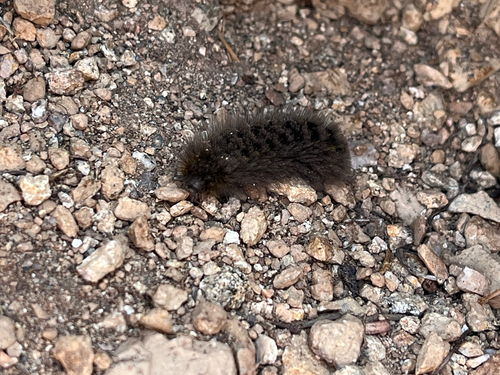
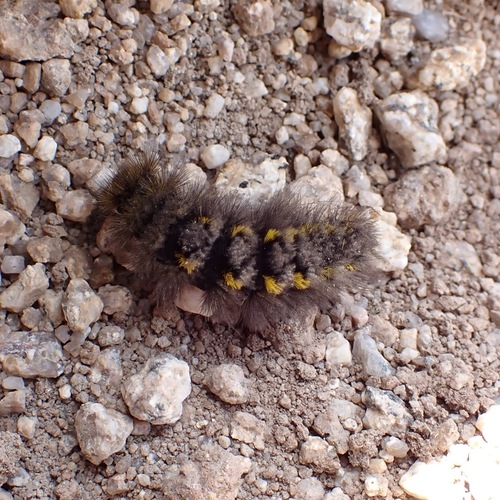
Caterpillars are large and furry and feed mainly on saxifrages.
Source: Wikipedia
Life cycle
Caterpillars may take seven to eleven years to complete metamorphosis. Females can lay fertile eggs without mating, a form of parthenogenesis.
Source: Wikipedia
When you see it
Across North America, adults have been collected from May through August.
Source: Wikipedia
Where it comes from
Overall it is widespread across tundras and highlands of the Holarctic.
Source: Wikipedia
Lookalikes
In British Columbia it can be confused with Polia richardsoni, which has similar wing colour and flies at the same time. Larvae differ from Gynaephora groenlandica by having finer, feather-like (plumose) hairs rather than stiff, unbranched (spinulose) hairs.
Source: Wikipedia
Where it is found in the US
Recorded in 5 of 51 states and DC. Most records: Alaska, Colorado, New Hampshire, Maine, Wyoming.
Darker = more records. Counts are museum and citizen-science records, not population size.
Source: GBIF
Status: native in North America; native in Canada. Source: iNaturalist
Months it is reported in the US
Source: GBIF
More photos


Questions people ask
When are Ross' tussock moths active?
Adults are typically on the wing from May to August, with peak activity in July in northern British Columbia.
Source: Wikipedia
What plants do the caterpillars eat?
The caterpillars feed on saxifrages such as Saxifraga tricuspidata and S. oppositifolia, as well as Salix arctica, Dryas, and possibly Potentilla.
Source: Wikipedia
Same family (Erebidae)
 Spongy MothLymantria disparDamages trees, gardens or crops
 Fall Webworm MothHyphantria cuneaDamages trees, gardens or crops
 Brown-tail MothEuproctis chrysorrhoeaCan irritate skin
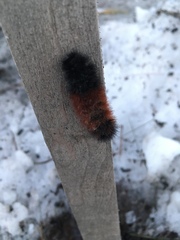 Isabella Tiger MothPyrrharctia isabella
 Virginian Tiger MothSpilosoma virginicaCan irritate skin
 Salt Marsh MothEstigmene acreaDamages trees, gardens or crops
Sources
- Wikipedia: https://en.wikipedia.org/wiki/Gynaephora_rossii
Look it up elsewhere: GBIF · iNaturalist · BugGuide · ITIS · Wikipedia
Text written 2026-10-27 from the sources above and checked sentence by sentence against them. Data fetched 2026-10-27.