 Bug FAQ
Pinion-streaked Snout
Schrankia costaestrigalis · Order: Lepidoptera · Family: Erebidae
Source: Wikipedia
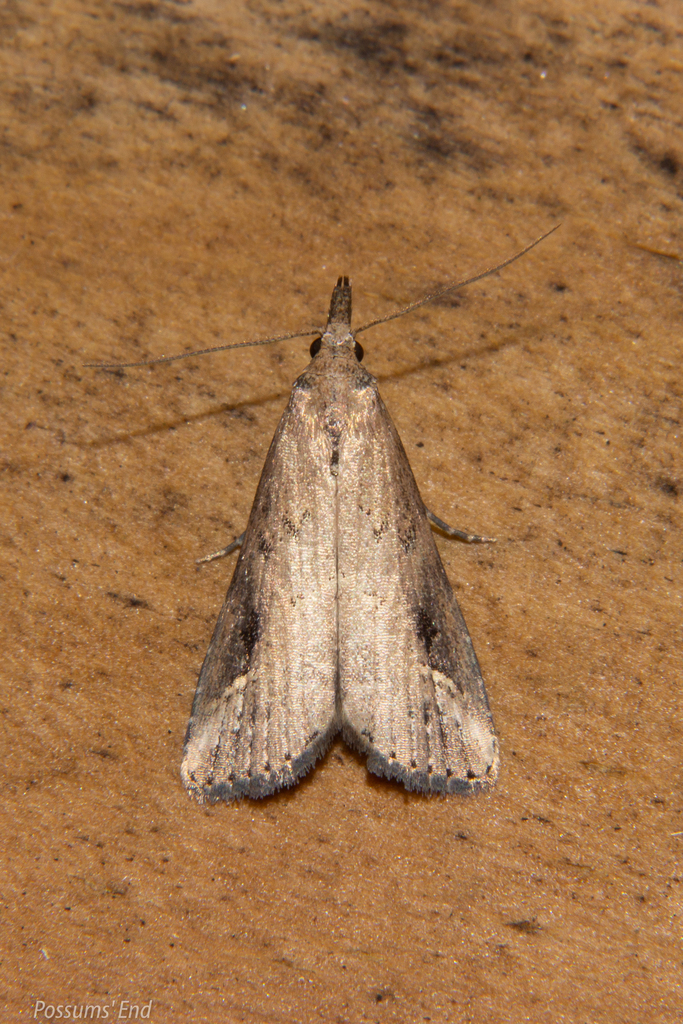
The pinion-streaked snout is a small moth with a wingspan of about 16 to 22 mm and forewings 9 to 11 mm long. Its larvae feed on many herbaceous and woody plants and can devastate potato tubers, causing over 80 % loss in China. Adults fly from May to October and are found across Europe, the Canary Islands, Madeira, Syria, Armenia and New Zealand.
Source: Wikipedia
How to recognize it
Forewings are whitish-ochreous mixed with brownish fuscous toward the costa, with a fine black dash near the base, dentate inner line, irregular outer line, small blackish cellspot linked by dark suffusion, indistinct pale subterminal line, and hindwings are luteous-whitish with a grey discal dot.
Source: Wikipedia
Size
Wingspan ranges from 16 to 22 mm. Forewing length is 9 to 11 mm.
Source: Wikipedia
Where it lives
It closely resembles species in the Crambidae or Pyralidae families.
Source: Wikipedia
What it eats
Larvae feed on a variety of herbaceous and woody plants. They have been reported to feed on potato tubers, causing major crop loss in China.
Source: Wikipedia
Life cycle
Adults are on the wing from May to October, depending on location.
Source: Wikipedia
When you see it
Flight period extends from May through October.
Source: Wikipedia
Where it comes from
Found in Europe, the Canary Islands, Madeira, Syria, Armenia, and also in New Zealand.
Source: Wikipedia
Lookalikes
Looks similar to moths in the Crambidae or Pyralidae families.
Source: Wikipedia
More photos
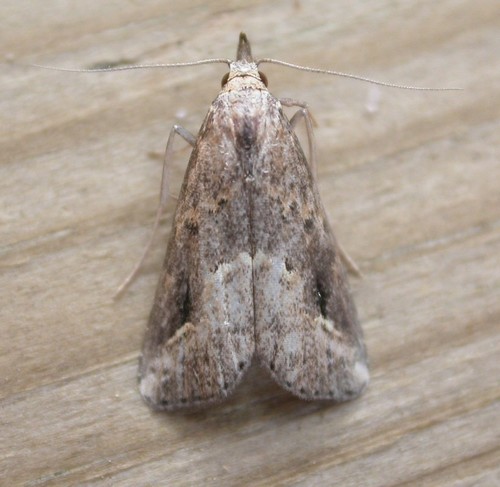
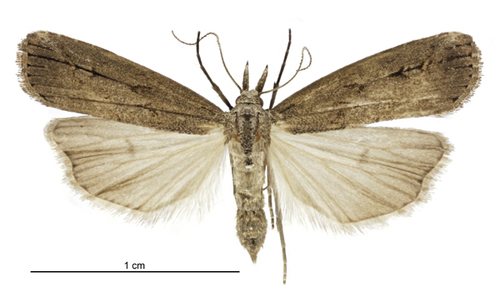
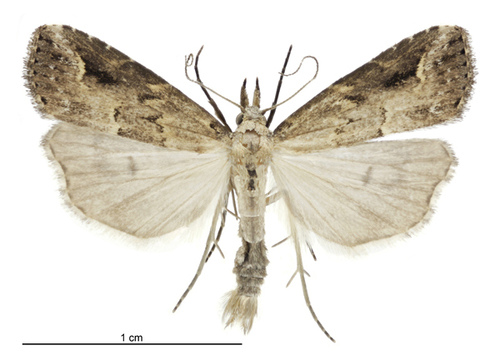
Same family (Erebidae)
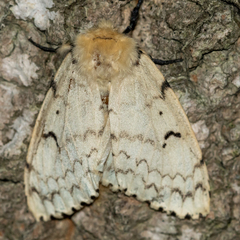 Spongy MothLymantria disparDamages trees, gardens or crops
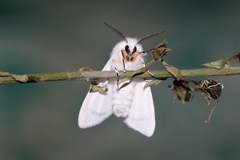 Fall Webworm MothHyphantria cuneaDamages trees, gardens or crops
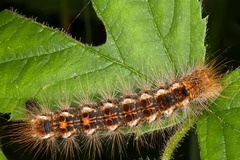 Brown-tail MothEuproctis chrysorrhoeaCan irritate skin
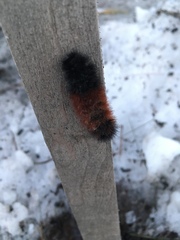 Isabella Tiger MothPyrrharctia isabella
 Virginian Tiger MothSpilosoma virginicaCan irritate skin
 Salt Marsh MothEstigmene acrea
Sources
- Wikipedia: https://en.wikipedia.org/wiki/Schrankia_costaestrigalis
Look it up elsewhere: GBIF · iNaturalist · BugGuide · Wikipedia
Text written 2026-10-23 from the sources above and checked sentence by sentence against them. Data fetched 2026-10-22.