 Bug FAQ
Ornate Tiger Moth
Grammia ornata · Order: Lepidoptera · Family: Erebidae
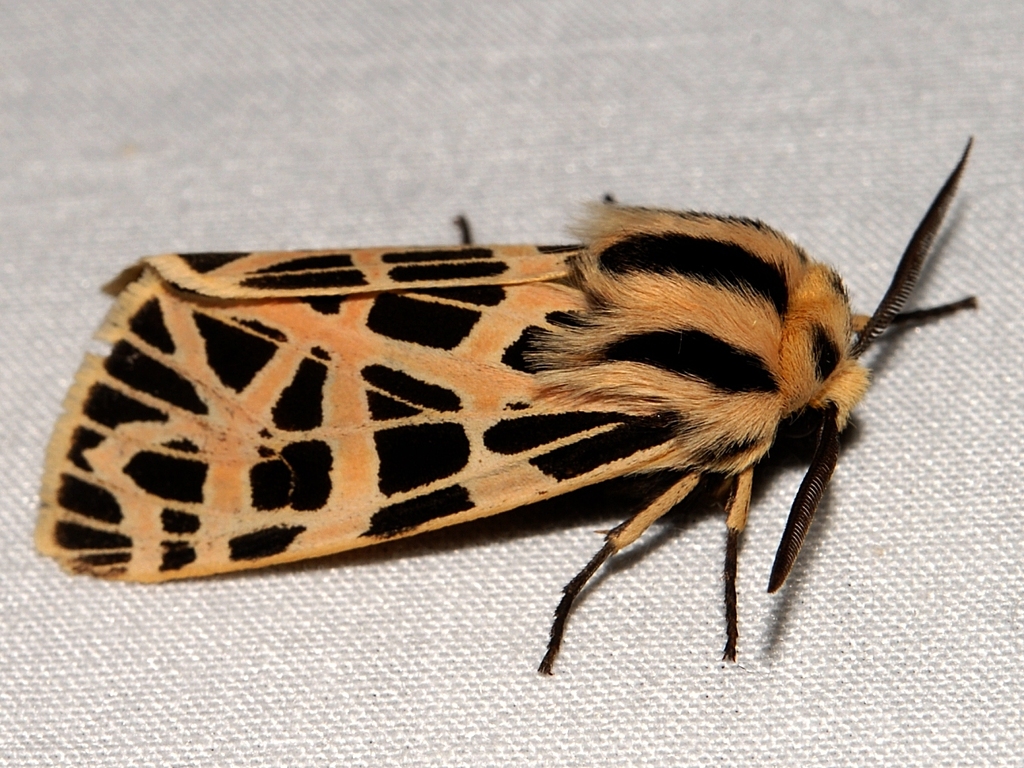
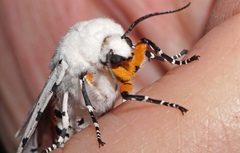
The Ornate Tiger Moth has a wingspan of about 4.3 cm and shows striking black and yellow patterns on its body and wings. It lives in many western North American habitats, from open woodlands in British Columbia down to southern California and parts of the Rocky Mountains. Its caterpillars are generalist feeders, eating a variety of plants.
Source: Wikipedia
How to recognize it
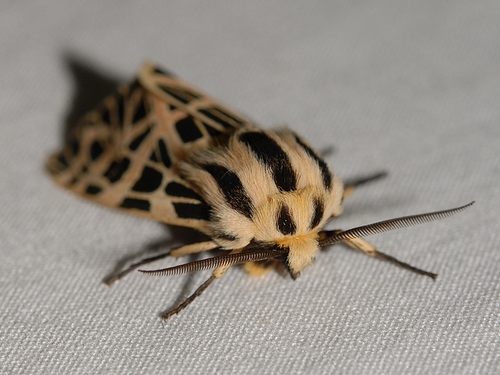
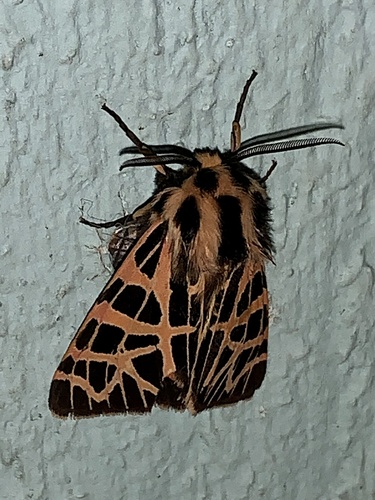
The forewings are dark with crisscrossing yellow or whitish lines. The hindwings are usually black with orange or reddish-orange lines or spots on an orange background. Three black vertical stripes on the thorax are highlighted by yellow lines. The abdomen displays alternating black and yellow bands.
Source: Wikipedia
Size
Adults measure about 4.3 cm across the wings.
Source: Wikipedia
What it eats
Caterpillars feed on many different plant species, showing a generalist diet.
Source: Wikipedia
Life cycle
The larvae are generalist feeders before pupating into the adult moth.
Source: Wikipedia
Where it is found in the US
Recorded in 10 of 51 states and DC. Most records: California, Idaho, Oregon, Washington, Nevada, Montana, Utah, Wyoming.
Darker = more records. Counts are museum and citizen-science records, not population size.
Source: GBIF
Status: native in North America; native in Canada; native in United States. Source: iNaturalist
Months it is reported in the US
Source: GBIF
More photos

Questions people ask
How can I identify an Ornate Tiger Moth?
Look for a 4.3 cm wingspan, dark forewings crossed by yellow lines, and hindwings that are black with orange or reddish-orange crisscrossing lines or spots; the thorax has three black stripes edged in yellow and the abdomen is black and yellow.
Source: Wikipedia
What do the caterpillars eat?
The larvae are generalist feeders that will eat a variety of plant species.
Source: Wikipedia
Same family (Erebidae)
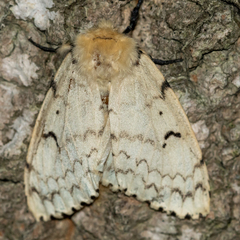 Spongy MothLymantria disparDamages trees, gardens or crops
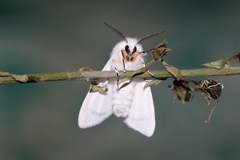 Fall Webworm MothHyphantria cuneaDamages trees, gardens or crops
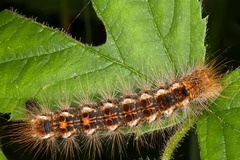 Brown-tail MothEuproctis chrysorrhoeaCan irritate skin
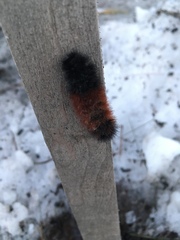 Isabella Tiger MothPyrrharctia isabella
 Virginian Tiger MothSpilosoma virginicaCan irritate skin
 Salt Marsh MothEstigmene acreaDamages trees, gardens or crops
Sources
- Wikipedia: https://en.wikipedia.org/wiki/Apantesis_ornata
Look it up elsewhere: GBIF · iNaturalist · BugGuide · ITIS · Wikipedia
Text written 2026-10-24 from the sources above and checked sentence by sentence against them. Data fetched 2026-10-24.