 Bug FAQ
Orange Footman
Eilema sororcula · Order: Lepidoptera · Family: Erebidae
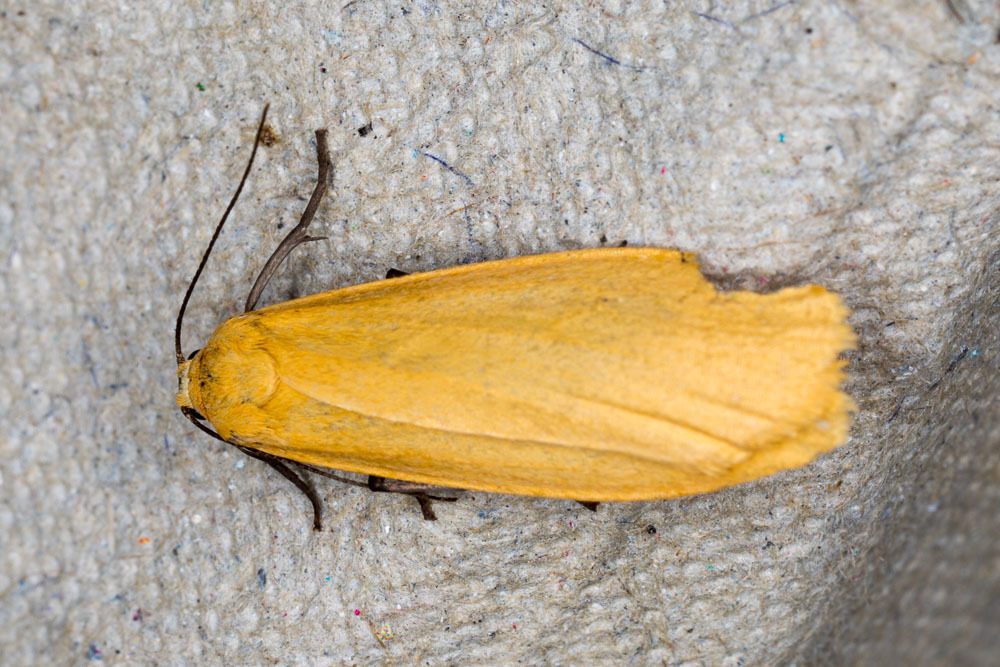
The orange footman moth has a wingspan of about 27 to 30 mm and bright golden-yellow forewings with orange-yellow hindwings that are slightly paler in females. It lives across Europe, Anatolia and the Palearctic to southern Siberia, the Amur basin and China, flying from April to June.
Source: Wikipedia
How to recognize it
The forewing’s leading edge is strongly convex, making the tip broader than in related species, and the costal area of the hindwing is never black. The head, thorax, abdomen tip and forewings are bright golden yellow; males have slightly brighter hindwings than females.
Source: Wikipedia
Size
Adults have a wingspan of roughly 27 to 30 mm (1.1 to 1.2 in).
Source: Wikipedia
What it eats
Larvae eat lichens growing on both coniferous and deciduous trees. Adults are sometimes seen feeding on flowers during the day.
Source: Wikipedia
Life cycle
Moths are on the wing from April through June, depending on location. The caterpillars are dark with two yellow dorsal stripes marked with red dots and white spots.
Source: Wikipedia
When you see it
Flight period runs from April to June, varying with geography.
Source: Wikipedia
Lookalikes
Unlike the lutarella group, the orange footman's hindwing costal area is never black on either side.
Source: Wikipedia
Where it is found in the US
Recorded in 1 of 51 states and DC. Most records: Utah.
Darker = more records. Counts are museum and citizen-science records, not population size.
Source: GBIF
Same family (Erebidae)
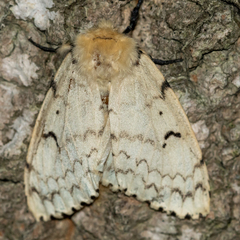 Spongy MothLymantria disparDamages trees, gardens or crops
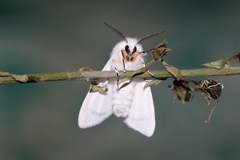 Fall Webworm MothHyphantria cuneaDamages trees, gardens or crops
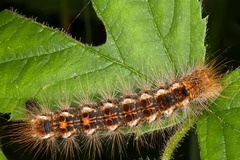 Brown-tail MothEuproctis chrysorrhoeaCan irritate skin
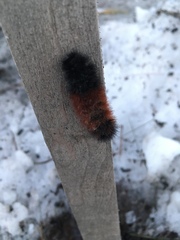 Isabella Tiger MothPyrrharctia isabella
 Virginian Tiger MothSpilosoma virginicaCan irritate skin
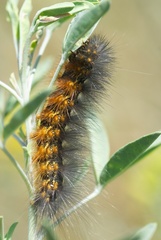 Salt Marsh MothEstigmene acrea
Sources
- Wikipedia: https://en.wikipedia.org/wiki/Wittia_sororcula
Look it up elsewhere: GBIF · iNaturalist · BugGuide · Wikipedia
Text written 2026-10-22 from the sources above and checked sentence by sentence against them. Data fetched 2026-10-22.