 Bug FAQ
Orange-bearded Bluebottle Fly
Calliphora vomitoria · Order: Diptera · Family: Calliphoridae
Also called: Blue Bottle Fly, Holarctic Blue Blowfly, Orange-bearded Bluebottle
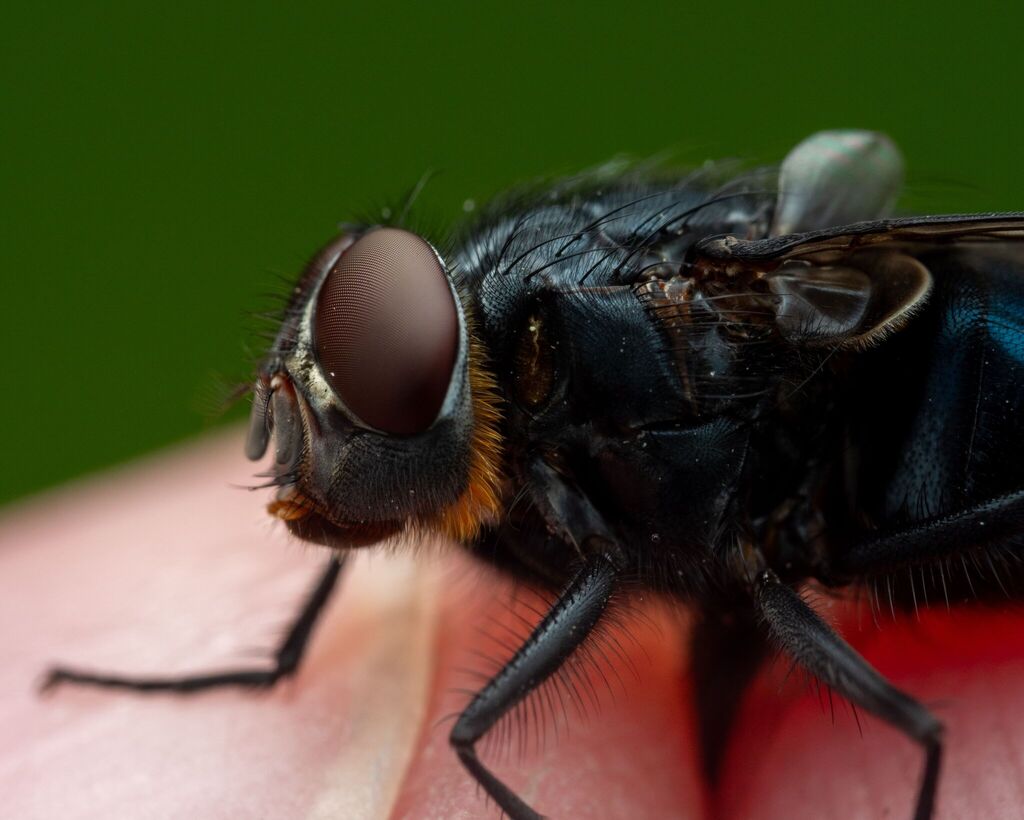
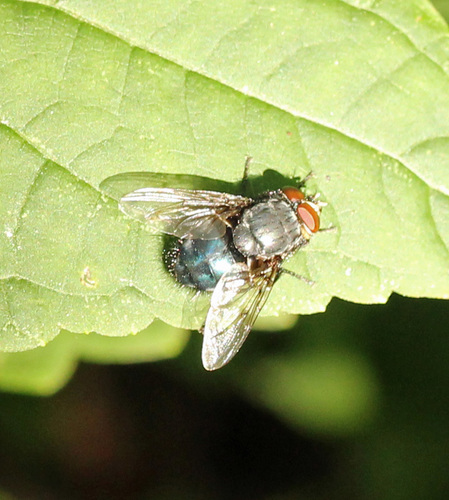
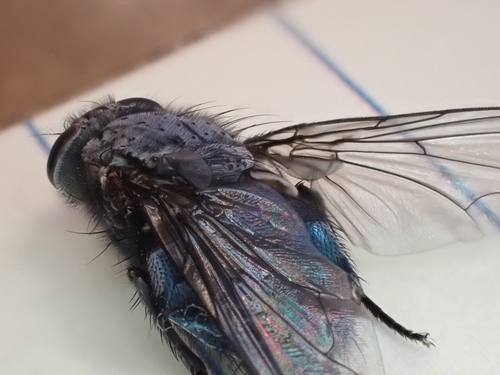
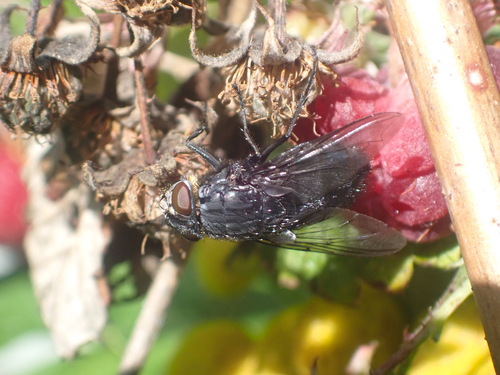
The orange-bearded bluebottle fly is a fairly large fly, about 10 to 14 mm long, with a dull gray head and thorax and bright metallic blue abdomen marked with black. Adults feed on nectar and act as pollinators, while the larvae develop in dead animal matter, completing their life cycle in roughly two weeks. They are found worldwide, especially in rural and riparian areas, and are most common in spring and summer.
Source: Wikipedia
Where it lives
They are among the most abundant flies in their regions and are found mainly in rural areas in winter and summer, and in riparian zones during spring and fall.
Source: Wikipedia
What it eats
Adults feed on nectar and act as pollinators; larvae develop in dead animal matter.
Source: Wikipedia
Life cycle
They undergo a complete metamorphosis: egg, larva, pupa, and adult, with development taking about two weeks.
Source: Wikipedia
When you see it
They are most abundant in spring and summer and least abundant in fall and winter, with temperature influencing their distribution.
Source: Wikipedia
Where it comes from
They occur worldwide, including most of Europe, Alaska, Greenland, southern Mexico, the United States, and southern Africa.
Source: Wikipedia
Lookalikes
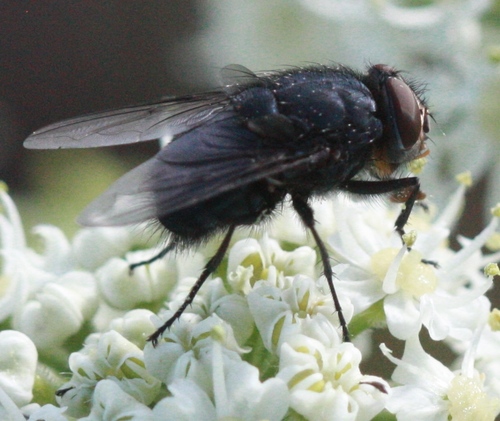
They can be distinguished from similar species by the orange hairs below the eyes, often called “orange cheeks.”
Source: Wikipedia
Where it is found in the US
Recorded in 29 of 51 states and DC. Most records: Alaska, Hawaii, California, Virginia, Washington, Kansas, Maryland, Pennsylvania.
Darker = more records. Counts are museum and citizen-science records, not population size.
Source: GBIF
Status: native in North America; native in United States; native in Canada. Source: iNaturalist
Months it is reported in the US
Source: GBIF
More photos
Questions people ask
How can I tell an orange-bearded bluebottle fly apart from other bluebottles?
Look for the orange hairs below the eyes and the bright metallic blue abdomen with black markings.
Source: Wikipedia
Where are these flies most likely to be found?
They are common in rural and riparian areas, especially in spring and summer.
Source: Wikipedia
What do adult orange-bearded bluebottle flies eat?
Adults feed on nectar and help pollinate flowers.
Source: Wikipedia
How long does it take for a bluebottle fly to develop from egg to adult?
The whole development cycle usually takes about two weeks.
Source: Wikipedia
Same family (Calliphoridae)
 Common European Greenbottle FlyLucilia sericataNuisance, not dangerous
 Blue BlowflyCalliphora vicinaCan spread germs or disease
 Black Blow FlyPhormia reginaNuisance, not dangerous
 Oriental Latrine FlyChrysomya megacephalaCan spread germs or disease
 Australian Sheep Blow FlyLucilia cuprinaNuisance, not dangerous
 Locust BlowflyStomorhina lunata
Sources
- Wikipedia: https://en.wikipedia.org/wiki/Calliphora_vomitoria
Look it up elsewhere: GBIF · iNaturalist · BugGuide · ITIS · Wikipedia
Text written 2026-10-23 from the sources above and checked sentence by sentence against them. Data fetched 2026-10-22.