 Bug FAQ
Nine-spotted Moth
Amata phegea · Order: Lepidoptera · Family: Erebidae
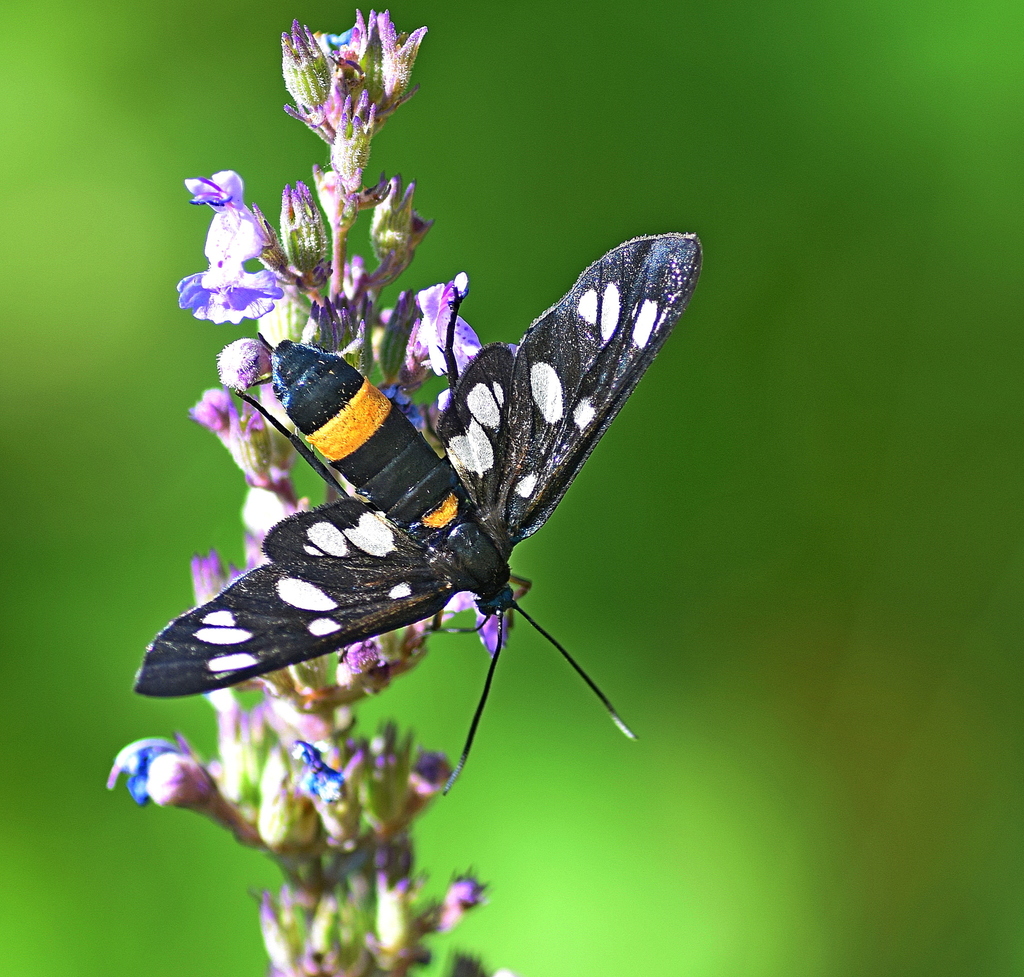
The nine-spotted moth has a wingspan of about 35 to 40 mm and its caterpillars grow to roughly 5 cm long. Adults fly in warm, sunny weather from late May through August, while the larvae appear in early August and feed on many low herbaceous plants. It lives in dry, open habitats with shrubs or trees, is a rare immigrant to the UK, and is native to southern Europe extending to northern Germany, Anatolia, the Caucasus, and now India.
Source: Wikipedia
How to recognize it
The moth’s wings are dark blue-black or green-black with a metallic shine and bear six white spots on each forewing and two or three on each hindwing.
Source: Wikipedia
Size
Wingspan ranges from 35 to 40 mm (1.4 to 1.6 in). Caterpillars can reach about 5 cm (2 in) in length.
Source: Wikipedia
Where it lives
Prefers dry, open areas with shrubs, trees, open forests, and sunny slopes.
Source: Wikipedia
What it eats
Females lay eggs on many herb species, and the larvae feed on a variety of low plants such as plantain, sorrel, bedstraw, grasses, dandelion and others.
Source: Wikipedia
Life cycle
The species produces one generation each year. Caterpillars hibernate in a silk nest and pupate in May within ground cocoons.
Source: Wikipedia
When you see it
Larvae hatch in early August and feed on various herbaceous plants.
Source: Wikipedia
Where it comes from
Mainly found in southern Europe, reaching up to northern Germany and eastward to Anatolia and the Caucasus. It has also been recorded in India in recent times.
Source: Wikipedia
Lookalikes
Similar species include Amata ragazzii and Zygaena ephialtes, and the nine-spotted moth participates in Müllerian mimicry.
Source: Wikipedia
Same family (Erebidae)
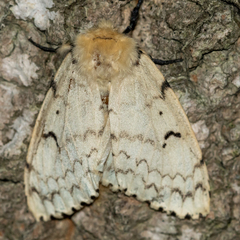 Spongy MothLymantria disparDamages trees, gardens or crops
 Fall Webworm MothHyphantria cuneaDamages trees, gardens or crops
 Brown-tail MothEuproctis chrysorrhoeaCan irritate skin
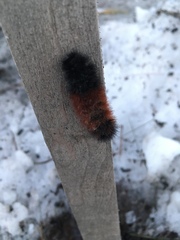 Isabella Tiger MothPyrrharctia isabella
 Virginian Tiger MothSpilosoma virginicaCan irritate skin
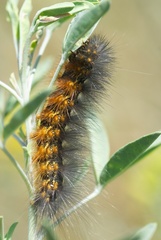 Salt Marsh MothEstigmene acrea
Sources
- Wikipedia: https://en.wikipedia.org/wiki/Nine-spotted_moth
Look it up elsewhere: GBIF · iNaturalist · BugGuide · Wikipedia
Text written 2026-10-22 from the sources above and checked sentence by sentence against them. Data fetched 2026-10-22.