 Bug FAQ
Madagascan fireweed moth
Galtara extensa · Order: Lepidoptera · Family: Erebidae
Also called: Madagascar moth
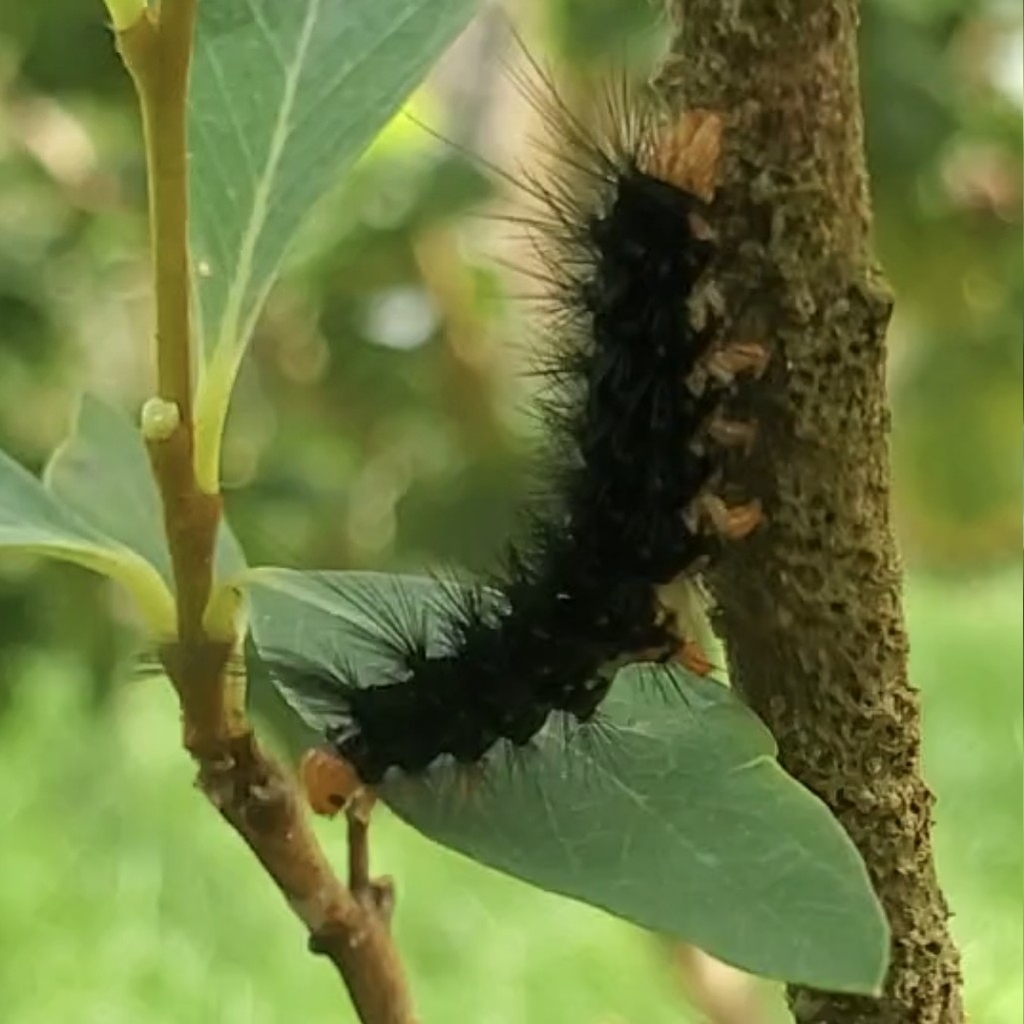
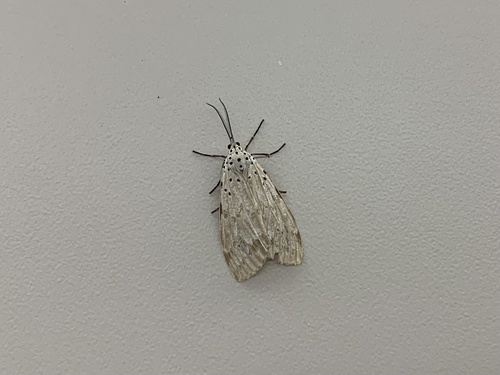
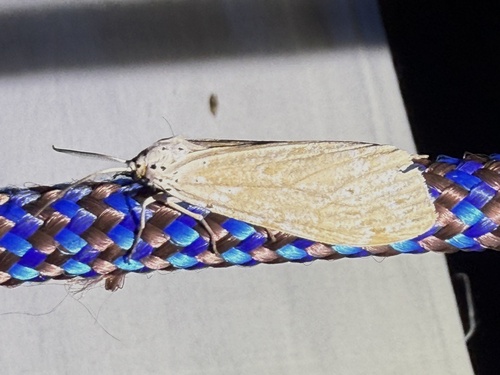
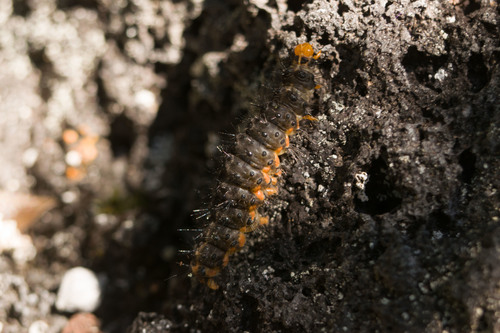
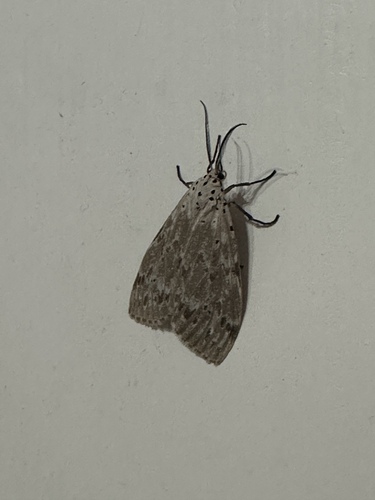
Adult Madagascan fireweed moths are about 26 mm long and have mottled grey-white forewings with black spots. The caterpillars feed mainly on fireweed and also on several other herbaceous plants, and the species has been released in Hawaii to help control fireweed.
Source: Wikipedia
How to recognize it
Adults show mottled shades of grey with white and black spotting on the forewings.
Source: Wikipedia
Size
Mature moths reach a length of about 26.4 mm.
Source: Wikipedia
How to get rid of it
In December 2012 the USDA approved releasing Galtara extensa in Hawaii to combat fireweed spread.
Source: Wikipedia
Where it lives
They are found on the Comoros islands and in Madagascar.
Source: Wikipedia
What it eats
Larvae feed primarily on fireweed (Senecio madagascariensis).
Source: Wikipedia
Life cycle
The whole life span is about 41 days, allowing up to nine generations per year under lab conditions.
Source: Wikipedia
Where it comes from
Their native range includes the Comoros and Madagascar.
Source: Wikipedia
Where it is found in the US
Recorded in 1 of 51 states and DC. Most records: Hawaii.
Darker = more records. Counts are museum and citizen-science records, not population size.
Source: GBIF
Status: introduced in United States. Source: iNaturalist
Months it is reported in the US
Source: GBIF
More photos
Questions people ask
What plants do the larvae eat?
They mainly eat fireweed and can also feed on several other weeds and sunflowers.
Source: Wikipedia
Has this moth been used for biological control?
Yes, it was approved for release in Hawaii to help control fireweed.
Source: Wikipedia
Same family (Erebidae)
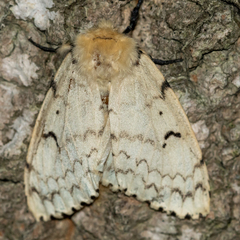 Spongy MothLymantria disparDamages trees, gardens or crops
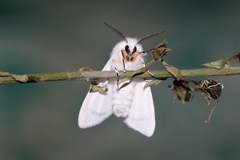 Fall Webworm MothHyphantria cuneaDamages trees, gardens or crops
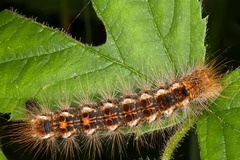 Brown-tail MothEuproctis chrysorrhoeaCan irritate skin
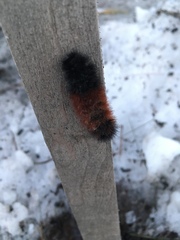 Isabella Tiger MothPyrrharctia isabella
 Virginian Tiger MothSpilosoma virginicaCan irritate skin
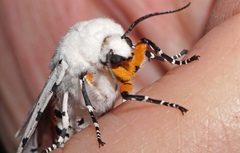 Salt Marsh MothEstigmene acreaDamages trees, gardens or crops
Sources
- Wikipedia: https://en.wikipedia.org/wiki/Galtara_extensa
Look it up elsewhere: GBIF · iNaturalist · BugGuide · Wikipedia
Text written 2026-10-27 from the sources above and checked sentence by sentence against them. Data fetched 2026-10-27.