 Bug FAQ
Locust Underwing
Euparthenos nubilis · Order: Lepidoptera · Family: Erebidae
Also called: Locust Underwing Moth
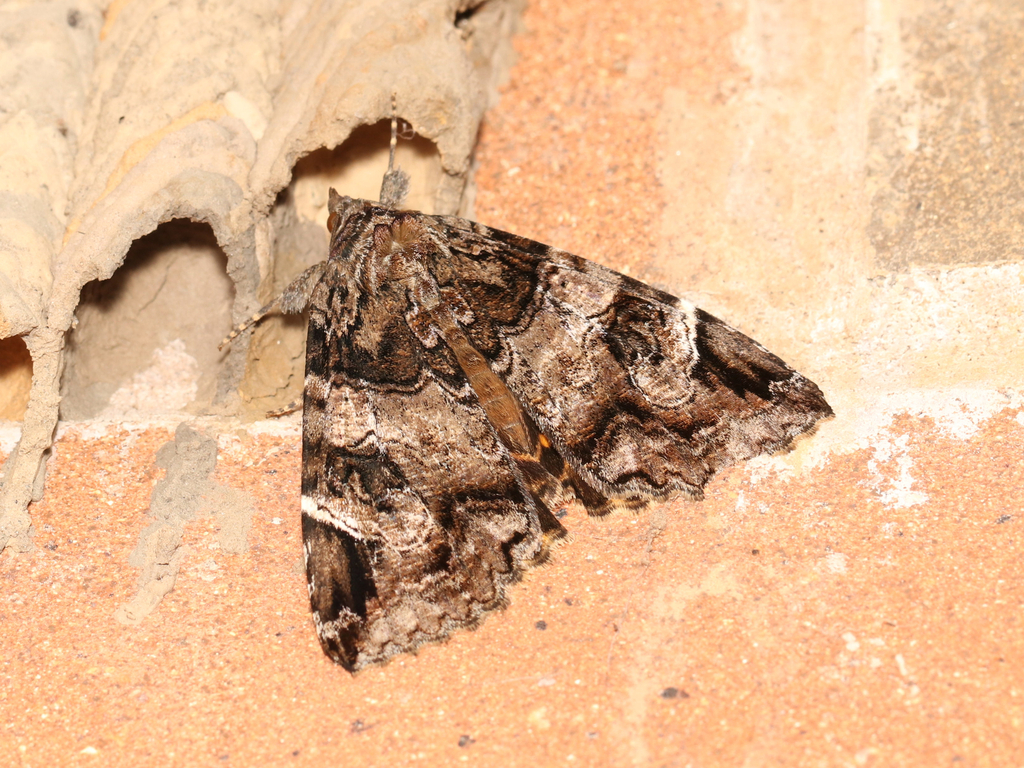
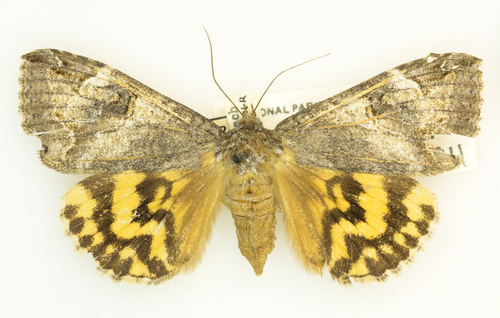
The locust underwing moth has a wingspan of about 56 to 70 mm, with light grey forewings marked by darker lines and bright yellow-orange hindwings crossed by four black concentric bands. It lives across much of North America, from the northeastern US and Canada down to northern Florida and west to the central states, and adults are active from April through September, producing two generations each year.
Source: Wikipedia
How to recognize it
Forewings are light grey with darker grey and brown lines; hindwings are yellow-orange with four black concentric bands, a key feature that separates it from similar Catocala moths.
Source: Wikipedia
Size
The wingspan ranges from 56 to 70 mm (about 2 to almost 3 inches).
Source: Wikipedia
Where it lives
Adults are attracted to lights and often feed on the juice of fermenting fruit.
Source: Wikipedia
What it eats
Caterpillars feed on locust-tree species such as black locust (Robinia pseudoacacia). Adults sip fermenting fruit juices.
Source: Wikipedia
Life cycle
Adults are on the wing from April to September. There are two generations each year.
Source: Wikipedia
When you see it
Adults can be seen from spring through early fall (April-September).
Source: Wikipedia
Lookalikes
It resembles some Catocala underwing moths, but the four black bands on each hindwing help tell them apart; colour morphs can make identification harder.
Source: Wikipedia
Where it is found in the US
Recorded in 38 of 51 states and DC. Most records: Pennsylvania, North Carolina, Virginia, Ohio, Maryland, New York, Michigan, Tennessee.
Darker = more records. Counts are museum and citizen-science records, not population size.
Source: GBIF
Status: native in North America; native in Canada; native in United States. Source: iNaturalist
Months it is reported in the US
Source: GBIF
More photos
Questions people ask
What do the caterpillars eat?
The larvae feed on locust-tree species, especially black locust.
Source: Wikipedia
When are adult locust underwing moths active?
Adults are active from April through September and have two generations each year.
Source: Wikipedia
How can I tell this moth apart from Catocala species?
Look for four concentric black bands on each yellow-orange hindwing; Catocala usually have only one to three bands.
Source: Wikipedia
Same family (Erebidae)
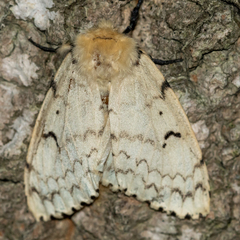 Spongy MothLymantria disparDamages trees, gardens or crops
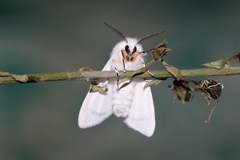 Fall Webworm MothHyphantria cuneaDamages trees, gardens or crops
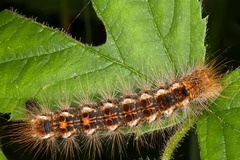 Brown-tail MothEuproctis chrysorrhoeaCan irritate skin
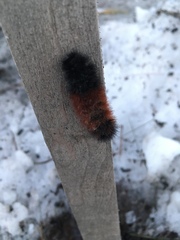 Isabella Tiger MothPyrrharctia isabella
 Virginian Tiger MothSpilosoma virginicaCan irritate skin
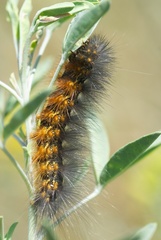 Salt Marsh MothEstigmene acrea
Sources
- Wikipedia: https://en.wikipedia.org/wiki/Euparthenos
Look it up elsewhere: GBIF · iNaturalist · BugGuide · ITIS · Wikipedia
Text written 2026-10-23 from the sources above and checked sentence by sentence against them. Data fetched 2026-10-23.