 Bug FAQ
Indomitable Graphic Moth
Melipotis indomita · Order: Lepidoptera · Family: Erebidae
Also called: Indomitable Melipotis Moth, Moth
Source: Wikipedia

The moth has a wingspan of about four to five and a half centimeters. It lives across a wide area from the West Indies and Mexico up to Maine and across to California. Its caterpillars feed on Prosopis species, which can affect those plants.
Source: Wikipedia
Size
Adults measure 40 to 55 mm from wing tip to wing tip.
Source: Wikipedia
Where it lives
You can find this moth in the West Indies, Mexico, and many U.S. states from Maine and Florida to Texas and California.
Source: Wikipedia
What it eats
The caterpillars eat leaves of plants in the Prosopis genus.
Source: Wikipedia
Life cycle
The species can produce several generations each year.
Source: Wikipedia
Where it comes from
Its natural range stretches from the West Indies through Mexico and across the United States from the northeast to the southwest.
Source: Wikipedia
Where it is found in the US
Recorded in 36 of 51 states and DC. Most records: Texas, Arizona, New Mexico, California, Oklahoma, Hawaii, Colorado, Kansas.
Darker = more records. Counts are museum and citizen-science records, not population size.
Source: GBIF
Status: native in North America; native in Canada; native in United States. Source: iNaturalist
Months it is reported in the US
Source: GBIF
More photos

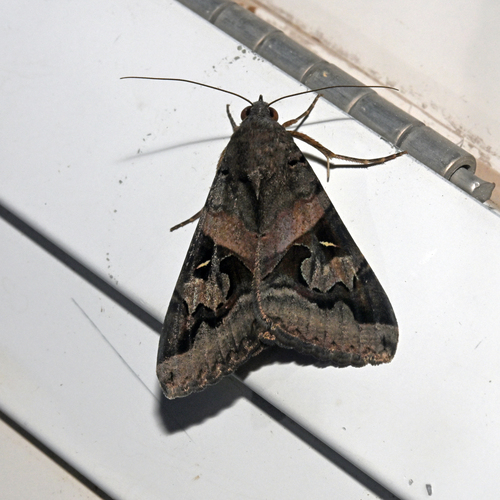
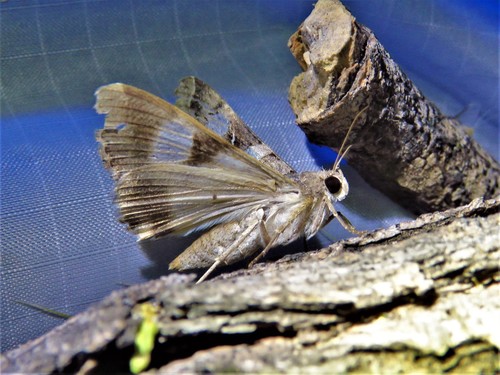
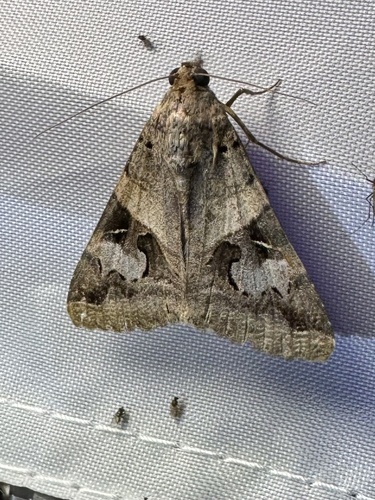
Questions people ask
Do the larvae damage garden plants?
Yes, they feed on Prosopis species, which can harm those shrubs or trees.
Source: Wikipedia
Same family (Erebidae)
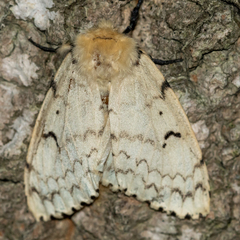 Spongy MothLymantria disparDamages trees, gardens or crops
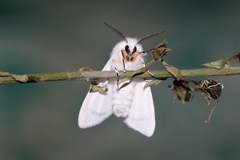 Fall Webworm MothHyphantria cuneaDamages trees, gardens or crops
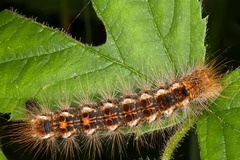 Brown-tail MothEuproctis chrysorrhoeaCan irritate skin
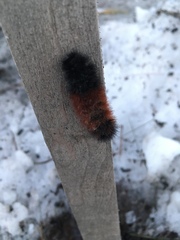 Isabella Tiger MothPyrrharctia isabella
 Virginian Tiger MothSpilosoma virginicaCan irritate skin
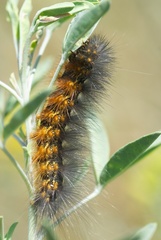 Salt Marsh MothEstigmene acrea
Sources
- Wikipedia: https://en.wikipedia.org/wiki/Melipotis_indomita
Look it up elsewhere: GBIF · iNaturalist · BugGuide · ITIS · Wikipedia
Text written 2026-10-22 from the sources above and checked sentence by sentence against them. Data fetched 2026-10-22.