 Bug FAQ
Illustrious Greenbottle Fly
Lucilia illustris · Order: Diptera · Family: Calliphoridae
Also called: Illustrious Greenbottle
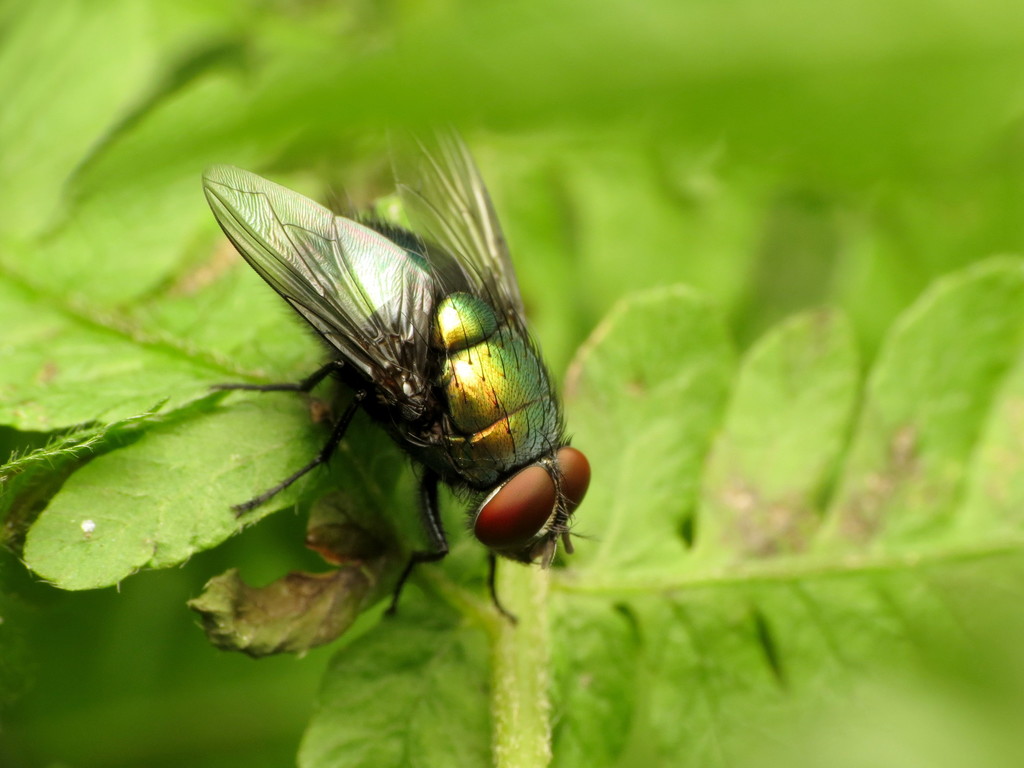
The Illustrious Greenbottle Fly is a 6 to 9 mm metallic blue-green fly whose thorax can shine bronze or purple. Adults feed on flowers while females need carrion protein to lay eggs, and the larvae develop on decomposing flesh. It prefers cooler weather and can become the dominant maggot species on a corpse at about 7.7 °C.
Source: Wikipedia
How to recognize it
It has a metallic blue-green thorax that can reflect bronze and purple.
Source: Wikipedia
Size
The fly measures about 6 to 9 mm long.
Source: Wikipedia
Is it a pest in the house?
It can infest wildlife and domesticated livestock, creating economic problems. Blowfly larvae may invade bird nests, sucking blood from nestlings and potentially killing them.
Source: Wikipedia
Where it lives
Adults visit flowering plants for food.
Source: Wikipedia
What it eats
Adults feed on flower nectar, but females require protein from carrion to produce eggs. The larvae are carrion feeders and will infest any decomposing corpse.
Source: Wikipedia
Life cycle
Larvae pass through three instars, each with distinct development. A female can lay up to ten batches of eggs during her three-week adult life. At 25 °C, eggs hatch in roughly 24 hours.
Source: Wikipedia
When you see it
The species prefers cooler weather.
Source: Wikipedia
Lookalikes
It is one of several species commonly called a green bottle fly.
Source: Wikipedia
Where it is found in the US
Recorded in 32 of 51 states and DC. Most records: Alaska, Vermont, Maryland, Illinois, Michigan, New York, Ohio, Wisconsin.
Darker = more records. Counts are museum and citizen-science records, not population size.
Source: GBIF
Status: native in North America; native in Canada. Source: iNaturalist
Months it is reported in the US
Source: GBIF
More photos

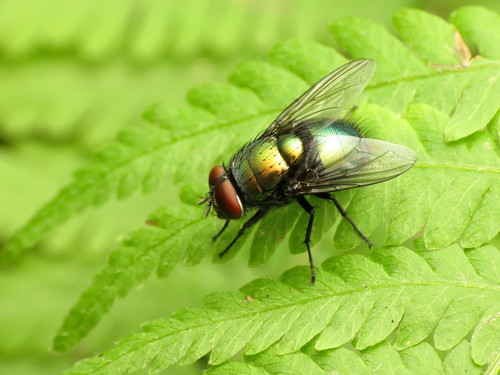
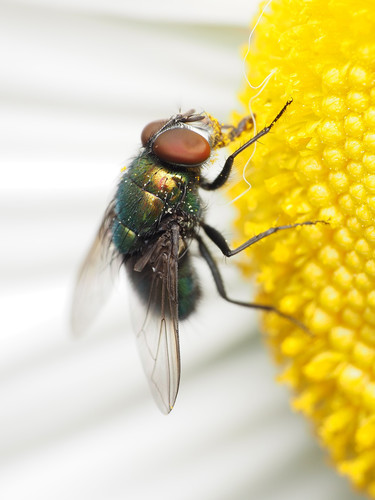
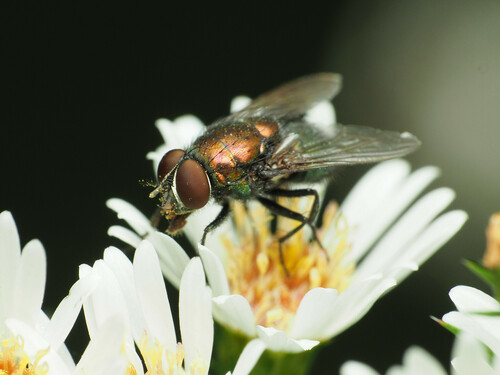
Same family (Calliphoridae)
 Common European Greenbottle FlyLucilia sericataNuisance, not dangerous
 Blue BlowflyCalliphora vicinaCan spread germs or disease
 Black Blow FlyPhormia reginaNuisance, not dangerous
 Oriental Latrine FlyChrysomya megacephalaCan spread germs or disease
 Australian Sheep Blow FlyLucilia cuprinaNuisance, not dangerous
 Locust BlowflyStomorhina lunata
Sources
- Wikipedia: https://en.wikipedia.org/wiki/Lucilia_illustris
Look it up elsewhere: GBIF · iNaturalist · BugGuide · ITIS · Wikipedia
Text written 2026-10-25 from the sources above and checked sentence by sentence against them. Data fetched 2026-10-25.