 Bug FAQ
Herald Moth
Scoliopteryx libatrix · Order: Lepidoptera · Family: Erebidae
Also called: Scalloped Owlet, The Herald
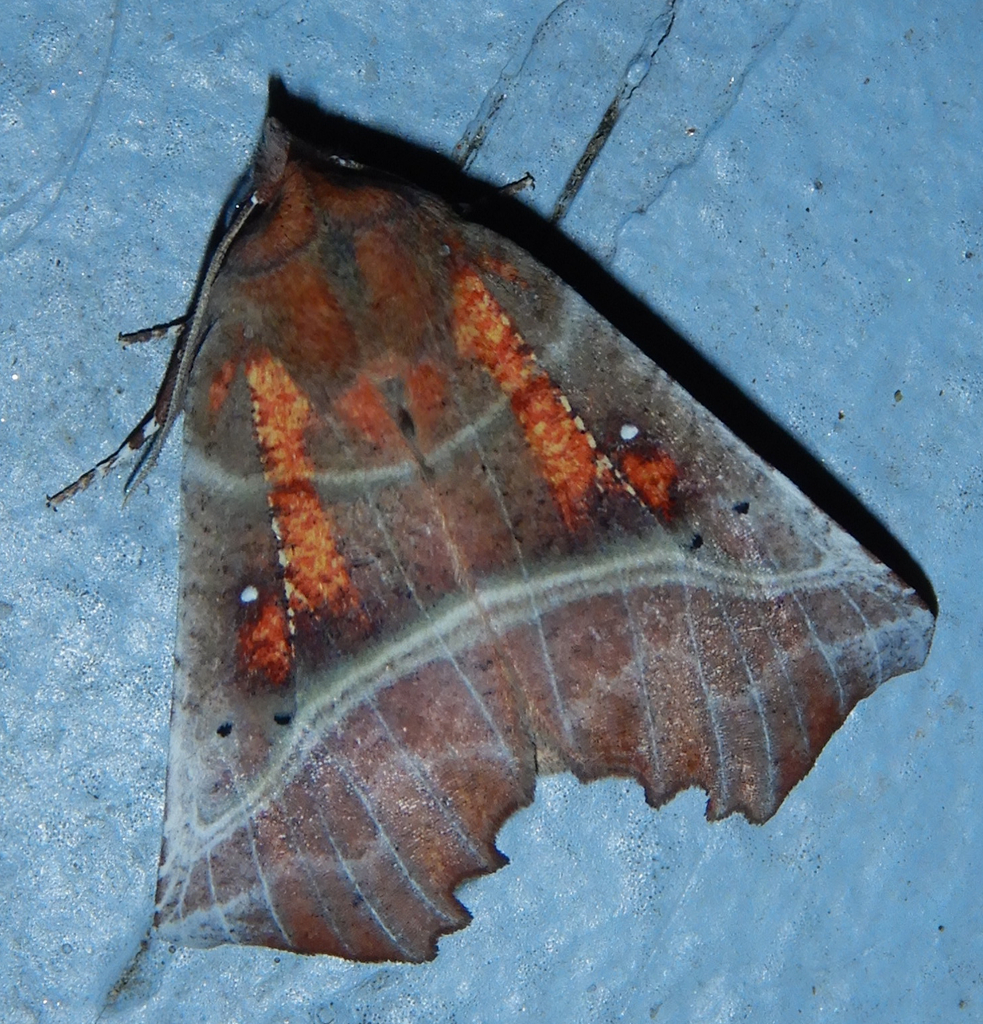
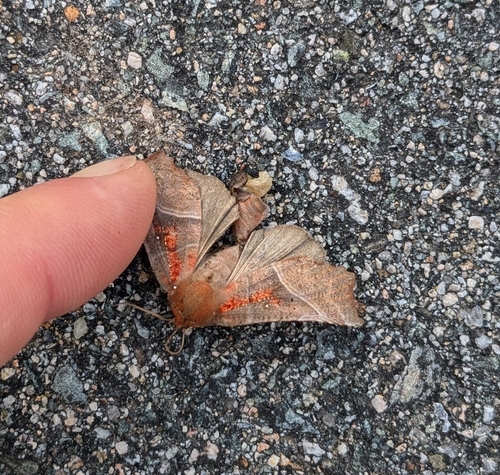
The herald moth has a wingspan of about 44 mm and distinctive wing patterns that look like a dead leaf, helping it blend into woodland parks and gardens. It is found across the Palearctic and Nearctic regions, flies from June to November in one or two generations, and overwinters in cool dark places such as cellars or barns.
Source: Wikipedia
How to recognize it
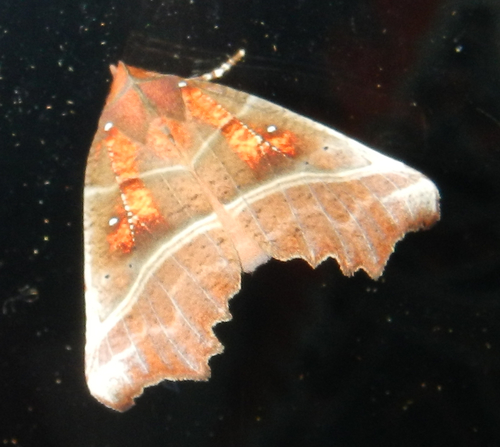
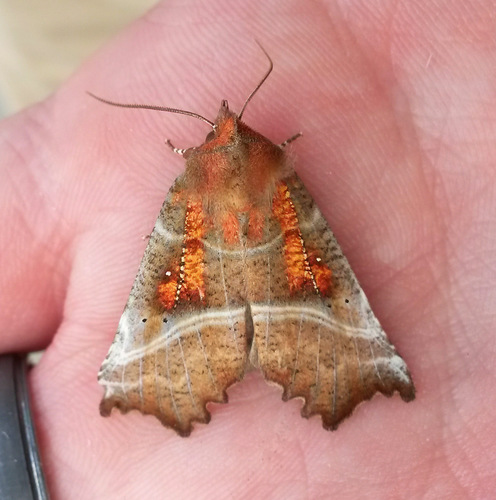
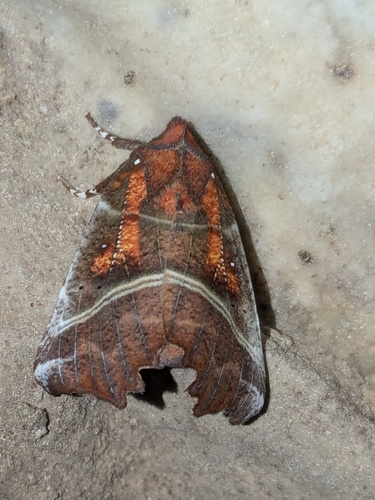
The forewings are broad with a middle angle and a concave edge toward the tip; they are grey-ochre with dark streaks, a rosy tint near the edge, and several pale and white markings including a white spot at the base, a white orbicular dot, and two black dots forming the reniform mark.
Source: Wikipedia
Size
The moth’s wingspan is roughly 44 mm.
Source: Wikipedia
Where it lives
It lives in woodland parks and gardens, where its wing pattern mimics a shrivelled leaf.
Source: Wikipedia
What it eats
Caterpillars are bright green with thin yellow lines between segments and feed on willow, aspen, and poplar before pupating in a white silk cocoon between two leaves.
Source: Wikipedia
Life cycle
Adults fly from June to November in one or two broods, while in winter they hide in cool dark places and emerge again from March to June.
Source: Wikipedia
When you see it
Flight time spans June-November, with winter hibernation in dark, cool structures and re-emergence in early spring.
Source: Wikipedia
Where it comes from
It occurs throughout the Holarctic, covering both Palearctic and Nearctic regions.
Source: Wikipedia
Where it is found in the US
Recorded in 47 of 51 states and DC. Most records: Michigan, Minnesota, Ohio, Oregon, Alaska, Massachusetts, New York, Washington.
Darker = more records. Counts are museum and citizen-science records, not population size.
Source: GBIF
Status: native in North America; native in Canada; native in United States. Source: iNaturalist
Months it is reported in the US
Source: GBIF
More photos
Same family (Erebidae)
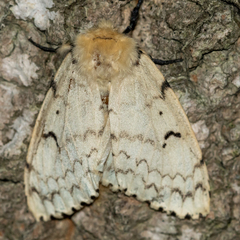 Spongy MothLymantria disparDamages trees, gardens or crops
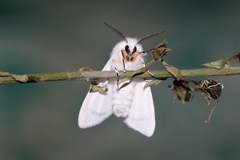 Fall Webworm MothHyphantria cuneaDamages trees, gardens or crops
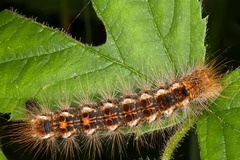 Brown-tail MothEuproctis chrysorrhoeaCan irritate skin
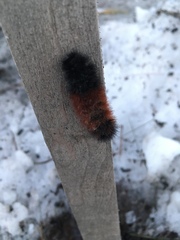 Isabella Tiger MothPyrrharctia isabella
 Virginian Tiger MothSpilosoma virginicaCan irritate skin
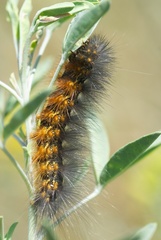 Salt Marsh MothEstigmene acrea
Sources
- Wikipedia: https://en.wikipedia.org/wiki/Herald_%28moth%29
Look it up elsewhere: GBIF · iNaturalist · BugGuide · ITIS · Wikipedia
Text written 2026-10-22 from the sources above and checked sentence by sentence against them. Data fetched 2026-10-22.