 Bug FAQ
Heliotrope Moth
Utetheisa pulchelloides · Order: Lepidoptera · Family: Erebidae
Source: Wikipedia
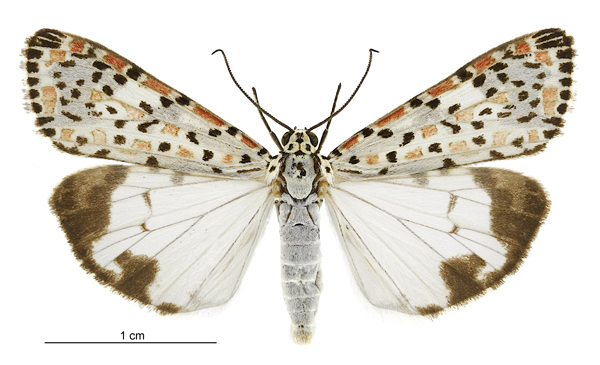
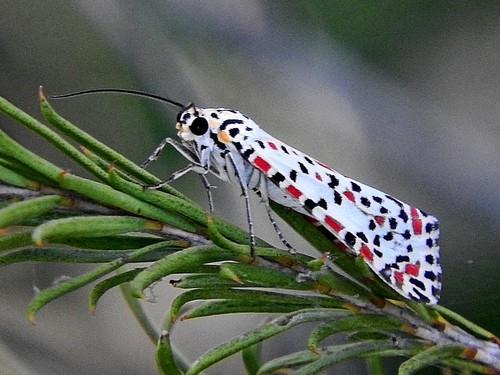
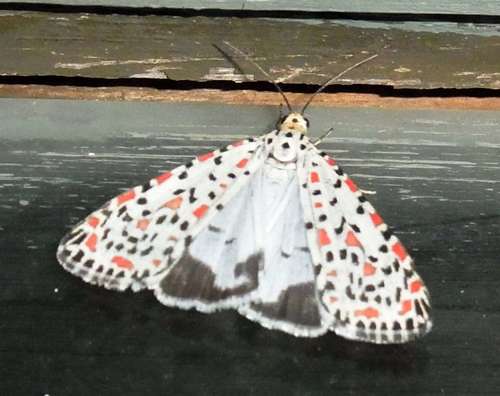
Forewings are white with five broken scarlet bands and black spots, plus a marginal row of black spots. Hindwings are mostly translucent white, sometimes with black on the discocellular area. It lives across the Indo-Australian region, including places like Borneo, Australia, Greece and New Zealand.
Source: Wikipedia
How to recognize it
Forewing white with five interrupted scarlet bands and a series of black spots between them. A marginal series of black spots runs along the wing edge. Hindwings are semi-diaphanous white; some specimens show black on the discocellulars. A very irregular black sub-marginal band is broad near the apex and between veins 1b and 3.
Source: Wikipedia
Where it lives
It occurs throughout the Indo-Australian region, from Borneo and Hong Kong to Australia, Greece and the Seychelles.
Source: Wikipedia
Life cycle
Pupation occurs in a loose cocoon spun in leaf litter beneath the host plant.
Source: Wikipedia
More photos
Questions people ask
Does the heliotrope moth damage garden plants?
Yes, its caterpillars feed on several garden species such as Heliotropium and Myosotis, which can harm gardens.
Source: Wikipedia
Same family (Erebidae)
 Spongy MothLymantria disparDamages trees, gardens or crops
 Fall Webworm MothHyphantria cuneaDamages trees, gardens or crops
 Brown-tail MothEuproctis chrysorrhoeaCan irritate skin
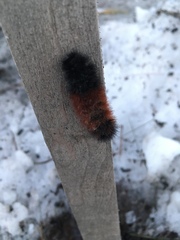 Isabella Tiger MothPyrrharctia isabella
 Virginian Tiger MothSpilosoma virginicaCan irritate skin
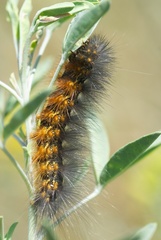 Salt Marsh MothEstigmene acrea
Sources
- Wikipedia: https://en.wikipedia.org/wiki/Utetheisa_pulchelloides
Look it up elsewhere: GBIF · iNaturalist · BugGuide · ITIS · Wikipedia
Text written 2026-10-22 from the sources above and checked sentence by sentence against them. Data fetched 2026-10-22.