 Bug FAQ
Hairy Maggot Blow Fly
Chrysomya rufifacies · Order: Diptera · Family: Calliphoridae
Also called: Blow fly
Source: Wikipedia

Adult hairy maggot blow flies are tiny, only 6 to 12 mm long. Their whole life cycle from egg to adult takes about 190 to 598 hours, depending on temperature. They are known to bring enteric pathogens into houses when they are attracted to feces, fruit, meat and waste.
Source: Wikipedia
How to recognize it
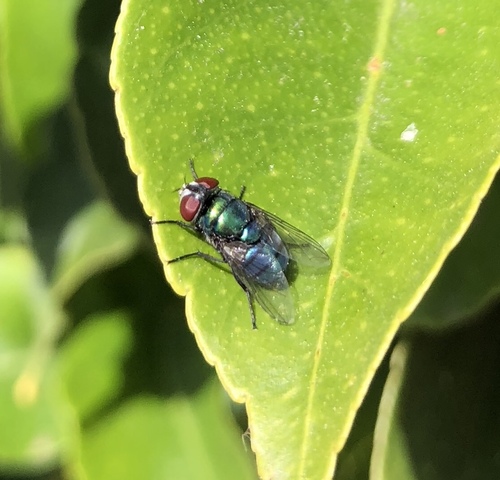
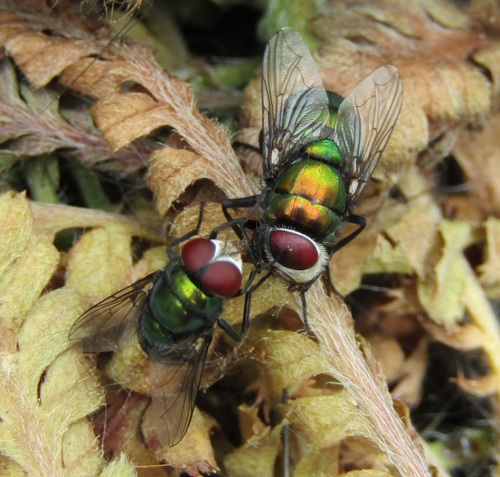
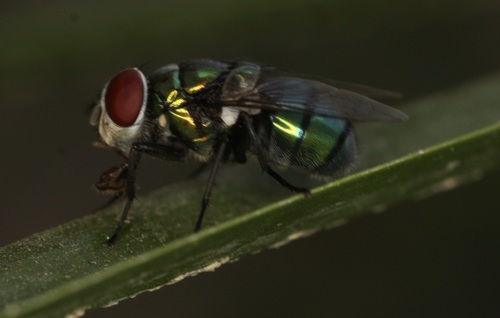
They have a shiny metallic blue-green body, a pale genal dilation, and a pale patch on the front thoracic spiracle.
Source: Wikipedia
Size
Adults measure about 6 to 12 mm in length.
Source: Wikipedia
Is it a pest in the house?
When they enter homes attracted to waste, they can act as vectors for enteric pathogens. They are expected to spread widely across the United States in the near future.
Source: Wikipedia
Can it bite, sting or make you sick?
Some strains from Australia, India and Hawaii have larval stages that can cause secondary myiasis, a harmful infestation.
Source: Wikipedia
How to get rid of it
- Their larvae can reduce populations of early-arriving blow flies like Lucilia cuprina and Lucilia sericata.
- However, harmful strains can produce larvae that cause secondary myiasis.
Source: Wikipedia
Where it lives
They live in many kinds of human-made environments. They are found from sea level up to roughly 2,100 m altitude.
Source: Wikipedia
What it eats
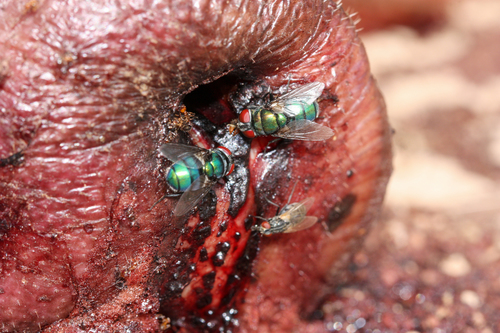
They are attracted to feces, fruit, meat and refuse, which brings them into contact with human food sources. Their larvae can suppress other blow-fly species such as Lucilia cuprina and Lucilia sericata that arrive first on carrion.
Source: Wikipedia
Life cycle
They develop holometabolously: egg, larva, pupa, then adult. The complete cycle takes 190 to 598 hours, varying with temperature.
Source: Wikipedia
When you see it
They prefer very warm weather and have a relatively short life cycle. In summer, adults mate 3 to 7 days after emerging; in autumn, mating occurs 9 to 10 days after emergence.
Source: Wikipedia
Where it comes from
The species is native to Australia.
Source: Wikipedia
Where it is found in the US
Recorded in 21 of 51 states and DC. Most records: Texas, Arizona, Florida, California, Hawaii, Oklahoma, Maryland, Alabama.
Darker = more records. Counts are museum and citizen-science records, not population size.
Source: GBIF
Status: introduced in Canada; introduced in United States. Source: iNaturalist
Months it is reported in the US
Source: GBIF
More photos
Questions people ask
Can they spread disease?
Yes, they can carry enteric pathogens into homes when they are attracted to feces, fruit, meat and waste.
Source: Wikipedia
Do they bite or sting?
Certain strains have larval stages that can cause secondary myiasis, a harmful infestation.
Source: Wikipedia
Same family (Calliphoridae)
 Common European Greenbottle FlyLucilia sericataNuisance, not dangerous
 Blue BlowflyCalliphora vicinaCan spread germs or disease
 Black Blow FlyPhormia reginaNuisance, not dangerous
 Oriental Latrine FlyChrysomya megacephalaCan spread germs or disease
 Australian Sheep Blow FlyLucilia cuprinaNuisance, not dangerous
 Locust BlowflyStomorhina lunata
Sources
- Wikipedia: https://en.wikipedia.org/wiki/Chrysomya_rufifacies
Look it up elsewhere: GBIF · iNaturalist · BugGuide · Wikipedia
Text written 2026-10-26 from the sources above and checked sentence by sentence against them. Data fetched 2026-10-26.