 Bug FAQ
Garden Tiger
Arctia caja · Order: Lepidoptera · Family: Erebidae
Also called: Garden Tiger Moth, Great Tiger Moth
Source: Wikipedia
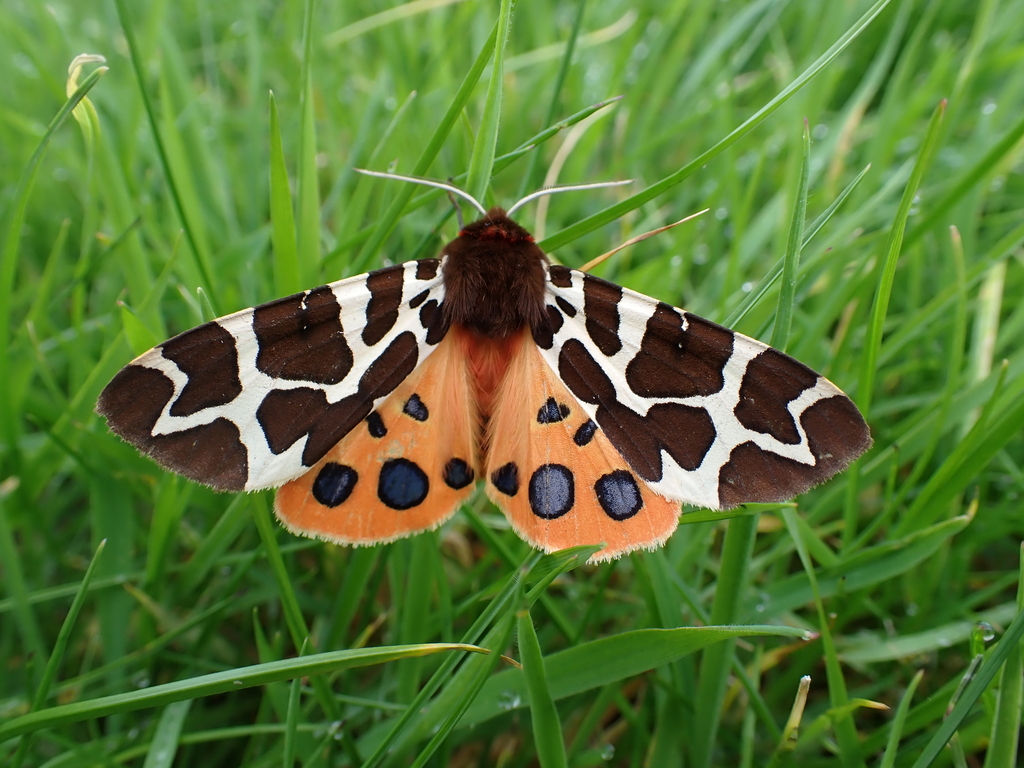
Adults are active at night from June to September, display bright orange hindwings with dark blue dots, and their body fluids are poisonous. It lives in cool, seasonal habitats across northern North America and Europe, preferring grasslands to forests.
Source: Wikipedia
How to recognize it
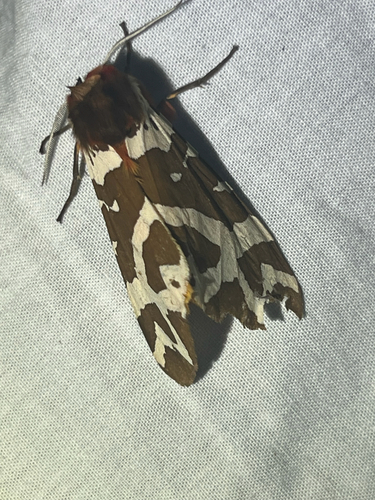
The forewings are brown with a white pattern that may be absent, while the hindwings are orange with dark blue dots outlined in black. There are many colour and pattern variants, some occurring naturally and some produced artificially.
Source: Wikipedia
Size
Wingspan ranges from 45 to 65 mm (1.8 to 2.6 in). Caterpillars can reach up to 6 cm (2.4 in) in length.
Source: Wikipedia
Does it bite or sting?
The moth’s body fluids are poisonous.
Source: Wikipedia
Where it lives
It occupies many wild habitats, from open grasslands to forested areas. A constant requirement is a cool, seasonal climate; tropical conditions are unsuitable.
Source: Wikipedia
Life cycle
Eggs hatch at the end of summer (August-September), the larvae overwinter once, and the moth completes development by June. There is no overlap of generations; each life stage is distinct.
Source: Wikipedia
When you see it
Adults are active mainly at night from July to August, extending to September in warmer areas. In northern climates, adult activity may end by August.
Source: Wikipedia
Where it comes from
It is a northern species found throughout the United States, Canada, and Europe.
Source: Wikipedia
Lookalikes
It is closely related to other cold-adapted tiger moths and shares genetic similarity with several species that were once considered the same.
Source: Wikipedia
Where it is found in the US
Recorded in 26 of 51 states and DC. Most records: Colorado, Utah, Vermont, Washington, Wyoming, Montana, Minnesota, New Hampshire.
Darker = more records. Counts are museum and citizen-science records, not population size.
Source: GBIF
Status: native in North America; native in Canada; native in United States. Source: iNaturalist
Months it is reported in the US
Source: GBIF
More photos
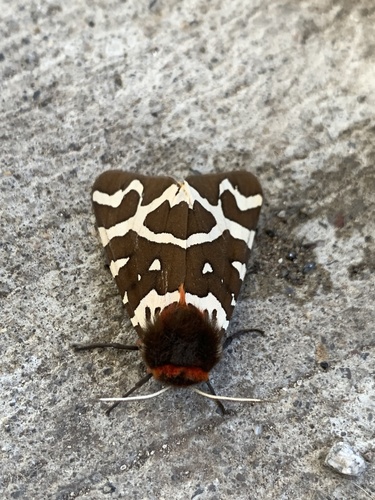
Questions people ask
When can I see adult garden tiger moths?
Adults are most active at night from June through September, with peak activity in July and August.
Source: Wikipedia
Where does this moth live?
It lives in cool, seasonal habitats across northern United States, Canada, and Europe, from grasslands to forests.
Source: Wikipedia
Same family (Erebidae)
 Spongy MothLymantria disparDamages trees, gardens or crops
 Fall Webworm MothHyphantria cuneaDamages trees, gardens or crops
 Brown-tail MothEuproctis chrysorrhoeaCan irritate skin
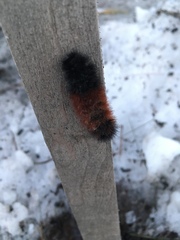 Isabella Tiger MothPyrrharctia isabella
 Virginian Tiger MothSpilosoma virginicaCan irritate skin
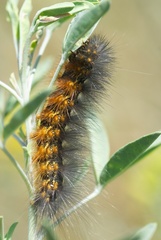 Salt Marsh MothEstigmene acrea
Sources
- Wikipedia: https://en.wikipedia.org/wiki/Garden_tiger_moth
Look it up elsewhere: GBIF · iNaturalist · BugGuide · ITIS · Wikipedia
Text written 2026-10-22 from the sources above and checked sentence by sentence against them. Data fetched 2026-10-22.