 Bug FAQ
Dot-underwing Moth
Eudocima materna · Order: Lepidoptera · Family: Erebidae
Also called: Fruit-Piercing Moth


The dot-underwing moth has a wingspan of roughly 60 to 96 mm. It is found across tropical Asia, New Guinea, Australia and Africa. Its larvae feed on plants in the Menispermaceae family, such as Tinospora smilacina and Legnephora moorei.
Source: Wikipedia
How to recognize it
Each hindwing shows a small central black dot, and the forewings are greenish-grey with many faint reddish lines and three rufous spots at the end of the cell.
Source: Wikipedia
Size
Wingspan ranges from about 60 mm to 96 mm.
Source: Wikipedia
Where it lives
It inhabits tropical regions of Asia, extending to New Guinea, Australia and Africa.
Source: Wikipedia
Where it comes from
The species occurs widely in tropical Asia, New Guinea, Australia and Africa.
Source: Wikipedia
Where it is found in the US
Recorded in 2 of 51 states and DC. Most records: Texas, Florida.
Darker = more records. Counts are museum and citizen-science records, not population size.
Source: GBIF
More photos


Questions people ask
How can I tell this moth apart from other Eudocima species?
Look for a small black dot in the centre of each hindwing and three reddish spots at the end of the forewing cell; the forewings are greenish-grey with many faint reddish lines.
Source: Wikipedia
What do the caterpillars eat?
The larvae feed on plants in the Menispermaceae family, such as Tinospora smilacina and Legnephora moorei.
Source: Wikipedia
Same family (Erebidae)
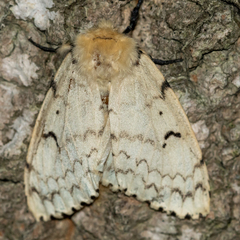 Spongy MothLymantria disparDamages trees, gardens or crops
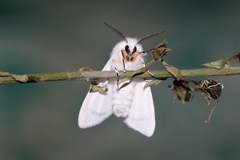 Fall Webworm MothHyphantria cuneaDamages trees, gardens or crops
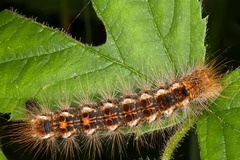 Brown-tail MothEuproctis chrysorrhoeaCan irritate skin
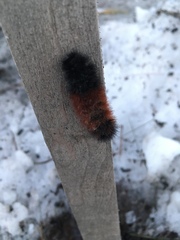 Isabella Tiger MothPyrrharctia isabella
 Virginian Tiger MothSpilosoma virginicaCan irritate skin
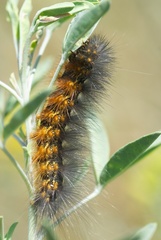 Salt Marsh MothEstigmene acrea
Sources
- Wikipedia: https://en.wikipedia.org/wiki/Eudocima_materna
Look it up elsewhere: GBIF · iNaturalist · BugGuide · Wikipedia
Text written 2026-10-23 from the sources above and checked sentence by sentence against them. Data fetched 2026-10-22.