 Bug FAQ
Doryodes latistriga
Doryodes latistriga · Order: Lepidoptera · Family: Erebidae
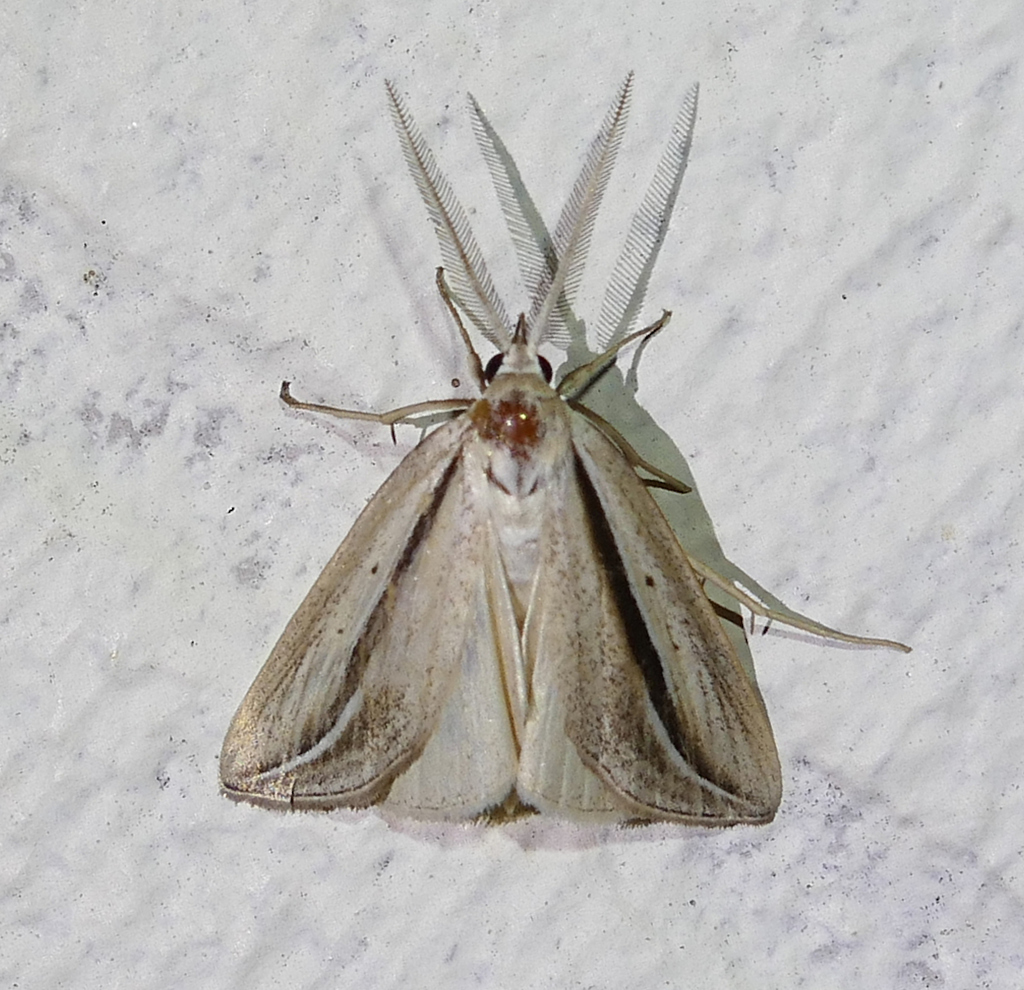
Adults are on the wing year-round and the forewing length ranges from about 14.5 mm to 20 mm depending on sex.
Source: Wikipedia
How to recognize it
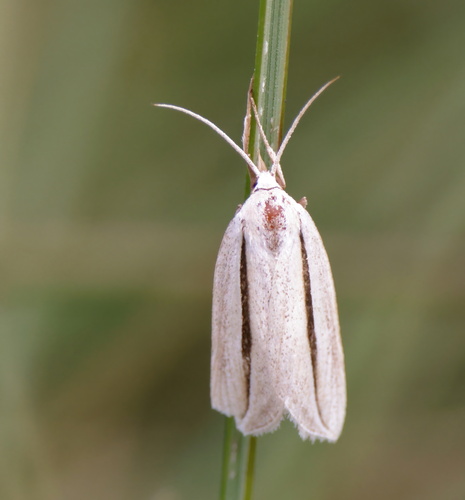
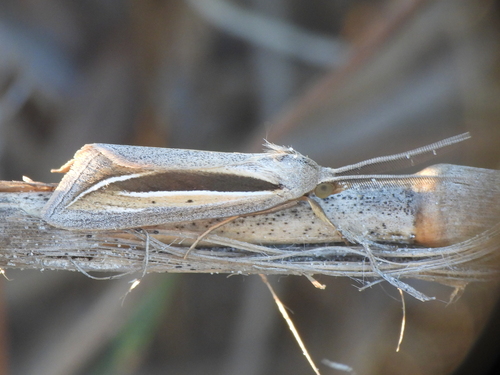
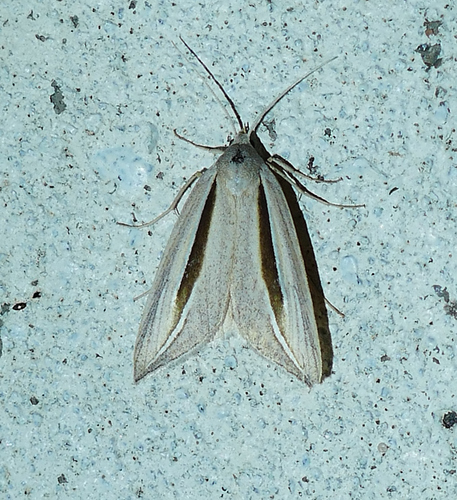
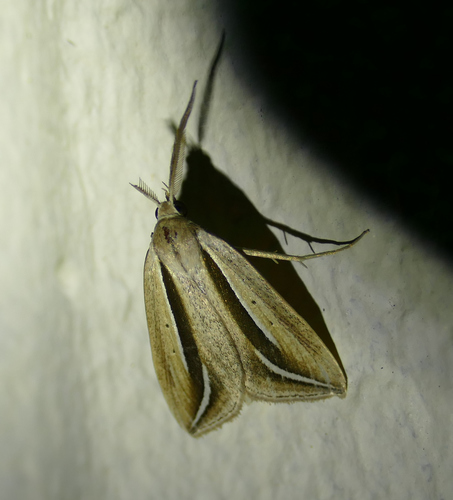
In spring and summer the forewings are yellowish-white to buff with gray streaks and the hindwings are white to whitish-buff. In fall and winter the forewings become darker with more brown shading, and the hindwings often show brown along the margins.
Source: Wikipedia
Size
Male forewing length is 14.5 to 18 mm. Female forewing length is 17.5 to 20 mm.
Source: Wikipedia
Where it lives
It lives in tidal creeks and salt marshes.
Source: Wikipedia
Life cycle
Adults are present throughout the entire year.
Source: Wikipedia
When you see it
The species is on wing year-round.
Source: Wikipedia
Where it comes from
Its range in the United States extends from Alabama to Louisiana.
Source: Wikipedia
Where it is found in the US
Recorded in 5 of 51 states and DC. Most records: Texas, Louisiana, Florida, Alabama, Virginia.
Darker = more records. Counts are museum and citizen-science records, not population size.
Source: GBIF
Months it is reported in the US
Source: GBIF
More photos
Questions people ask
When are Doryodes latistriga adults active?
Adults can be seen flying at any time of year.
Source: Wikipedia
What do the wings look like in different seasons?
In spring and summer the forewings are yellowish-white to buff with gray streaks, while in fall and winter they become darker with brown shading and the hindwing margins turn brown.
Source: Wikipedia
Same family (Erebidae)
 Spongy MothLymantria disparDamages trees, gardens or crops
 Fall Webworm MothHyphantria cuneaDamages trees, gardens or crops
 Brown-tail MothEuproctis chrysorrhoeaCan irritate skin
 Isabella Tiger MothPyrrharctia isabella
 Virginian Tiger MothSpilosoma virginicaCan irritate skin
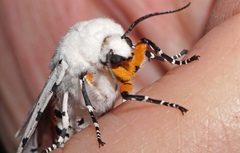 Salt Marsh MothEstigmene acreaDamages trees, gardens or crops
Sources
- Wikipedia: https://en.wikipedia.org/wiki/Doryodes_latistriga
Look it up elsewhere: GBIF · iNaturalist · BugGuide · Wikipedia
Text written 2026-10-29 from the sources above and checked sentence by sentence against them. Data fetched 2026-10-29.