 Bug FAQ
Delilah Underwing Moth
Catocala delilah · Order: Lepidoptera · Family: Erebidae
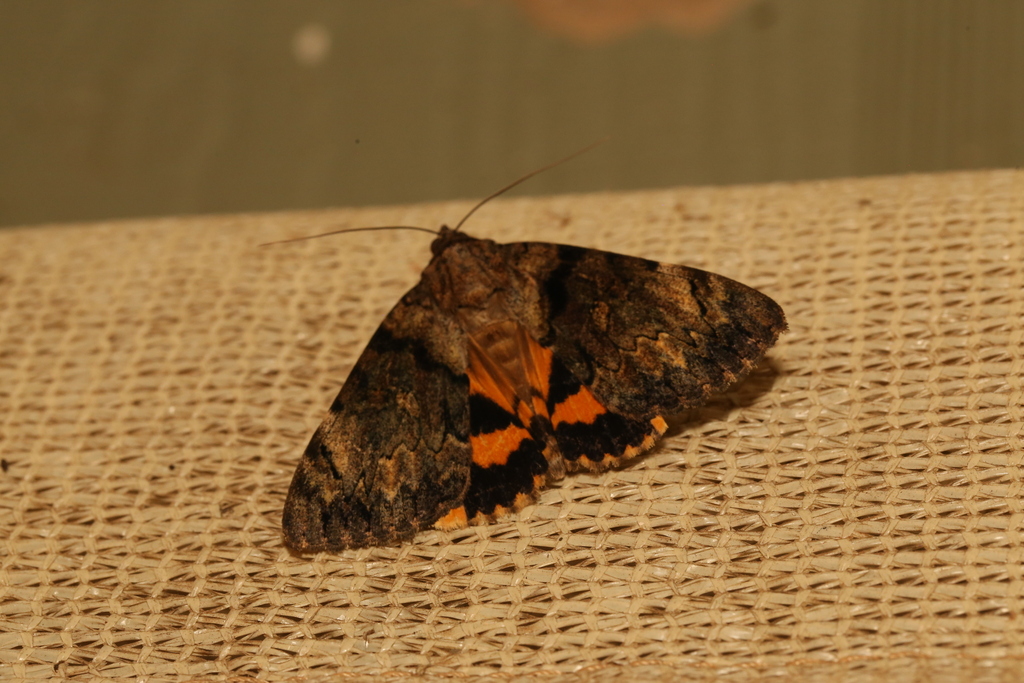
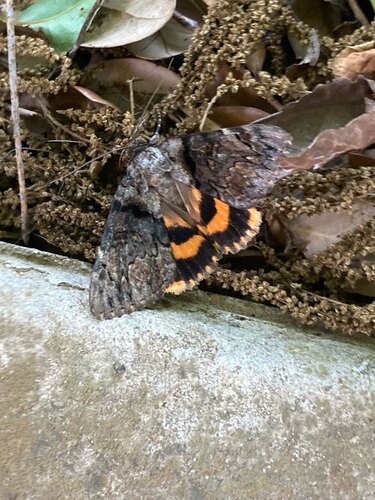
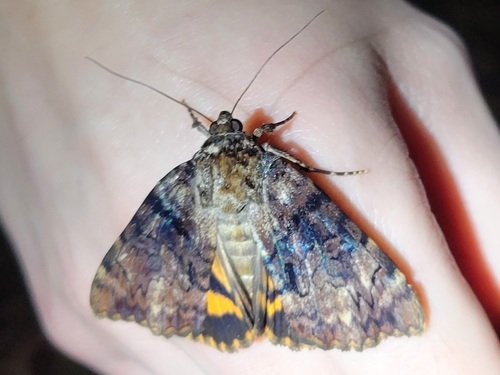
The Delilah underwing moth has a wingspan of about 60 to 65 mm and shows gray-brown forewings with a distinct irregular black line, while its hindwings are bright yellow-orange with dark markings.
Source: Wikipedia
How to recognize it
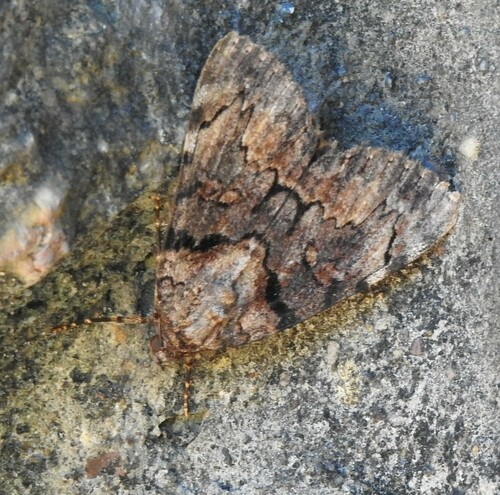
The forewings are grayish brown with a clear irregular black line crossing from the leading to the trailing edge.
Source: Wikipedia
Size
The wingspan ranges from 60 to 65 mm.
Source: Wikipedia
What it eats
Caterpillars feed on bur oak, Gambel oak, and willows.
Source: Wikipedia
Life cycle
There is probably one generation per year.
Source: Wikipedia
When you see it
Adults are active in May and June, varying with location.
Source: Wikipedia
Where it is found in the US
Recorded in 10 of 51 states and DC. Most records: Texas, Florida, Oklahoma, New Mexico, Kansas, Arizona, Utah, Georgia.
Darker = more records. Counts are museum and citizen-science records, not population size.
Source: GBIF
Status: native in North America; native in United States. Source: iNaturalist
Months it is reported in the US
Source: GBIF
More photos
Questions people ask
When are Delilah underwing moths active?
Adults fly in May and June, depending on where they live.
Source: Wikipedia
Same family (Erebidae)
 Spongy MothLymantria disparDamages trees, gardens or crops
 Fall Webworm MothHyphantria cuneaDamages trees, gardens or crops
 Brown-tail MothEuproctis chrysorrhoeaCan irritate skin
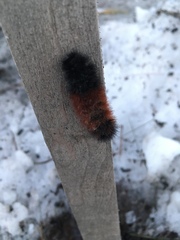 Isabella Tiger MothPyrrharctia isabella
 Virginian Tiger MothSpilosoma virginicaCan irritate skin
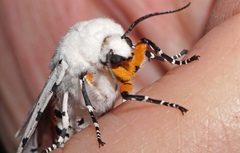 Salt Marsh MothEstigmene acreaDamages trees, gardens or crops
Sources
- Wikipedia: https://en.wikipedia.org/wiki/Catocala_delilah
Look it up elsewhere: GBIF · iNaturalist · BugGuide · ITIS · Wikipedia
Text written 2026-10-27 from the sources above and checked sentence by sentence against them. Data fetched 2026-10-27.