 Bug FAQ
Cyrtolobus vau
Cyrtolobus vau · Order: Hemiptera · Family: Membracidae
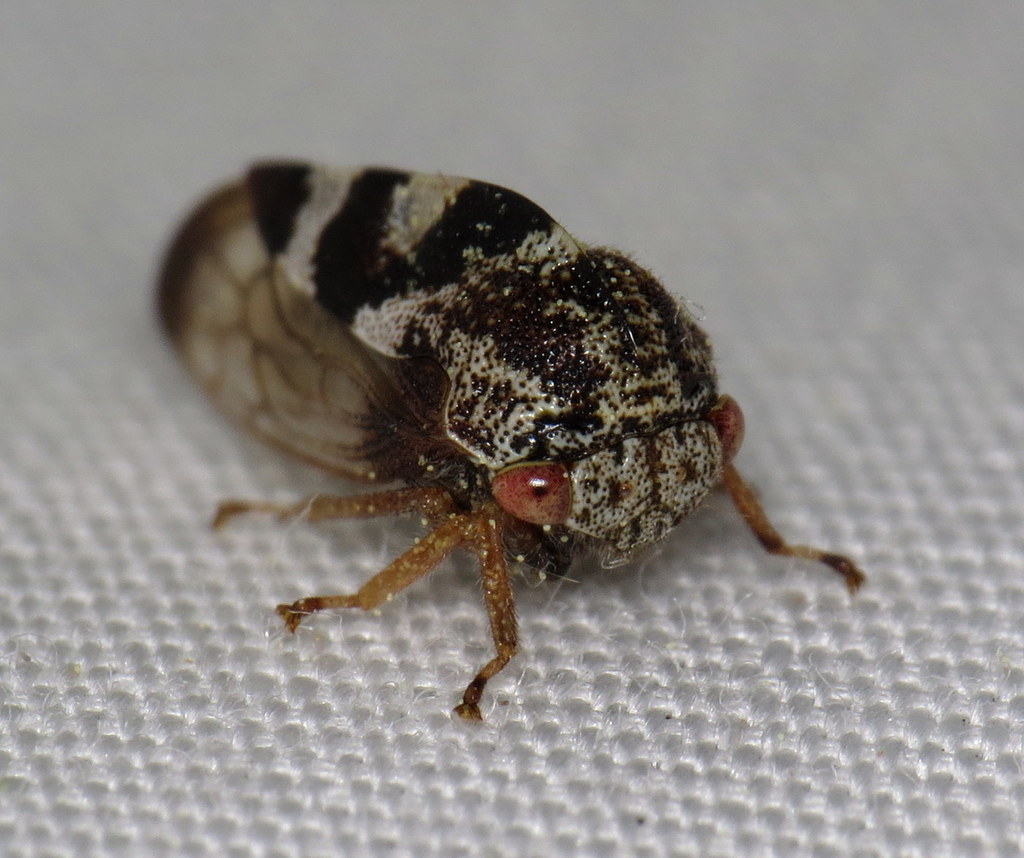
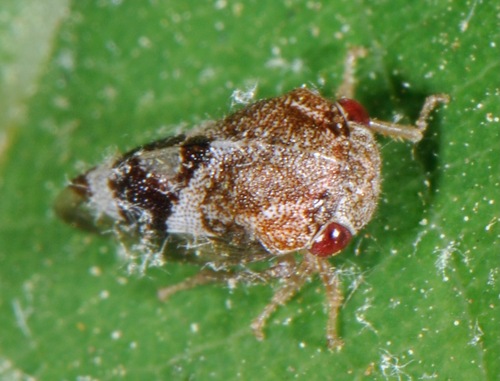
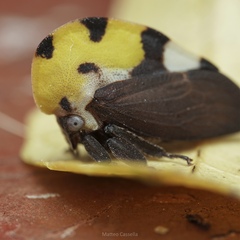
Adults are tiny, only about five to six millimetres long. They live throughout the eastern United States and eat a variety of oak leaves. Males can be told apart from females by a lower pronotal crest, and eye colour ranges from gray-brown to red.
Source: Wikipedia
How to recognize it
Eye colour varies from grayish-brown to red.
Source: Wikipedia
Size
Adults measure about five to six millimetres.
Source: Wikipedia
Where it lives
They are found across the eastern United States.
Source: Wikipedia
What it eats
They feed on many types of oak (Quercus).
Source: Wikipedia
Where it comes from
Their range includes the eastern United States.
Source: Wikipedia
Where it is found in the US
Recorded in 29 of 51 states and DC. Most records: Pennsylvania, North Carolina, Maryland, Connecticut, Illinois, Virginia, Massachusetts, New York.
Darker = more records. Counts are museum and citizen-science records, not population size.
Source: GBIF
Status: native in North America; native in Canada. Source: iNaturalist
Months it is reported in the US
Source: GBIF
More photos
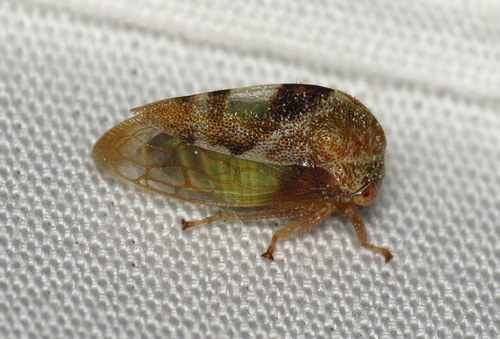
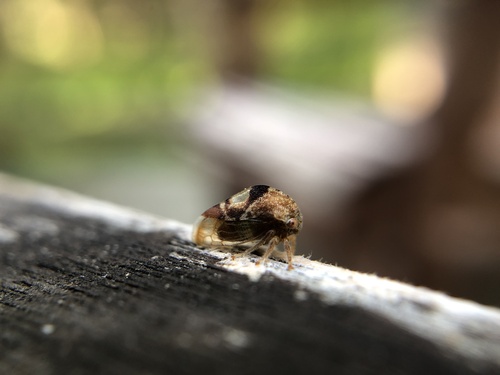
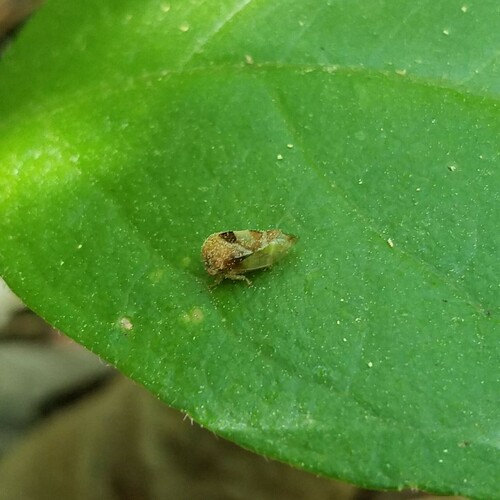
Questions people ask
Same family (Membracidae)
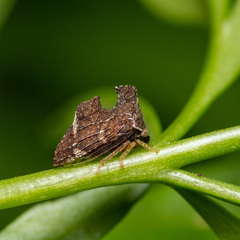 Keeled TreehopperEntylia carinata
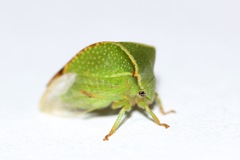 Buffalo TreehopperStictocephala bisoniaDamages trees, gardens or crops
 Horned TreehopperCentrotus cornutus
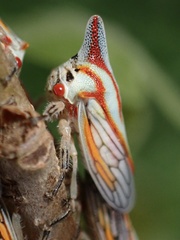 Oak TreehopperPlatycotis vittata
 Mexican TreehopperMembracis mexicanaDamages trees, gardens or crops
 Three-cornered Alfalfa HopperSpissistilus festinusDamages trees, gardens or crops
Sources
- Wikipedia: https://en.wikipedia.org/wiki/Cyrtolobus_vau
Look it up elsewhere: GBIF · iNaturalist · BugGuide · Wikipedia
Text written 2026-10-24 from the sources above and checked sentence by sentence against them. Data fetched 2026-10-24.