 Bug FAQ
Creamstriped Owl
Cyligramma latona · Order: Lepidoptera · Family: Erebidae


The Creamstriped Owl moth has a wingspan of about 75 to 100 mm (3.0 to 3.9 in). Its upper wings are brown with a yellow band across them and a large eyespot on the forewings. It lives widely across western and southern Sub-Saharan Africa, from Egypt to Guinea.
Source: Wikipedia
How to recognize it
The moth’s upper wings are brown, crossed by a yellowish band and bearing a large eyespot on each forewing.
Source: Wikipedia
Size
Its wingspan ranges from 75 to 100 mm (about 3.0 to 3.9 in).
Source: Wikipedia
What it eats
The caterpillars feed on Acacia species.
Source: Wikipedia
Where it comes from
The species is native to western and southern Sub-Saharan Africa, from Egypt and Guinea down to southern African regions.
Source: Wikipedia
More photos


Questions people ask
Where is the Creamstriped Owl moth found?
It occurs across western and southern Sub-Saharan Africa, from Egypt and Guinea to southern African countries.
Source: Wikipedia
How large does this moth get?
Its wingspan measures between 75 and 100 mm (about 3.0 to 3.9 in).
Source: Wikipedia
Same family (Erebidae)
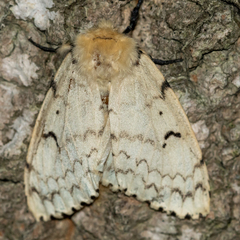 Spongy MothLymantria disparDamages trees, gardens or crops
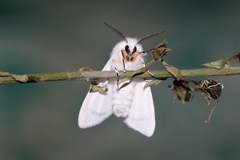 Fall Webworm MothHyphantria cuneaDamages trees, gardens or crops
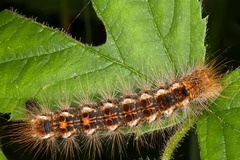 Brown-tail MothEuproctis chrysorrhoeaCan irritate skin
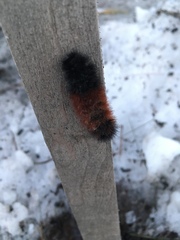 Isabella Tiger MothPyrrharctia isabella
 Virginian Tiger MothSpilosoma virginicaCan irritate skin
 Salt Marsh MothEstigmene acrea
Sources
- Wikipedia: https://en.wikipedia.org/wiki/Cyligramma_latona
Look it up elsewhere: GBIF · iNaturalist · BugGuide · Wikipedia
Text written 2026-10-23 from the sources above and checked sentence by sentence against them. Data fetched 2026-10-22.