 Bug FAQ
Cream-spot Tiger
Arctia villica · Order: Lepidoptera · Family: Erebidae
Source: Wikipedia
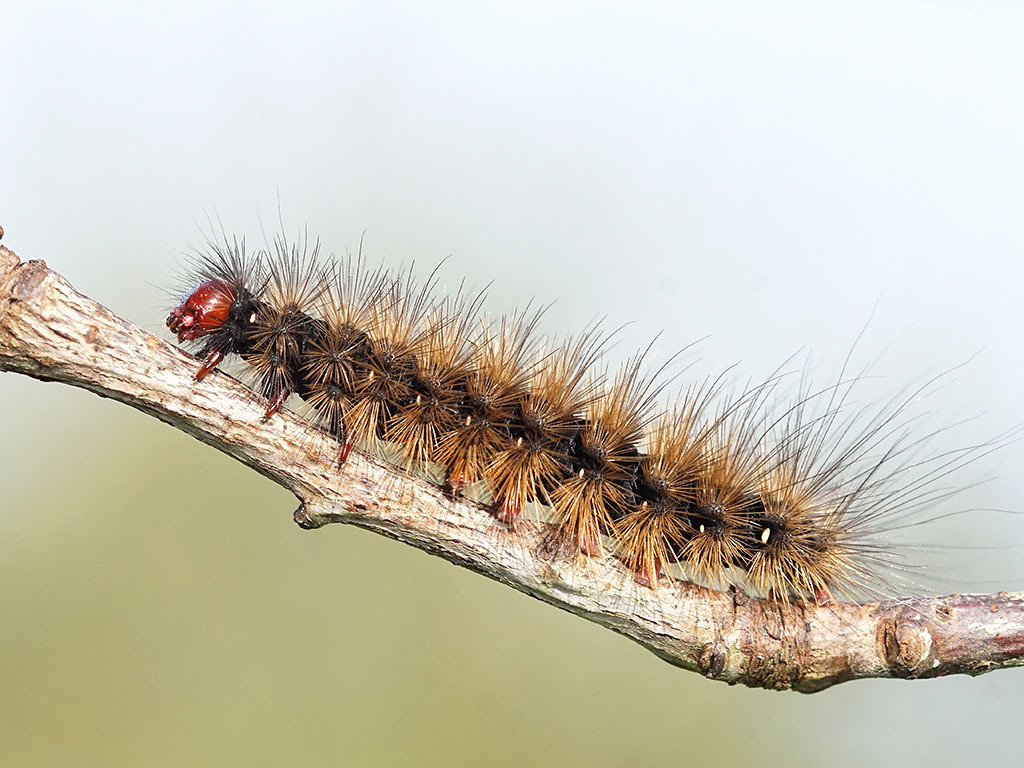
Adult moths have a wingspan of about 45 to 60 mm and a body length near 12 mm. They show black or grey forewings with white-cream patches and bright red-orange hindwings spotted in black. Moths fly from March to July, live in woods, hedges and sunny grass, and the larvae feed on many common garden plants.
Source: Wikipedia
How to recognize it
Forewings are dark with broad white-cream patches; hindwings are bright red-orange with black spots.
Source: Wikipedia
Size
Wingspan ranges from 45 to 60 mm. Body length is about 12 mm.
Source: Wikipedia
Where it lives
Found in woodlands, bushy areas, hedges and sunny open grass.
Source: Wikipedia
What it eats
Caterpillars eat dandelion, plantain, deadnettle, yarrow, blackberry, nettle, knapweed and strawberry plants.
Source: Wikipedia
Life cycle
They overwinter but are sensitive to frost. Pupation occurs on the ground in May.
Source: Wikipedia
When you see it
Adults are on the wing from March through July, depending on location.
Source: Wikipedia
Where it comes from
Occurs from the Iberian Peninsula across western and northern Iran to western Siberia, plus southwestern Asia and North Africa.
Source: Wikipedia
Lookalikes
Formerly placed in Epicallia, it was moved to the genus Arctia after 2016 phylogenetic work.
Source: Wikipedia
Where it is found in the US
Recorded in 2 of 51 states and DC. Most records: Arizona, Texas.
Darker = more records. Counts are museum and citizen-science records, not population size.
Source: GBIF
More photos

Questions people ask
Do the caterpillars damage garden plants?
Yes, they feed on many common garden herbs and fruits such as dandelion, strawberries and blackberries.
Source: Wikipedia
Same family (Erebidae)
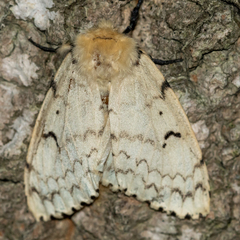 Spongy MothLymantria disparDamages trees, gardens or crops
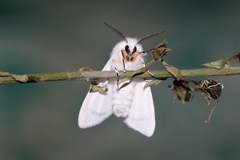 Fall Webworm MothHyphantria cuneaDamages trees, gardens or crops
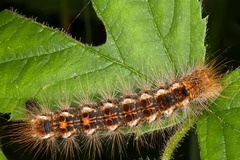 Brown-tail MothEuproctis chrysorrhoeaCan irritate skin
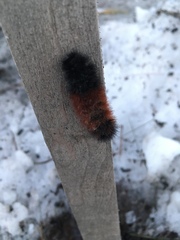 Isabella Tiger MothPyrrharctia isabella
 Virginian Tiger MothSpilosoma virginicaCan irritate skin
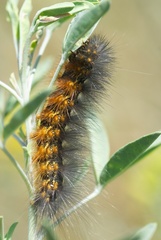 Salt Marsh MothEstigmene acrea
Sources
- Wikipedia: https://en.wikipedia.org/wiki/Arctia_villica
Look it up elsewhere: GBIF · iNaturalist · BugGuide · Wikipedia
Text written 2026-10-22 from the sources above and checked sentence by sentence against them. Data fetched 2026-10-22.