 Bug FAQ
Common Fruit-piercing Moth
Eudocima phalonia · Order: Lepidoptera · Family: Erebidae
Also called: Fruit Piercing Moth
Source: Wikipedia
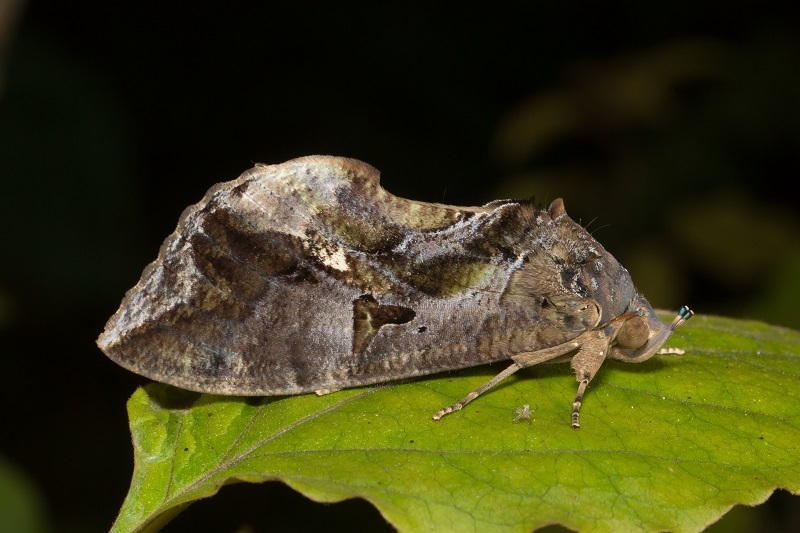
The adult moth pierces fruit with its strong proboscis, causing sap to ooze and ruining the crop. Larvae feed on vines of the Menispermaceae family and sometimes on Erythrina species.
Source: Wikipedia
How to recognize it
Forewings are reddish-brown with a greenish tint and sprinkled with dark spots. Hindwings are orange and bear a large black crescent beyond the lower cell angle.
Source: Wikipedia
Size
Males have a wingspan of roughly 80 to 94 mm. Females are larger, with a wingspan of about 90 to 110 mm.
Source: Wikipedia
Is it a pest in the house?
Adults are considered agricultural pests because they pierce fruit, causing sap to leak and internal feeding damage.
Source: Wikipedia
How to get rid of it
Management strategies involve baiting adults and employing natural enemies such as egg parasites and larval parasitoids.
Source: Wikipedia
Where it lives
It lives throughout much of the tropical regions of Asia, Africa and Australia and has been introduced to places like Hawaii, New Zealand and the Society Islands.
Source: Wikipedia
What it eats
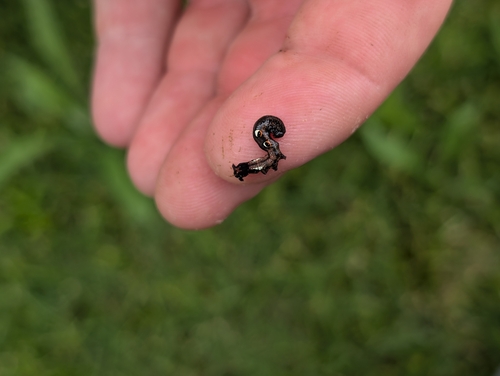
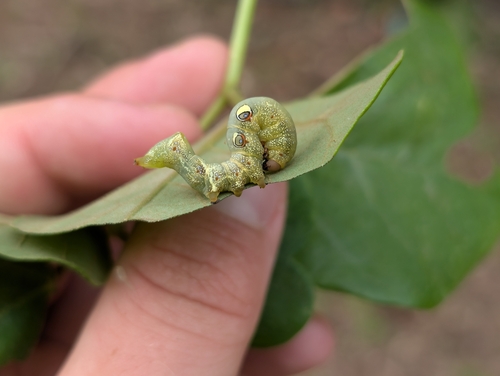
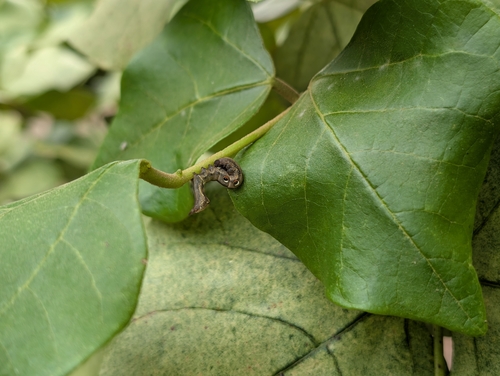
Adults damage fruit crops by piercing the fruit to drink the juice. Caterpillars feed mainly on vines in the Menispermaceae family and can also use Erythrina species.
Source: Wikipedia
Life cycle
Control efforts have included bait traps for adults and the use of egg and larval parasites.
Source: Wikipedia
Where it comes from
Its native range covers large parts of the tropics in Asia, Africa and Australia.
Source: Wikipedia
Where it is found in the US
Recorded in 1 of 51 states and DC. Most records: Hawaii.
Darker = more records. Counts are museum and citizen-science records, not population size.
Source: GBIF
Months it is reported in the US
Source: GBIF
More photos

Questions people ask
What damage does the common fruit-piercing moth cause?
The adult moth pierces fruit to suck the juice, which makes the fruit ooze sap and become unusable.
Source: Wikipedia
How can I control this moth?
Control methods include using bait traps for adults and releasing natural enemies like egg parasites and larval parasitoids.
Source: Wikipedia
Where is this moth found?
It occurs throughout tropical Asia, Africa and Australia and has been introduced to Hawaii, New Zealand and the Society Islands.
Source: Wikipedia
How big does the common fruit-piercing moth get?
Males have a wingspan of about 80 to 94 mm, while females range from 90 to 110 mm.
Source: Wikipedia
Same family (Erebidae)
 Spongy MothLymantria disparDamages trees, gardens or crops
 Fall Webworm MothHyphantria cuneaDamages trees, gardens or crops
 Brown-tail MothEuproctis chrysorrhoeaCan irritate skin
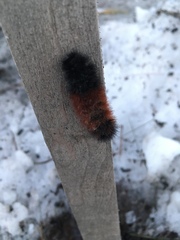 Isabella Tiger MothPyrrharctia isabella
 Virginian Tiger MothSpilosoma virginicaCan irritate skin
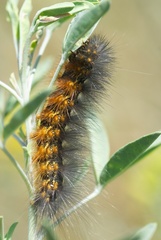 Salt Marsh MothEstigmene acrea
Sources
- Wikipedia: https://en.wikipedia.org/wiki/Eudocima_phalonia
Look it up elsewhere: GBIF · iNaturalist · BugGuide · Wikipedia
Text written 2026-10-22 from the sources above and checked sentence by sentence against them. Data fetched 2026-10-22.