 Bug FAQ
Cocoa Tussock Moth
Orgyia postica · Order: Lepidoptera · Family: Erebidae
Also called: Hevea Tussock Moth
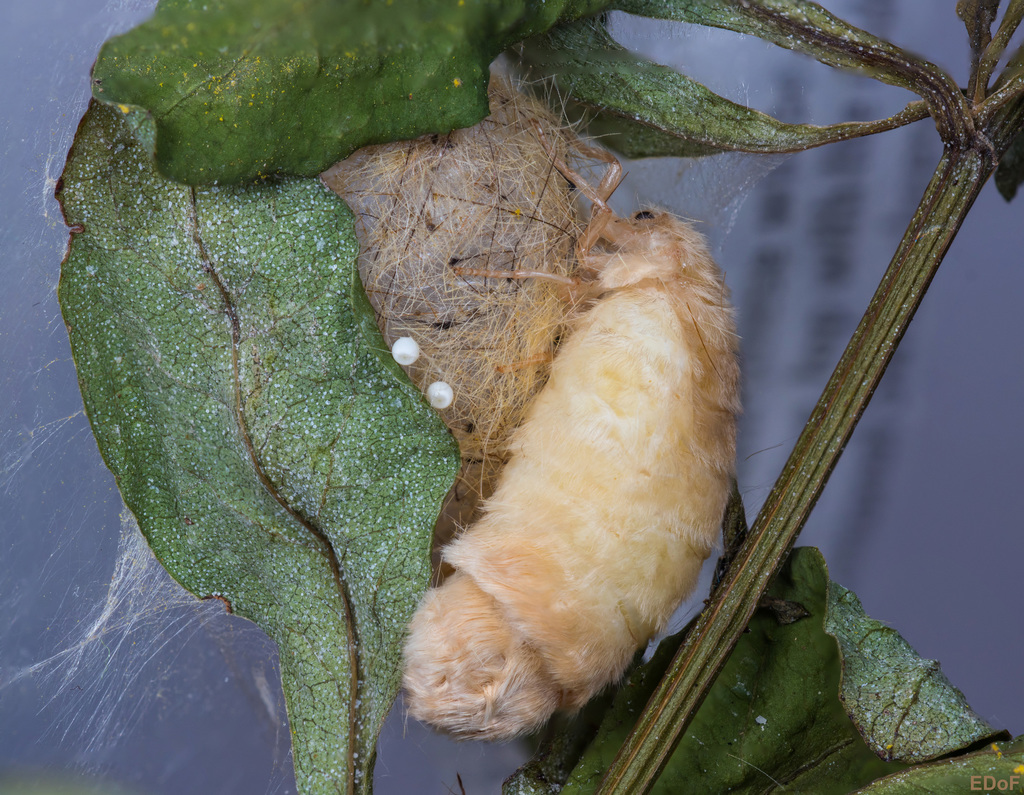
Male Cocoa Tussock Moths have a wingspan of about 2 to 3 cm and are brownish in colour, while females are wingless. They live in the Oriental tropics of South and Southeast Asia and the males can be seen flying any time of year. The eggs are small, pale-brown pills with a darker ring, and are attacked by parasitoid wasps of the genus Telenomus.
Source: Wikipedia
How to recognize it
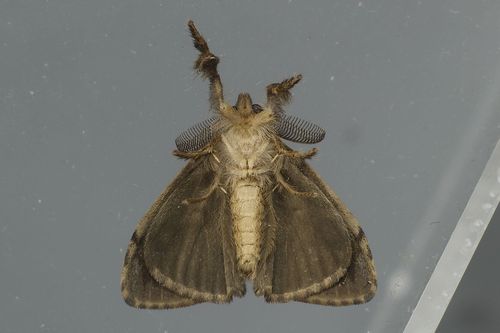
Male moths have brown heads, thoraxes and abdomens, and their forewings are brown with a faint slanted line near the base.
Source: Wikipedia
Size
Male wingspan ranges from 20 to 30 mm. Females have no wings.
Source: Wikipedia
What it eats
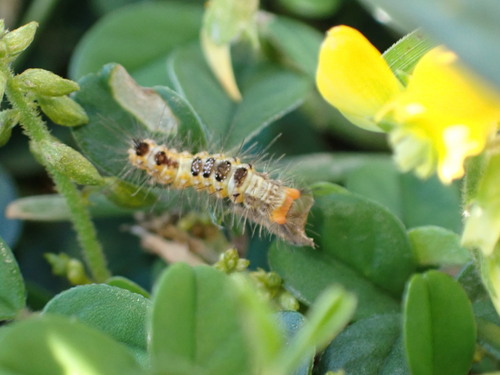
The larvae have been recorded feeding on many different plant species.
Source: Wikipedia
Life cycle
Eggs are pill-shaped, pale whitish-brown with a darker ring around a depressed top. Eggs are parasitised by Telenomus wasps.
Source: Wikipedia
When you see it
Adult males are active throughout the year.
Source: Wikipedia
Where it comes from
Their native range includes the same Oriental tropical regions listed above.
Source: Wikipedia
More photos
Questions people ask
Can I see adult moths any time of year?
Yes, male adults are on the wing year-round.
Source: Wikipedia
What do the eggs look like?
They are small, pill-shaped, pale whitish-brown with a darker ring around a slightly indented top.
Source: Wikipedia
Same family (Erebidae)
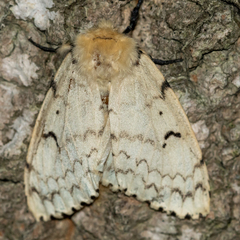 Spongy MothLymantria disparDamages trees, gardens or crops
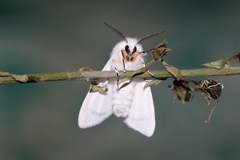 Fall Webworm MothHyphantria cuneaDamages trees, gardens or crops
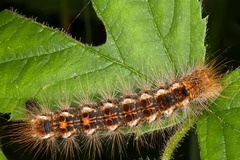 Brown-tail MothEuproctis chrysorrhoeaCan irritate skin
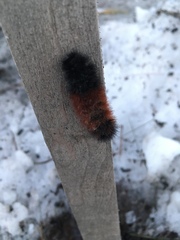 Isabella Tiger MothPyrrharctia isabella
 Virginian Tiger MothSpilosoma virginicaCan irritate skin
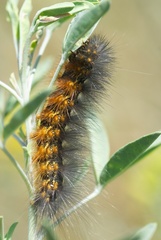 Salt Marsh MothEstigmene acrea
Sources
- Wikipedia: https://en.wikipedia.org/wiki/Orgyia_postica
Look it up elsewhere: GBIF · iNaturalist · BugGuide · Wikipedia
Text written 2026-10-22 from the sources above and checked sentence by sentence against them. Data fetched 2026-10-22.