 Bug FAQ
Clouded Buff
Diacrisia sannio · Order: Lepidoptera · Family: Erebidae
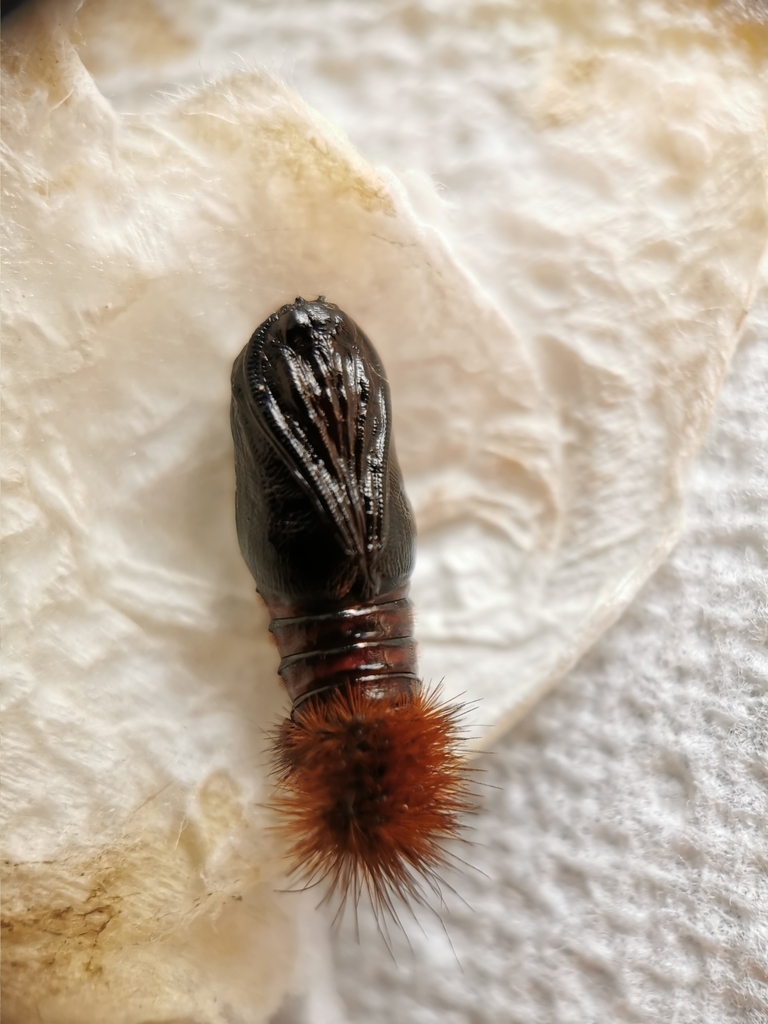
The clouded buff moth has a wingspan of about 35 to 50 mm and shows bright yellow wings with distinctive spots in males, while females are brownish-red. It lives across the Palearctic from Ireland to Siberia and flies in early summer, June to July. The caterpillars eat a range of common shrubs and herbaceous plants such as galium, plantain, dandelion, willowherb and nettle.
Source: Wikipedia
How to recognize it
Male forewings are lemon yellow and hindwings ivory yellow, both with a grey-red spot and pink edge; females are brownish-red overall.
Source: Wikipedia
Size
Wingspan ranges from 35 to 50 mm.
Source: Wikipedia
Where it lives
Found throughout the Palearctic region from Ireland to Siberia.
Source: Wikipedia
Life cycle
Adults are on the wing from June to July, timing varies by location.
Source: Wikipedia
When you see it
Flight period is June to July depending on where it lives.
Source: Wikipedia
Where it comes from
Its native range covers the Palearctic realm, spanning Ireland to Siberia.
Source: Wikipedia
Questions people ask
Where can I see a clouded buff moth?
They fly in early summer (June-July) across the Palearctic from Ireland to Siberia.
Source: Wikipedia
Same family (Erebidae)
 Spongy MothLymantria disparDamages trees, gardens or crops
 Fall Webworm MothHyphantria cuneaDamages trees, gardens or crops
 Brown-tail MothEuproctis chrysorrhoeaCan irritate skin
 Isabella Tiger MothPyrrharctia isabella
 Virginian Tiger MothSpilosoma virginicaCan irritate skin
 Salt Marsh MothEstigmene acrea
Sources
- Wikipedia: https://en.wikipedia.org/wiki/Diacrisia_sannio
Look it up elsewhere: GBIF · iNaturalist · BugGuide · Wikipedia
Text written 2026-10-22 from the sources above and checked sentence by sentence against them. Data fetched 2026-10-22.