 Bug FAQ
Castor Semi-looper
Achaea janata · Order: Lepidoptera · Family: Erebidae
Also called: Croton caterpillar
Source: Wikipedia
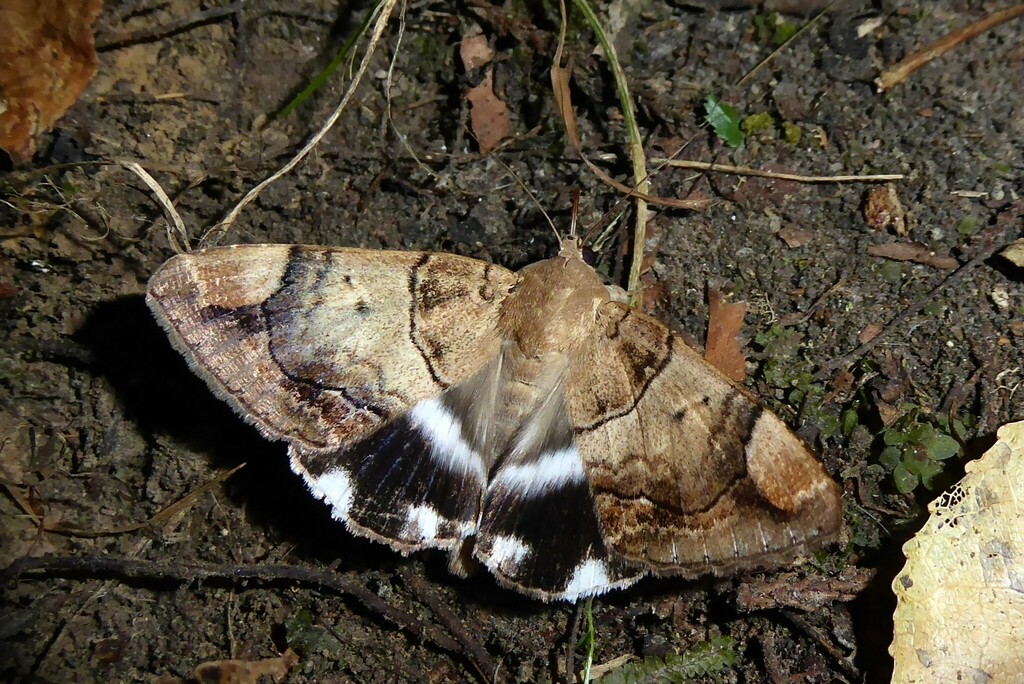
The castor semi-looper moth has a 60 to 70 mm wingspan and a pale reddish-brown body with distinct wing markings. Its larvae feed on many garden and field crops, stripping leaves and boring into stems until the plants wilt and die. Control relies on hand-picking, traps, parasitoid releases and targeted insecticide sprays.
Source: Wikipedia
How to recognize it
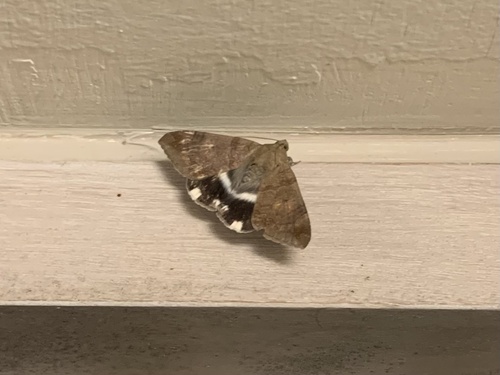
The forewings show a short sub-basal waved line, oblique antemedial and excised postmedial lines, often black-suffused inside. A speck marks the end of the cell and a diffuse rufous band lies beyond the postmedial line; hindwings are black with a medial white band. Three large white spots appear on the outer margin with whitish cilia, and the ventral side is grey-suffused. An oblique white postmedial band on the forewing does not reach the costa, and each wing bears two crenulate medial lines.
Source: Wikipedia
Size
The adult’s wingspan measures about 60 to 70 mm.
Source: Wikipedia
Is it a pest in the house?
Caterpillars chew foliage, causing defoliation and reduced photosynthesis. They also bore into stems, leading the whole plant to wilt and die.
Source: Wikipedia
How to get rid of it
- Hand-picking late-instar larvae and using pheromone or light traps can reduce adult numbers.
- Biological control uses parasitoids such as Trichogramma evanescens on eggs, Microplitis maculipennis on caterpillars, and Euplectrus and Rhogas species.
- Chemical options include sprays of quinalphos, chlorpyrifos, carbaryl, monocrotophos, endosulphan, or neem seed kernel extract for eggs.
Source: Wikipedia
Where it lives
It occurs throughout the Indo-Australian tropics and subtropics, reaching south to New Zealand and east across Pacific islands to Easter Island.
Source: Wikipedia
What it eats
Larvae feed on castor oil plant, Excoecaria, many Brassica and Ficus species, and a long list of crops such as peanuts, citrus, soy, pumpkin, pomegranate, roses, tomato, tamarind, cacao, mung bean and others.
Source: Wikipedia
Life cycle
Eggs are small, spherical and greenish; the larvae pass through four instars before pupating into a whitish-green pupa.
Source: Wikipedia
Where it comes from
Its native range matches the Indo-Australian tropics and subtropics, extending to New Zealand and the Pacific archipelagoes.
Source: Wikipedia
Lookalikes
Achaea janata is the scientific name for the castor semi-looper, also called the croton caterpillar.
Source: Wikipedia
Where it is found in the US
Recorded in 5 of 51 states and DC. Most records: Hawaii, Florida, South Carolina, Texas, Connecticut.
Darker = more records. Counts are museum and citizen-science records, not population size.
Source: GBIF
Months it is reported in the US
Source: GBIF
More photos


Questions people ask
How can I get rid of castor semi-looper caterpillars?
Pick late-instar larvae by hand and set up pheromone or light traps; release parasitoids like Trichogramma and Microplitis, or apply approved insecticide sprays such as chlorpyrifos or neem extract.
Source: Wikipedia
What plants are at risk from this pest?
It attacks castor oil plant, beans, citrus, soy, pumpkin, pomegranate, roses, tomato, tamarind, cacao and many other garden and field crops.
Source: Wikipedia
What does the adult moth look like?
The moth has a pale reddish-brown body, a 60 to 70 mm wingspan, forewings with several waved lines and a white postmedial band, and hindwings that are black with a medial white band.
Source: Wikipedia
Same family (Erebidae)
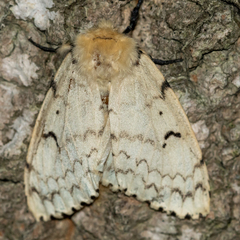 Spongy MothLymantria disparDamages trees, gardens or crops
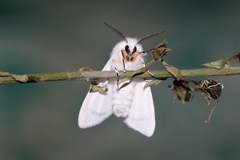 Fall Webworm MothHyphantria cuneaDamages trees, gardens or crops
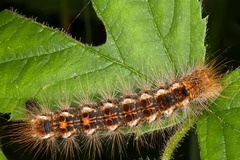 Brown-tail MothEuproctis chrysorrhoeaCan irritate skin
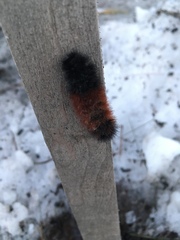 Isabella Tiger MothPyrrharctia isabella
 Virginian Tiger MothSpilosoma virginicaCan irritate skin
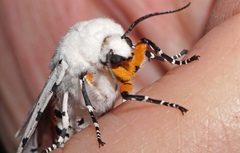 Salt Marsh MothEstigmene acreaDamages trees, gardens or crops
Sources
- Wikipedia: https://en.wikipedia.org/wiki/Achaea_janata
Look it up elsewhere: GBIF · iNaturalist · BugGuide · ITIS · Wikipedia
Text written 2026-10-27 from the sources above and checked sentence by sentence against them. Data fetched 2026-10-27.