 Bug FAQ
Carynota mera
Carynota mera · Order: Hemiptera · Family: Membracidae
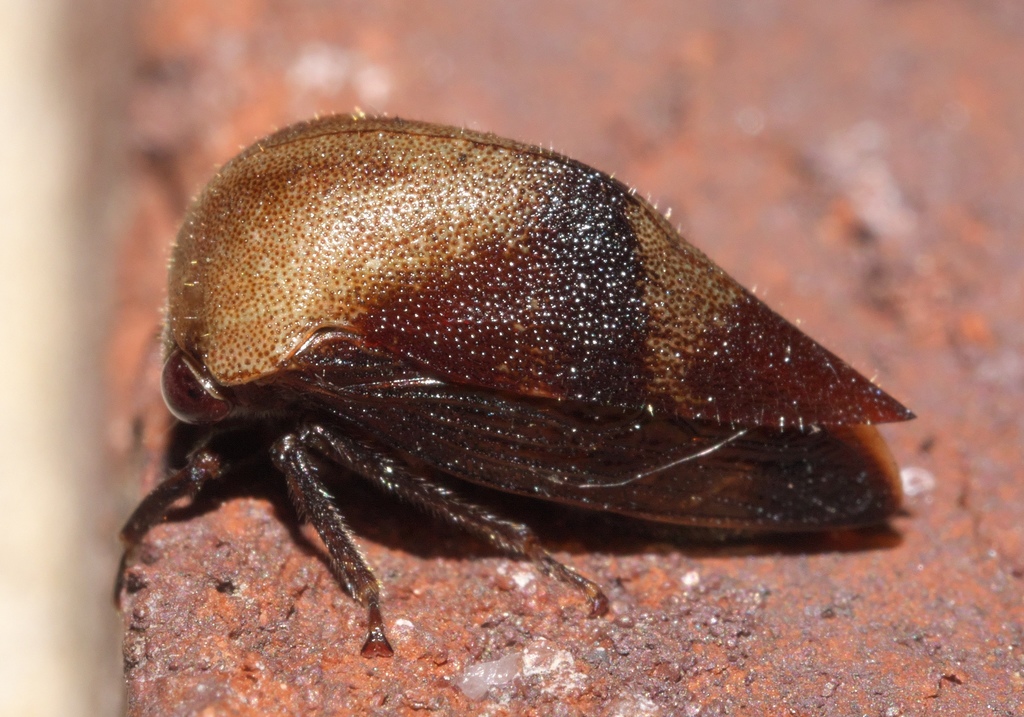
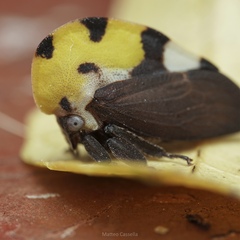
Males are about 8.5 mm long and females reach roughly 10 mm. The pronotum is rounded, unlike other treehoppers in its tribe.
Source: Wikipedia
How to recognize it
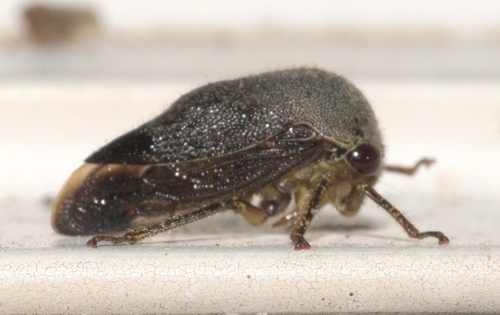
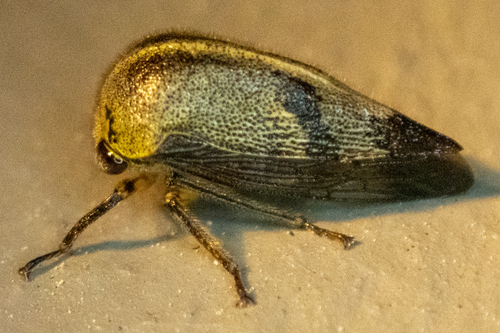
The pronotum of this species is rounded, setting it apart from other Telamonini treehoppers.
Source: Wikipedia
Size
Males measure about 8.5 mm, while females are about 10 mm long.
Source: Wikipedia
Where it lives
It is found throughout the eastern United States and eastern Canada.
Source: Wikipedia
Where it comes from
Its range includes the eastern United States and eastern Canada.
Source: Wikipedia
Where it is found in the US
Recorded in 32 of 51 states and DC. Most records: New York, North Carolina, Oklahoma, Ohio, Connecticut, Illinois, Pennsylvania, Maryland.
Darker = more records. Counts are museum and citizen-science records, not population size.
Source: GBIF
Status: native in North America; native in Canada. Source: iNaturalist
Months it is reported in the US
Source: GBIF
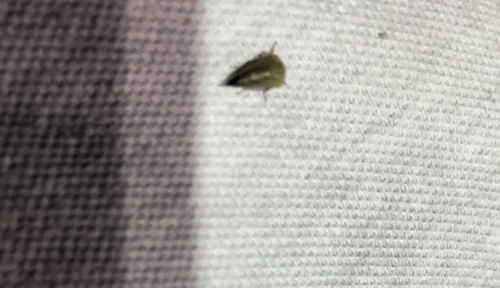
More photos
Questions people ask
How can I tell Carynota mera apart from other treehoppers?
Look for a rounded pronotum, which is different from the shapes seen in other Telamonini treehoppers.
Source: Wikipedia
How big are Carynota mera insects?
Males are about 8.5 mm long and females grow to roughly 10 mm.
Source: Wikipedia
Same family (Membracidae)
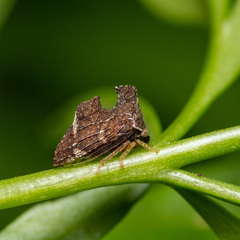 Keeled TreehopperEntylia carinata
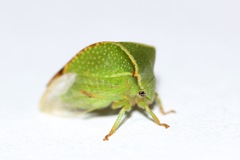 Buffalo TreehopperStictocephala bisoniaDamages trees, gardens or crops
 Horned TreehopperCentrotus cornutus
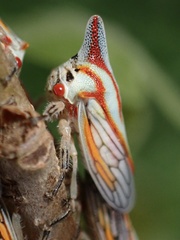 Oak TreehopperPlatycotis vittata
 Mexican TreehopperMembracis mexicanaDamages trees, gardens or crops
 Three-cornered Alfalfa HopperSpissistilus festinusDamages trees, gardens or crops
Sources
- Wikipedia: https://en.wikipedia.org/wiki/Carynota_mera
Look it up elsewhere: GBIF · iNaturalist · BugGuide · Wikipedia
Text written 2026-10-25 from the sources above and checked sentence by sentence against them. Data fetched 2026-10-25.