 Bug FAQ
Camel Treehopper
Smilia camelus · Order: Hemiptera · Family: Membracidae
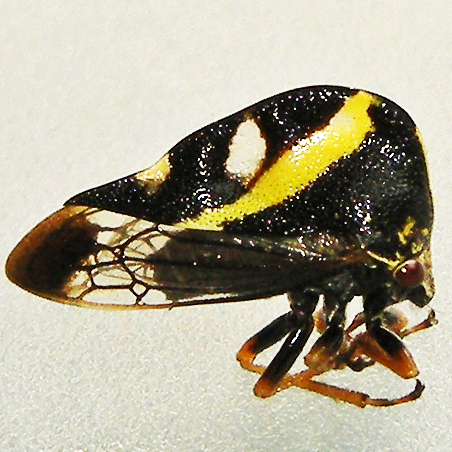
Females are about 9 mm long and males about 8 mm. They live in mixed hardwood forests across the eastern United States and Canada and feed on several oak species. Adults are most abundant during the summer months.
Source: Wikipedia
How to recognize it
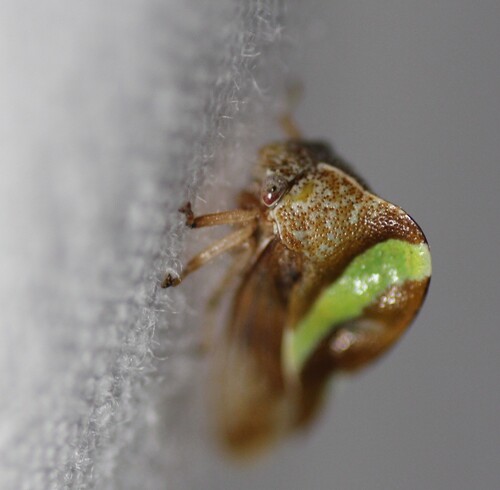
The pronotum is high and peaks over the head, higher in females than males.
Source: Wikipedia
Size
Females measure around 9 mm (0.35 in) and males about 8 mm (0.31 in).
Source: Wikipedia
Life cycle
The species is abundant throughout the summer months.
Source: Wikipedia
When you see it
Adults are most common in summer.
Source: Wikipedia
Where it is found in the US
Recorded in 32 of 51 states and DC. Most records: Texas, North Carolina, Maryland, Illinois, Massachusetts, Mississippi, Pennsylvania, Ohio.
Darker = more records. Counts are museum and citizen-science records, not population size.
Source: GBIF
Status: native in North America; native in Canada. Source: iNaturalist
Months it is reported in the US
Source: GBIF
More photos
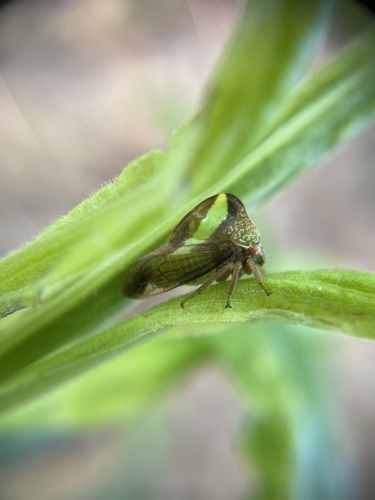
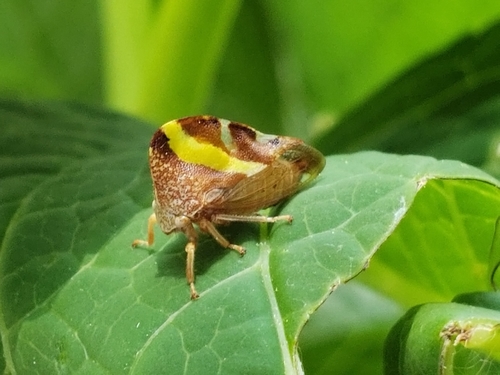
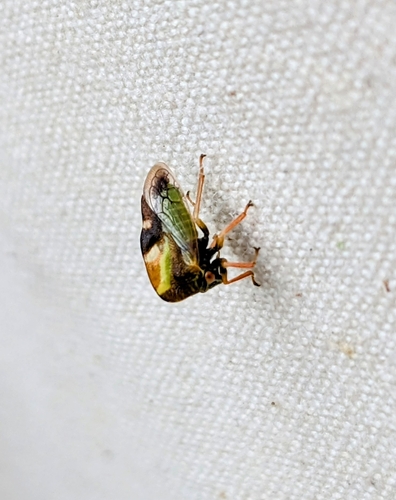
Questions people ask
What do camel treehoppers eat?
They feed on several oak species, including southern red oak and turkey oak.
Source: Wikipedia
When are camel treehoppers most common?
They are most abundant during the summer months.
Source: Wikipedia
Same family (Membracidae)
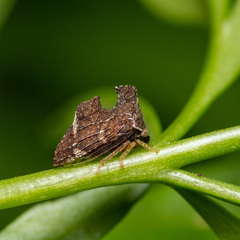 Keeled TreehopperEntylia carinata
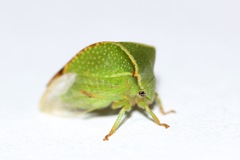 Buffalo TreehopperStictocephala bisoniaDamages trees, gardens or crops
 Horned TreehopperCentrotus cornutus
 Oak TreehopperPlatycotis vittata
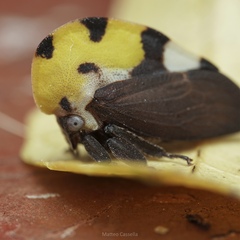 Mexican TreehopperMembracis mexicanaDamages trees, gardens or crops
 Three-cornered Alfalfa HopperSpissistilus festinusDamages trees, gardens or crops
Sources
- Wikipedia: https://en.wikipedia.org/wiki/Smilia_camelus
Look it up elsewhere: GBIF · iNaturalist · BugGuide · Wikipedia
Text written 2026-10-24 from the sources above and checked sentence by sentence against them. Data fetched 2026-10-24.