 Bug FAQ
Calliphora latifrons
Calliphora latifrons · Order: Diptera · Family: Calliphoridae
Source: Wikipedia
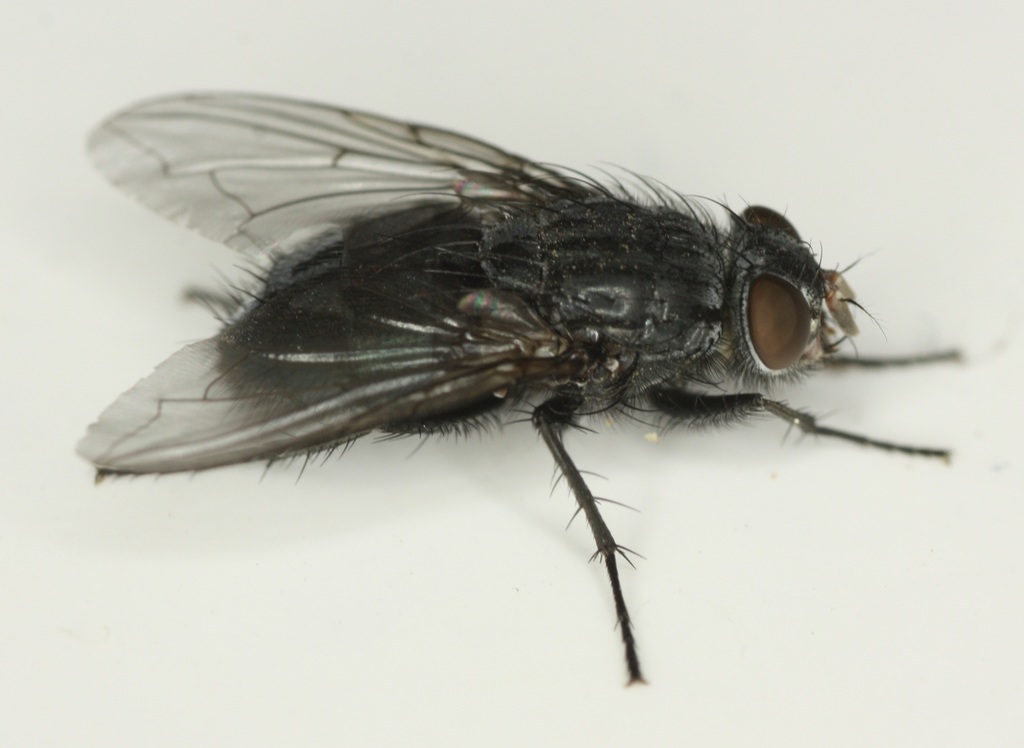
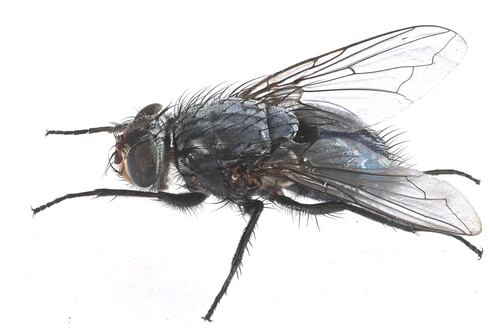
The maggots are about half to three-quarters of an inch long (13 to 19 mm). Adults have a metallic bluish abdomen and an orange front spiracle, and they readily fly into houses where they may breed on small carcasses such as dead mice. They can carry pathogens when they lay eggs on food, making them a potential disease vector.
Source: Wikipedia
How to recognize it
The abdomen is usually metallic bluish, sometimes with white micro-mentum. An orange anterior spiracle is visible on the head.
Source: Wikipedia
Is it a pest in the house?
The species often enters homes and can breed in dead mice, producing many flies.
Source: Wikipedia
Where it lives
Calliphora latifrons freely enters houses. It usually breeds in small carcasses found in rural areas.
Source: Wikipedia
What it eats
By laying eggs on food while feeding, it can transfer various pathogens.
Source: Wikipedia
Life cycle
Its life cycle follows the pattern of other domestic flies and depends on temperature. The total immature development period is about 13 days.
Source: Wikipedia
Where it comes from
Its distribution is limited to certain ecosystems in North America.
Source: Wikipedia
Lookalikes
Calliphora latifrons can be separated from related species by a specific set of characters.
Source: Wikipedia
Where it is found in the US
Recorded in 11 of 51 states and DC. Most records: California, Hawaii, Montana, Alaska, Arizona, Colorado, Washington, New Mexico.
Darker = more records. Counts are museum and citizen-science records, not population size.
Source: GBIF
Status: native in North America; native in Canada. Source: iNaturalist
Months it is reported in the US
Source: GBIF
More photos
Questions people ask
Can Calliphora latifrons spread disease?
Yes, it can transfer pathogens when it lays eggs on food.
Source: Wikipedia
What do the adults look like?
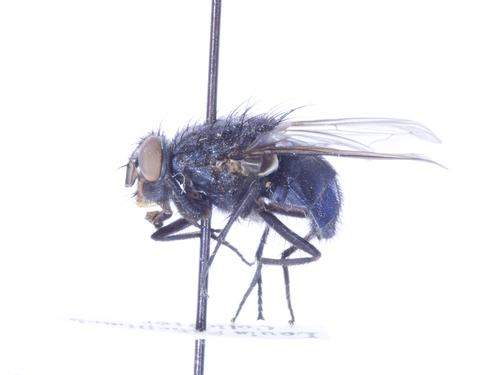
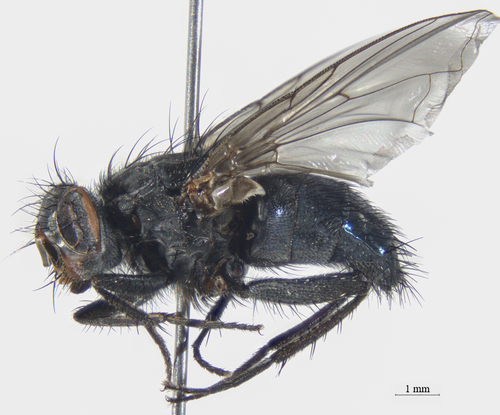
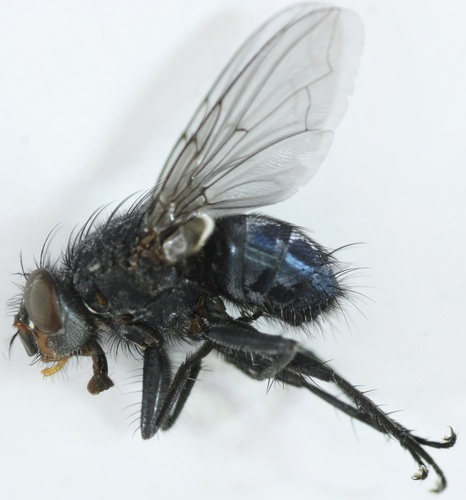
Adults have a metallic bluish abdomen and an orange front spiracle.
Source: Wikipedia
Same family (Calliphoridae)
 Common European Greenbottle FlyLucilia sericataNuisance, not dangerous
 Blue BlowflyCalliphora vicinaCan spread germs or disease
 Black Blow FlyPhormia reginaNuisance, not dangerous
 Oriental Latrine FlyChrysomya megacephalaCan spread germs or disease
 Australian Sheep Blow FlyLucilia cuprinaNuisance, not dangerous
 Locust BlowflyStomorhina lunata
Sources
- Wikipedia: https://en.wikipedia.org/wiki/Calliphora_latifrons
Look it up elsewhere: GBIF · iNaturalist · BugGuide · ITIS · Wikipedia
Text written 2026-10-24 from the sources above and checked sentence by sentence against them. Data fetched 2026-10-24.